

As the Society of St Pius X rejected current negotiating terms with the Dicastery for the Doctrine of the Faith regarding future episcopal consecrations, pointed exchanges between Cardinal Robert Sarah and the Society have followed.
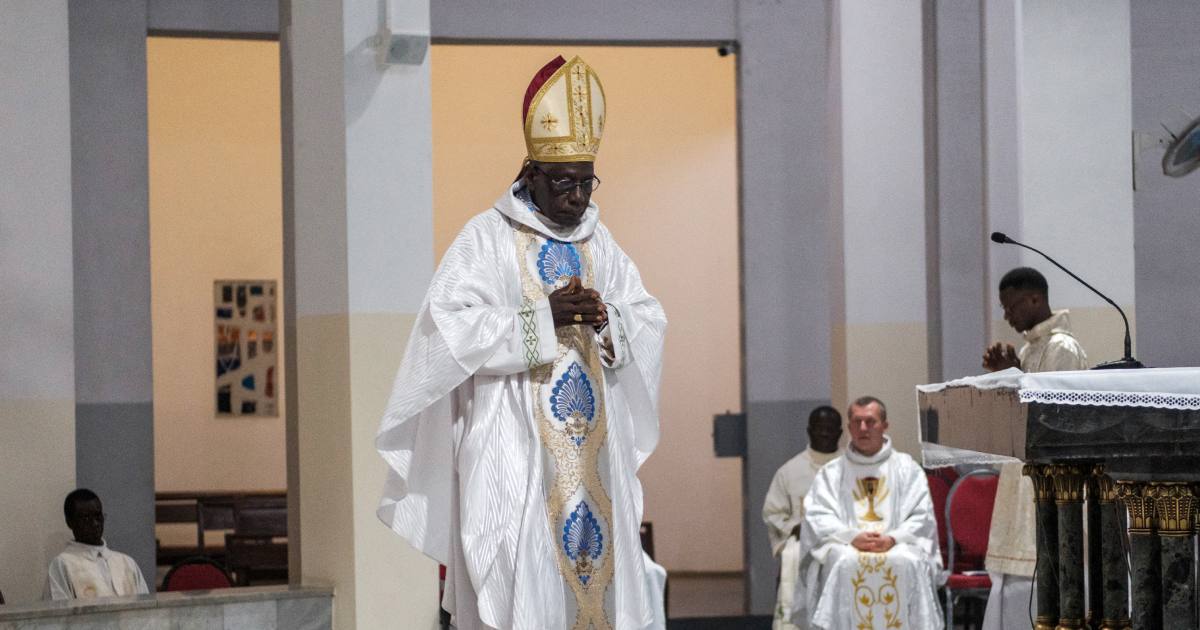
Cardinal Robert Sarah wrote in the French weekly Le Journal du Dimanche on February 22 that he had learned of the Society’s intention to consecrate bishops and viewed the development with “deep concern and profound sadness”. The Guinean cardinal warned that proceeding with episcopal consecrations without the authorisation of the Holy See would amount to a grave act of disobedience that risked damaging the unity of the Church.
“We are told that this decision to disobey the law of the Church is motivated by the supreme law of the salvation of souls,” he wrote, invoking the canonical maxim suprema lex salus animarum. “But salvation is Christ, and He gives Himself only in the Church.”
Cardinal Sarah questioned whether the defence of souls could be invoked to justify an action undertaken outside the authority of Rome. “How can we claim to lead souls to salvation by means other than those He Himself has indicated to us?” he asked, warning that the consequences could be severe. To proceed, he suggested, would be to “tear the Mystical Body of Christ in an irreversible manner”.
“How many souls risk being lost because of this new rupture?” he continued, raising concerns that the proposed consecrations could deepen the divisions that have long characterised the relationship between the traditionalist society and the Vatican.
The cardinal nevertheless acknowledged that the Society presents its actions as a defence of Catholic tradition and fidelity to the Faith. “We are told that this act aims to defend Tradition and the faith,” he wrote, adding that he understood the concern among many Catholics that the “deposit of faith is today sometimes despised by those who themselves have the mission to defend it”.
But he insisted that fidelity to tradition cannot be separated from obedience to ecclesial authority. “Faith can never lead us to renounce obedience to the Church,” he said. “How can we continue to tear apart His Body under the pretext of saving souls?”
The cardinal argued that the Church itself is the ordinary means of salvation and that unity with the Successor of Peter remains the surest safeguard against doctrinal error. Recalling the words of St Augustine that “Where the Church is, there is Christ”, he emphasised that Christ “does not give Himself outside the Church”.
“There exists a centre, an obligatory point of reference: the Church of Rome, governed by the Successor of Peter, the Pope,” he wrote, recalling Christ’s words in the Gospel of St Matthew: “You are Peter, and on this rock I will build my Church.”
He warned that separation from that visible unity carries grave risks. “To leave the Barque of Peter and organise oneself autonomously and in a closed circle is to deliver oneself to the waves of the storm,” he said.
The remarks quickly drew responses from within the Society itself, which has long maintained that extraordinary circumstances within the Church justify exceptional measures to preserve the Catholic faith and sacraments.
The first reply came on February 28 from Fr Étienne Ginoux, prior of Our Lady of Sorrows Priory in South Africa. Writing in response to the cardinal’s concerns, he questioned whether the faithful who attend the Society’s chapels were truly those in danger.
“One is entitled to wonder whether it is really the souls of the faithful who frequent the chapels of the Fraternity that are in danger,” he said, “or whether one should not be more afraid for the salvation of those who follow the ‘prelates who renounce teaching the deposit of faith’ or the ‘wolves in sheep’s clothing’, rightly denounced by the prelate.”
Fr Ginoux argued that the appeal to obedience raised difficult questions in the present ecclesial climate. While acknowledging that Catholics are ordinarily expected to accept the authority of the Pope, he suggested that recent developments within the Church had complicated the issue.
He explained that whilst Catholics must accept “what comes from the Pope without ever disobeying”, that the situation is “not as simple as it seems, for is it not precisely from Rome that we have recently seen the opening of Eucharistic Communion to divorced and remarried Catholics, the blessing of irregular couples, the assertion that God wills the plurality of religions, the questioning of titles traditionally attributed to the Blessed Virgin Mary and used by many popes, and even the attempt at the long-term suppression of the traditional missal?”
He pointed out that Cardinal Sarah himself had opposed some of these developments in defence of Catholic tradition. “On the one hand, he shows us the example of the good fight for the faith, Catholic morality and liturgical tradition; on the other, he invites us to obey those who are the source of the evils we are fighting.”
Fr Ginoux concluded that Catholics faced the task of distinguishing between authentic teachings and those which he suggested were innovations. “What can we conclude, if not that we have no other choice, before assenting, than to distinguish between teachings faithful to the faith of all time and those that are the expression of a new thought irreconcilable with the previous magisterium?”
In defence of this position he cited historical precedents. “Saint Paul publicly opposed Saint Peter in Antioch, before the first pope acknowledged his error,” he said. “Saint Athanasius, while the majority of bishops were close to the heresy of Arius, was excommunicated by Pope Liberius but continued to preach and enlighten souls.”
He urged Cardinal Sarah to use his influence to address what he described as the doctrinal crisis within the Church. “Your Eminence, we implore you to use your authority, your renown and your writing skills to persuade the Holy Father to put an end to the doctrinal, moral and liturgical crisis that the Holy Church is experiencing.”
“Then the Society of Saint Pius X will no longer be forced to ordain bishops without papal mandate,” he added. “Then there will be true unity and perfect communion in the Church of God: unity and communion in faith.”
A second response followed on March 4 from Fr Jean-Michel Gleize, professor of ecclesiology at the Society’s seminary in Écône. His comments focused more directly on the theological implications of Cardinal Sarah’s argument. “By placing obedience on the same level as faith, Cardinal Robert Sarah refuses to acknowledge the unprecedented upheaval that is eroding the Church, which makes his call for unity unconvincing,” Fr Gleize wrote.
He argued that the cardinal’s reasoning risked elevating obedience beyond its proper theological place. “Obedience is thus placed on the same footing as faith,” he said. “It is even supposed to bring about salvation on its own, to the point that obedience cannot be denied in the name of the salvation of souls.”
According to Fr Gleize, such an approach ignored what he described as profound changes in the Church’s teaching and pastoral practice. “To such an extent that right reason, even enlightened by faith, should refrain from noting the unprecedented upheaval of a change of axis in the preaching of churchmen.”
He described this position as “the Great Denial”, arguing that failure to recognise the scale of the crisis led inevitably to the conclusion that the proposed consecrations must be schismatic. “Failing to confront the magnitude and gravity of this upheaval, Cardinal Sarah relentlessly reaffirms the self-justifying conclusion already contained within his premises: the episcopal consecrations announced for July 1 in Écône will bring about a schism… because they can only be schismatic.”
“Obedience, confused with faith,” he added, had effectively been “elevated to the rank of the fourth theological virtue”.
Fr Gleize concluded by appealing to the example of Christ’s own obedience. “Christ’s example is that of an obedience which finds its true measure – and its nature as a genuinely virtuous act – because it conforms to a commandment of God, contrary to the commandments of men. The Pope is merely the Vicar of Christ, and the Church is not the pope’s Mystical Body.”
Addressing the cardinal directly, he said: “To Cardinal Sarah, we would reply with all the respect his episcopate demands: it is already getting late, too late after sixty years and more of revolution in the Church.”
“Too late to demand what would be a false obedience to those who have already excommunicated the Tradition of the Church through all these reforms that impose the Protestantisation of faith and morals.”
Successive pontificates have attempted to address the dispute through a mixture of doctrinal dialogue and accommodation, including the lifting of excommunications in 2009 and the granting of certain faculties to the Society’s clergy in recent years. Yet the fundamental questions surrounding the Second Vatican Council remain an unresolved tension between the Society and Rome.