July 14, 2026

SSPX makes canonical appeal against excommunication

Michael Haynes
More
Related
Min read
share

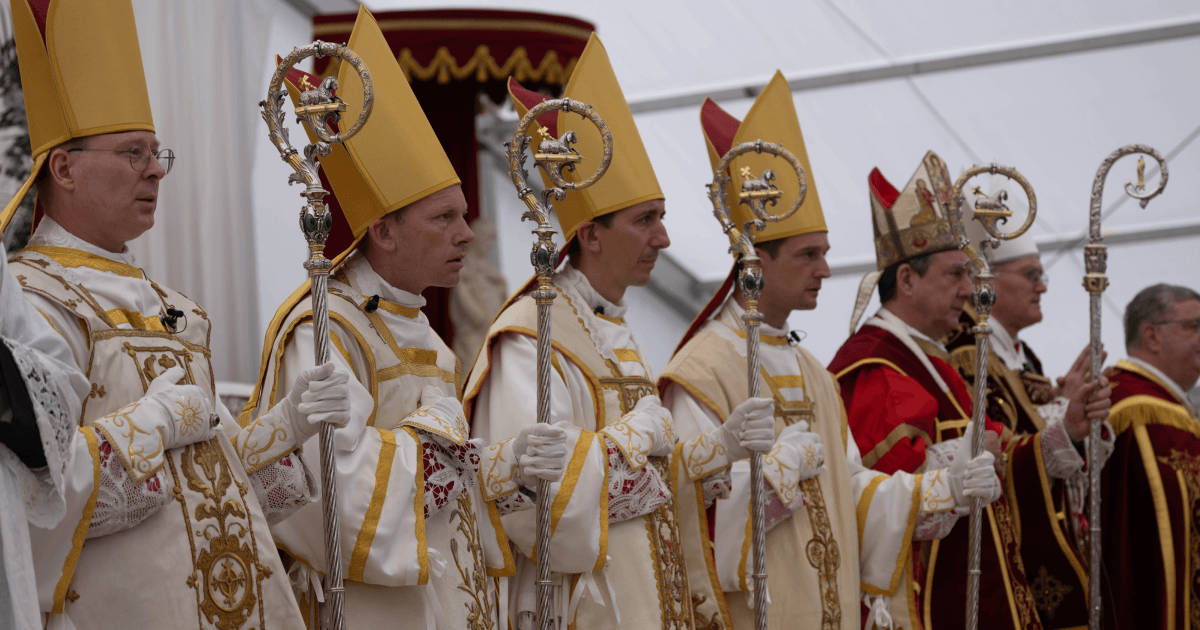
The Society of Saint Pius X has issued its formal response to the Holy See’s Decree of excommunication, thus initiating a process which results in the temporary suspension of the penalties of the Decree.

On 11 July, the Society sent a “preliminary recourse” to the Dicastery for the Doctrine of the Faith (DDF), marking its formal response to the 2 July Decree from the Dicastery regarding the penalty of automatic excommunication incurred by the six SSPX bishops. News of the appeal was published on the evening of 13 July. 
The Society’s recourse was issued in line with canons 1353 and 1734, which outline set guidelines for the timing of submitting a response to a punitive decree. By submitting the appeal, the SSPX has also thus initiated a temporary suspension of the penalties against them, as per canon 1353 which reads: “An appeal or a recourse against judgements of a court or against decrees which impose or declare any penalty has a suspensive effect.”

“By this recourse” the SSPX’s press statement read, “the Society intends to exercise the right which the Church recognises to any person who considers himself harmed by an administrative act to seek its correction, in a spirit of respect for ecclesiastical authority and of faithful attachment to justice, truth and the good of the Church.”

No further public details have been issued by the Society regarding the content of their appeal to the Holy See, nor has the DDF made any public comment by the time of publication. 

The DDF will now have thirty days in which to respond to the SSPX, after which time the Society may make a fresh appeal if no response has been forthcoming. 

However the very fact of the Society’s appeal is notable in that it implies an acceptance of the validity of the penalties incurred, since the SSPX is choosing to engage in the formal, canonical process to lift those same penalties. Notably, after the 1988 consecrations, the SSPX did not perform such a step, with Archbishop Marcel Lefebvre citing canons 1323 and 1324 as exculpating him from the exacting penalty of excommunication. 

Previous essays published on the Society’s official website following this month’s consecrations rejected the penalty of excommunication and the declaration of the Society being in schism. “The Fraternity is neither schismatic nor disobedient”, read a July 8 essay. “The excommunications pronounced against it are without effect, because where there is no crime, there can be no punishment.”

The Society has also argued in recent days that the DDF’s Decree against them was “neither theologically nor canonically sound”, the latter point of which has been supported by a number of canonists who have highlighted endemic errors in the Decree’s accompanying Note.

The 1988 excommunication was always contested by the Society, but following a fruitful dialogue between the SSPX and Rome, the Decree was lifted in early 2009. Welcoming the news in January 2009, Bishop Bernard Fellay – then Superior General – commented that: “Catholic Tradition is no longer excommunicated. Though it never was in itself, it was often excommunicated and cruelly so in day to day events.”

Part of the requirements in lifting the 1988 Decree was for the Society to commit to theological talks with Rome, talks which Bp. Fellay stated would “enable the Priestly Society of Saint Pius X to explain the fundamental doctrinal reasons which it believes to be at the origin of the present difficulties of the Church”.

Both the series of meetings in subsequent years, and those held briefly in early 2026, ended without a happy resolution, with the Society informing the DDF this year that: “We both know in advance that we cannot agree doctrinally, particularly regarding the fundamental orientations adopted since the Second Vatican Council.”

Tuesday’s response from the Society thus moves the dispute into a new phase and will be a public test of certain points of Canon Law. Canon 1323 §4 notes that an individual is exempt from a penalty when violating a law if he “acted under the compulsion of grave fear, even if only relative, or by reason of necessity or grave inconvenience, unless, however, the act is intrinsically evil or tends to be harmful to souls”.

At the centre of the debate over the SSPX’s consecrations is the question of a state of necessity, whether it exists and who can determine if it exists. The Society have publicly argued that the Church’s moral crisis points to a state of necessity which admits the possibility of episcopal consecrations: critics have argued that no state of necessity can involve contravening a direct command from the Pope not to consecrate bishops. 

The SSPX has also been clear that it considers the penalty of excommunication to be unjust and also invalid. Additionally the Society has attested that its sacraments remain valid, particularly those of Confession and Marriage – sacraments which the DDF had written would be invalid due to lack of authority, but which canonists argue would actually remain valid, due to the DDF’s procedural errors publishing the Decree and accompanying Note. 

But despite declaring the Vatican’s Decree of excommunication to be invalid, the SSPX is now following the legal procedures to challenge the penalty as if working on the presumption that the penalty is valid. It will precipitate a test of the DDF’s canonical accuracy, something which has been very much lacking under Cardinal Victor Manuel Fernández’s prefecture.

Michael Haynes is an English journalist in the Holy See Press Corps. He serves as Vatican Correspondent for the Catholic Herald, while readers can follow him at Per Mariam and on X/Twitter @MLJHaynes. 

Continue reading with a free account

Create a free account to read up to five articles each month
Create free account

You have # free articles remaining this month.

Subscribe to get unlimited access.
Sign up

subscribe to the catholic herald today

Our best content is exclusively available to our subscribers. Subscribe today and gain instant access to expert analysis, in-depth articles, and thought-provoking insights—anytime, anywhere. Don’t miss out on the conversations that matter most.
Subscribe