

One evening, when I was fully awake, I felt an extraordinary sensation, and I said to my wife as she entered the bedroom: “that little girl is here” –
“Who?” she asked.
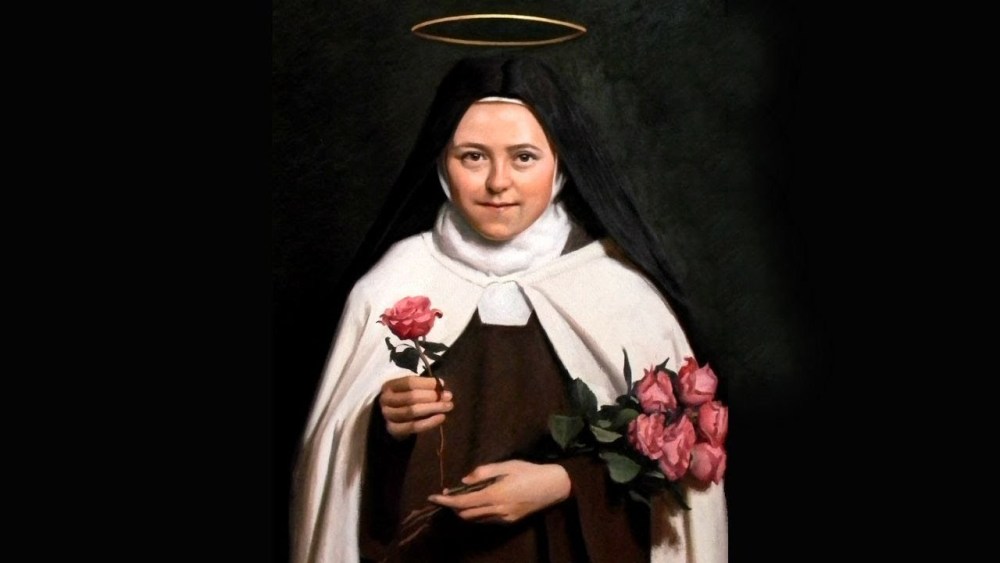
“The little Flower” I replied, “I’m sure she’s in this room.”
Nothing had prepared me for this sensation, or prompted an event such as this. This is how I felt in my soul: the exterior world seemed to vanish before my eyes, and it was inwardly, in my mind, that I saw the Servant of God. I pushed these thoughts aside, saying to myself: “You’re giving in to superstition and idolatry”; but my attempts at pushing her away were in vain; she came back and wrapped herself around my heart, refusing to leave me, and this is what I believe I heard: “This is how holy Catholics love Jesus, choose my little way.”
“Well,” I replied, “I shall try to follow it, if you will help me,” for I ardently desired to succeed.
Now we come to the crux of the story. Bewildered by this mystical experience, Grant sought solace in the writings of John Henry Newman, who will be canonised this Sunday. After reading the Apologia Pro Vita Sua, in which Newman described his own painful, hesitant path to Rome, Grant turned to his wife and said: “I now believe in things that I was never able to believe before.” After months of inner turmoil, Grant resigned his living as a pastor in 1911 and entered the Catholic Church under the name of Francis-Mary-Thérèse. Not long afterwards, he was called to testify at the so-called Ordinary Trial in Lisieux, a critical early stage in the canonisation process. There he explained why he regarded his conversion as a miracle. After he gave his testimony, Grant and his wife were invited to live in Alençon, the French nun’s birthplace. In the coming years, they would show pilgrims around the town, recounting the life of the nun who was proclaimed St Thérèse of the Child Jesus and the Holy Face in 1925. Grant’s story illustrates the way in which John Henry Newman has guided countless people to the Catholic faith since his death in 1890. As the articles in this issue explain, Newman’s life was not a smooth progression from triumph to triumph, but rather a humiliating journey from one failure to another. But despite this adversity – indeed, perhaps because of it – he became the man who will be proclaimed a saint in Rome this weekend. Newman could never have imagined his profound influence on those who came after him. His reflections on conscience inspired German students who courageously rebelled against the Third Reich. His hymn Lead, Kindly Light brought solace to Mahatma Gandhi in his darkest moments. His Essay in Aid of a Grammar of Assent helped to lead Oscar Wilde towards the Catholic faith. He has changed thousands of lives for the better and now, with his canonisation, he will transform countless more.