
January 1, 2026
January 1, 2026

The incoherence of the Charlotte diocese’s ban on altar rails

Min read
share

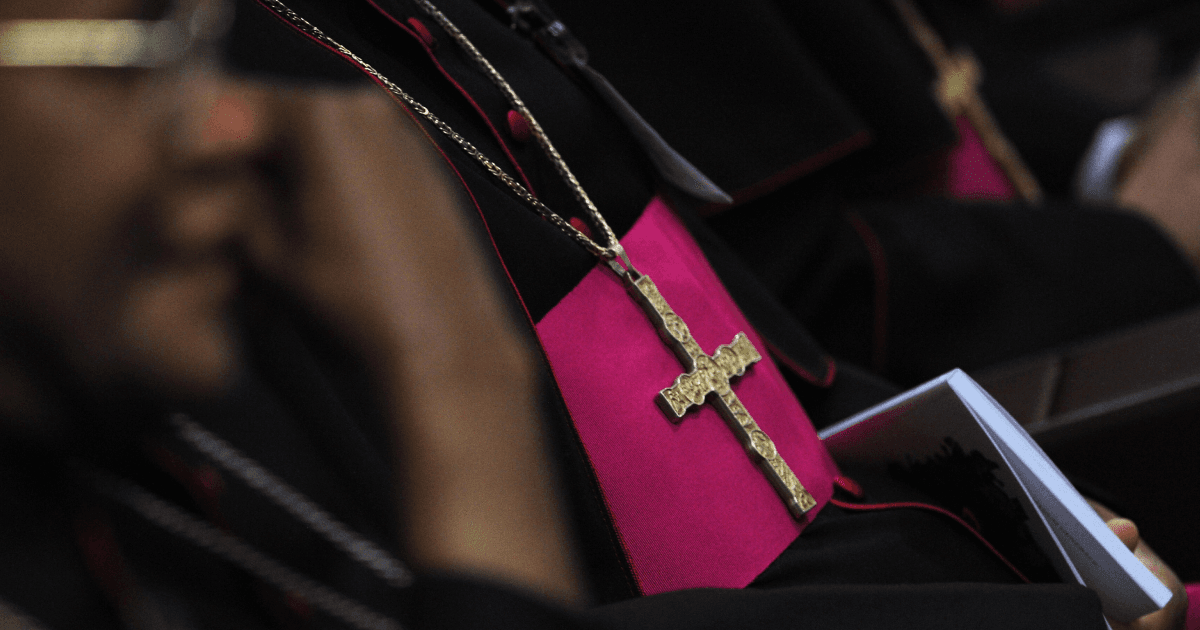
Bishop Michael Martin has issued new diocesan guidance banning the use of altar rails during Holy Communion in the Diocese of Charlotte.

In a pastoral letter dated 17 December, Bishop Michael Martin affirmed that the “normative posture” for receiving Holy Communion in the United States is standing, following a bow of the head as a sign of reverence. The letter instructs parishes that currently use altar rails, kneelers, or prie-dieus for the distribution of Communion to discontinue the practice, with any temporary or movable fixtures to be removed by 16 January 2026.
“The liturgy of the Church is the work of God and the work on behalf of God in the life of the Church,” the bishop wrote. “These norms for our diocese move us together towards the Church’s vision for fuller and more active participation of the faithful.” He added that receiving Holy Communion is “to be done as the members of the faithful go in procession, witnessing that the Church journeys forward and receives Holy Communion as a pilgrim people on their way”.

The guidance builds on diocesan liturgical norms first issued in 2005 and is presented as being in continuity with the General Instruction of the Roman Missal and directives of the United States Conference of Catholic Bishops. Bishop Martin said the letter followed months of consultation with the diocesan Office for Divine Worship and the presbyteral council.

While emphasising standing as the common posture, the bishop reiterated that no Catholic may be denied Holy Communion for choosing to kneel. At the same time, he encouraged the faithful to “prayerfully consider the blessing of communal witness that is realised when we share a common posture”.

In accompanying guidance, the diocesan liturgy director, Fr Noah Carter, noted that standing is “no less reverent or worthy a way to receive Our Lord”, adding that “in both ways, the communicant who is properly disposed to receive Holy Communion gains the same graces and gifts contained in the Eucharist, regardless of standing or kneeling”.

The pastoral letter also encourages wider use of Communion under both kinds, urging priests to offer the Precious Blood more frequently on Sundays and major solemnities, including Christmas, Easter, Pentecost, Corpus Christi, and Holy Thursday. Bishop Martin observed that a significant number of parishes had not resumed distribution of the chalice after the Covid-19 pandemic. “To foster unity, it is helpful that we all practise a similar way of distributing Holy Communion,” he wrote. The letter also calls for broader use of extraordinary ministers of Holy Communion, setting out eligibility and formation.

Controversy in the Diocese of Charlotte is not new. However, the universal ban on altar rails raises the question of whether Catholic worship still visibly teaches the doctrine it professes, above all belief in the Real Presence of Christ in the Eucharist.

It is for this reason that the effort by Bishop Martin to enforce uniformity, even when “well intentioned”, risks undermining the doctrinal clarity he seeks to protect. What appears administratively coherent may prove destructive. The wider pattern in the post-conciliar Church has, in practice, flattened reverence and weakened Eucharistic faith.

This can be seen in Bishop Martin’s emphasis on unity of practice, alignment, and fuller participation by the laity. On paper, the measures are presented as pastoral clarifications rather than innovations, yet a deeper historical tension is brewing in Charlotte.

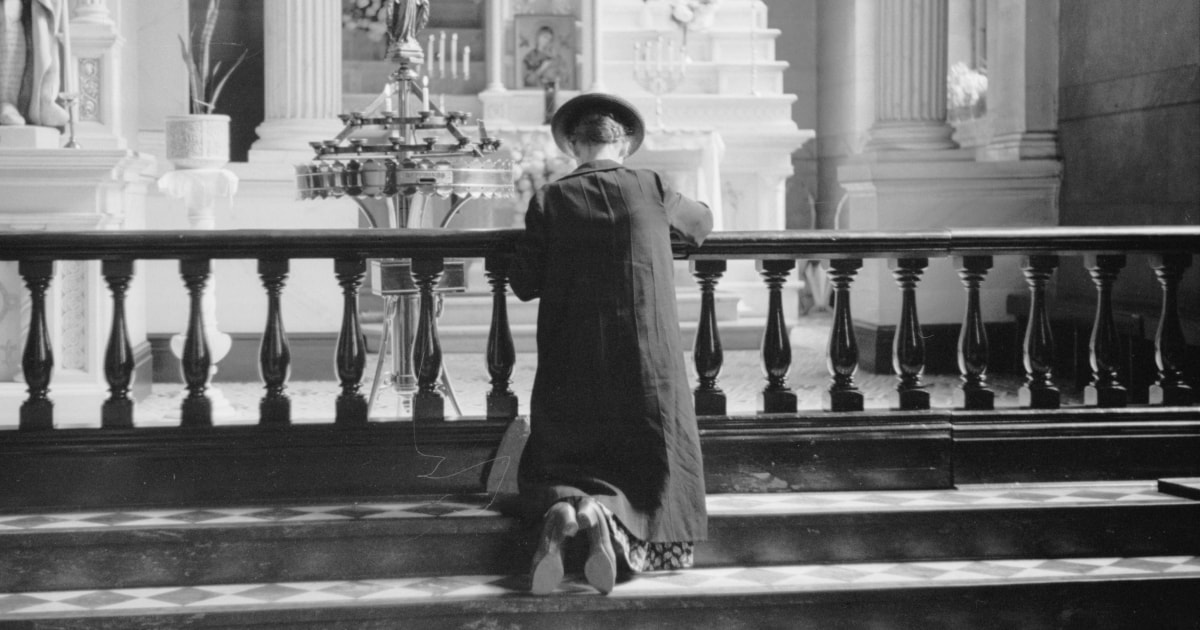
For most of the Church’s history, posture at Communion was inseparable from doctrine. Kneeling was not merely customary but expressive. It signalled adoration, unworthiness, and the reality that the communicant approached not a symbol but Christ himself. Altar rails, whatever their architectural origins, reinforced a theology of approach shaped by this belief.

This is why debates about posture cannot be dismissed as aesthetic nostalgia. They also touch on what the Council of Trent sought to safeguard when it defined Eucharistic doctrine in response to Protestant denial. Trent affirmed that the whole Christ is received under either species through the doctrine of concomitance and insisted that the Church possesses authority over sacramental discipline in order to protect reverence and belief. Communion under one kind was retained for the laity not because the chalice lacked value, but because the full sacrament was already present and because discipline served doctrine.

The post-conciliar period introduced a different emphasis. The Second Vatican Council called for “full, conscious and active participation” of the faithful, a phrase now so overused that it has lost much of its meaning. Within that framework, standing reception, Communion in the hand, and more frequent distribution under both species came to be associated with maturity, engagement, and communal identity. Over time, these associations hardened into expectations.

Crucially, however, Communion in the hand was never established as a new universal norm. In 1969, Pope Paul VI, through the instruction Memoriale Domini, reaffirmed that reception on the tongue remained the normative practice of the Latin Church. Permission for Communion in the hand was granted only by indult, following petitions from individual bishops’ conferences and under strict conditions designed to prevent a loss of reverence. The United States received this permission in the late 1970s, but the universal norm was never displaced.

This distinction matters because Bishop Martin’s directive, while not directly mentioning Communion on the tongue or prohibiting kneeling, removes the physical and visual cues that make kneeling reception practicable and intelligible. By eliminating altar rails, kneelers, and other physical structures that historically ordered the faithful’s approach to the sacrament, the norms weaken the visible link between bodily posture and belief in transubstantiation. Kneeling is not an optional devotional flourish, but a physical confession of faith.

In ordinary parish life, standing for Communion overwhelmingly correlates with reception in the hand. Kneeling to receive in the hand is rare, not because it is forbidden, but because it contradicts the embodied logic that has developed since the reforms. The result is that standing becomes not a mere posture, but a theological signal, one increasingly detached from adoration.

The irony is that efforts to impose unity can erode belief. Eucharistic faith in the West has already suffered significant decline, with surveys consistently showing confusion or disbelief regarding transubstantiation. Practices that mute adoration and blur distinction risk accelerating a trend the Church can ill afford. Reforms that prioritise efficiency and uniformity over visible reverence risk hollowing out the very faith they seek to organise.

Bishop Michael Martin has issued new diocesan guidance banning the use of altar rails during Holy Communion in the Diocese of Charlotte.

In a pastoral letter dated 17 December, Bishop Michael Martin affirmed that the “normative posture” for receiving Holy Communion in the United States is standing, following a bow of the head as a sign of reverence. The letter instructs parishes that currently use altar rails, kneelers, or prie-dieus for the distribution of Communion to discontinue the practice, with any temporary or movable fixtures to be removed by 16 January 2026.
“The liturgy of the Church is the work of God and the work on behalf of God in the life of the Church,” the bishop wrote. “These norms for our diocese move us together towards the Church’s vision for fuller and more active participation of the faithful.” He added that receiving Holy Communion is “to be done as the members of the faithful go in procession, witnessing that the Church journeys forward and receives Holy Communion as a pilgrim people on their way”.

The guidance builds on diocesan liturgical norms first issued in 2005 and is presented as being in continuity with the General Instruction of the Roman Missal and directives of the United States Conference of Catholic Bishops. Bishop Martin said the letter followed months of consultation with the diocesan Office for Divine Worship and the presbyteral council.

While emphasising standing as the common posture, the bishop reiterated that no Catholic may be denied Holy Communion for choosing to kneel. At the same time, he encouraged the faithful to “prayerfully consider the blessing of communal witness that is realised when we share a common posture”.

In accompanying guidance, the diocesan liturgy director, Fr Noah Carter, noted that standing is “no less reverent or worthy a way to receive Our Lord”, adding that “in both ways, the communicant who is properly disposed to receive Holy Communion gains the same graces and gifts contained in the Eucharist, regardless of standing or kneeling”.

The pastoral letter also encourages wider use of Communion under both kinds, urging priests to offer the Precious Blood more frequently on Sundays and major solemnities, including Christmas, Easter, Pentecost, Corpus Christi, and Holy Thursday. Bishop Martin observed that a significant number of parishes had not resumed distribution of the chalice after the Covid-19 pandemic. “To foster unity, it is helpful that we all practise a similar way of distributing Holy Communion,” he wrote. The letter also calls for broader use of extraordinary ministers of Holy Communion, setting out eligibility and formation.

Controversy in the Diocese of Charlotte is not new. However, the universal ban on altar rails raises the question of whether Catholic worship still visibly teaches the doctrine it professes, above all belief in the Real Presence of Christ in the Eucharist.

It is for this reason that the effort by Bishop Martin to enforce uniformity, even when “well intentioned”, risks undermining the doctrinal clarity he seeks to protect. What appears administratively coherent may prove destructive. The wider pattern in the post-conciliar Church has, in practice, flattened reverence and weakened Eucharistic faith.

This can be seen in Bishop Martin’s emphasis on unity of practice, alignment, and fuller participation by the laity. On paper, the measures are presented as pastoral clarifications rather than innovations, yet a deeper historical tension is brewing in Charlotte.

For most of the Church’s history, posture at Communion was inseparable from doctrine. Kneeling was not merely customary but expressive. It signalled adoration, unworthiness, and the reality that the communicant approached not a symbol but Christ himself. Altar rails, whatever their architectural origins, reinforced a theology of approach shaped by this belief.

This is why debates about posture cannot be dismissed as aesthetic nostalgia. They also touch on what the Council of Trent sought to safeguard when it defined Eucharistic doctrine in response to Protestant denial. Trent affirmed that the whole Christ is received under either species through the doctrine of concomitance and insisted that the Church possesses authority over sacramental discipline in order to protect reverence and belief. Communion under one kind was retained for the laity not because the chalice lacked value, but because the full sacrament was already present and because discipline served doctrine.

The post-conciliar period introduced a different emphasis. The Second Vatican Council called for “full, conscious and active participation” of the faithful, a phrase now so overused that it has lost much of its meaning. Within that framework, standing reception, Communion in the hand, and more frequent distribution under both species came to be associated with maturity, engagement, and communal identity. Over time, these associations hardened into expectations.

Crucially, however, Communion in the hand was never established as a new universal norm. In 1969, Pope Paul VI, through the instruction Memoriale Domini, reaffirmed that reception on the tongue remained the normative practice of the Latin Church. Permission for Communion in the hand was granted only by indult, following petitions from individual bishops’ conferences and under strict conditions designed to prevent a loss of reverence. The United States received this permission in the late 1970s, but the universal norm was never displaced.

This distinction matters because Bishop Martin’s directive, while not directly mentioning Communion on the tongue or prohibiting kneeling, removes the physical and visual cues that make kneeling reception practicable and intelligible. By eliminating altar rails, kneelers, and other physical structures that historically ordered the faithful’s approach to the sacrament, the norms weaken the visible link between bodily posture and belief in transubstantiation. Kneeling is not an optional devotional flourish, but a physical confession of faith.

In ordinary parish life, standing for Communion overwhelmingly correlates with reception in the hand. Kneeling to receive in the hand is rare, not because it is forbidden, but because it contradicts the embodied logic that has developed since the reforms. The result is that standing becomes not a mere posture, but a theological signal, one increasingly detached from adoration.

The irony is that efforts to impose unity can erode belief. Eucharistic faith in the West has already suffered significant decline, with surveys consistently showing confusion or disbelief regarding transubstantiation. Practices that mute adoration and blur distinction risk accelerating a trend the Church can ill afford. Reforms that prioritise efficiency and uniformity over visible reverence risk hollowing out the very faith they seek to organise.

share

subscribe to the catholic herald today

Our best content is exclusively available to our subscribers. Subscribe today and gain instant access to expert analysis, in-depth articles, and thought-provoking insights—anytime, anywhere. Don’t miss out on the conversations that matter most.
Subscribe