

April 21, 2026

The just war tradition is a warning, not a licence

G E M Lippiatt
More
Related
Min read
share

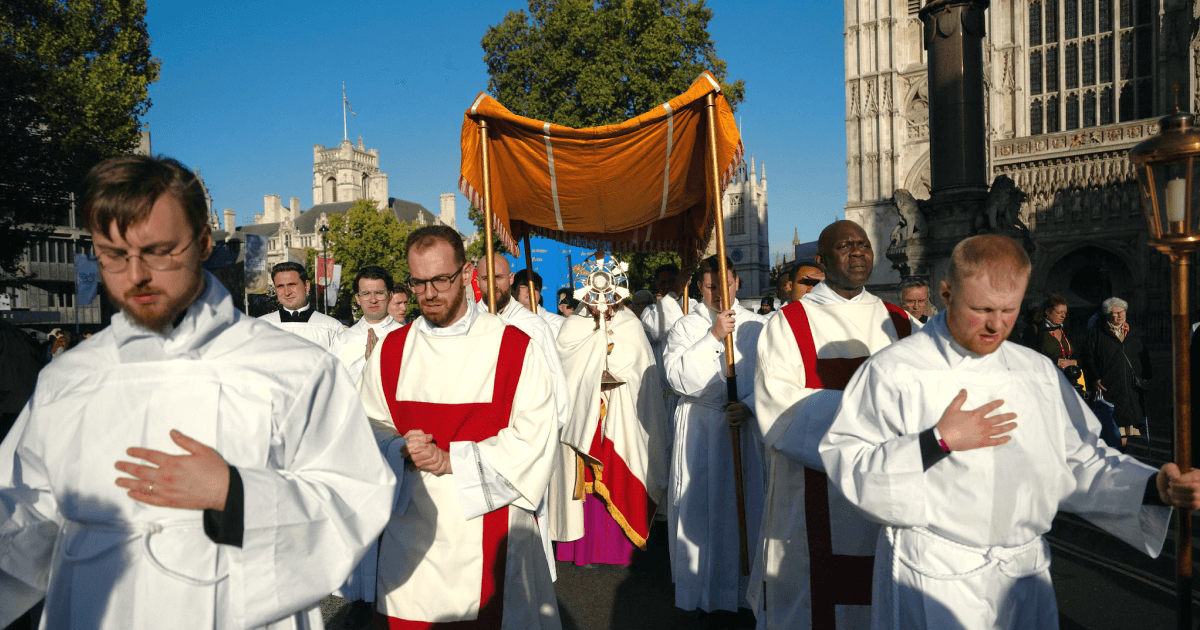
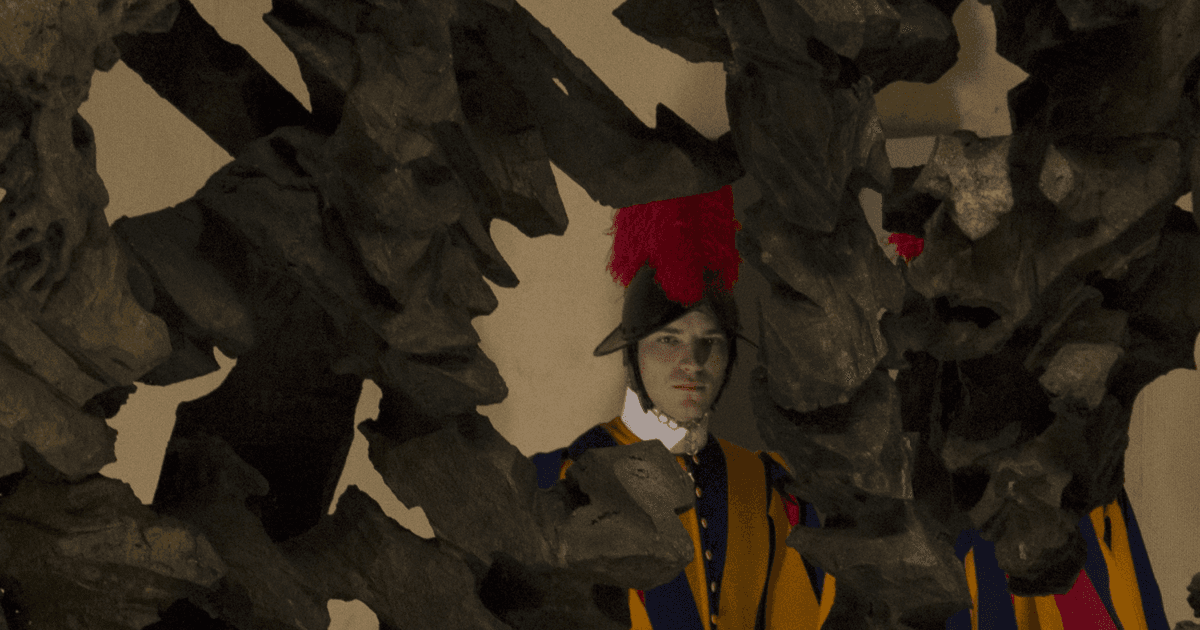
‘The Pope! How many divisions has he?’, asked Stalin – apocryphally – at the Potsdam Conference in 1945, in response to potential Vatican objections to communist control of post-war Poland. Though there have been periods in history when papal armies and navies went to battle, Leo XIV surely now rejoices that the answer to Stalin’s rhetorical question is ‘none’. After all, despite the military might of the Soviet Union, the papacy is still here, while Bolshevism is not. The Holy See has outlasted many empires with which it has had a complicated relationship: Roman (East and West), German, French. Indeed, during the 11th-century controversy over ecclesiastical liberty, Leo’s predecessor Gregory VII revelled in the contrast between the moral authority of the Church and the material power of the imperial state – an authority which brought his opponent, Emperor Henry IV, to his knees in the snow before Canossa, seeking absolution from the pope.

So when Leo insists on his vocation to ‘[speak] out loudly the message of the Gospel’ in urging President Trump and others to ‘end wars and promote peace and reconciliation’, he is obviously speaking a very different language from that of the American Secretary of War, Pete Hegseth, who prays that ‘every round [may] find its mark against the enemies of righteousness and our great nation’ in the war against Iran, and that American forces might visit ‘overwhelming violence of action against those who deserve no mercy’. In response, Leo warned the faithful that Christ ‘does not listen to the prayers of those who wage war, but rejects them’ and ‘is never on the side of those who once wielded the sword and today drop bombs’. The Catholic vice-president then suggested that the Pope ought to confine his comments to morality, as though the justice of war were not a moral matter. The following day he even advised the Holy Father to exercise caution when speaking about theology. What, then, is the Pope allowed to speak about, according to JD Vance?

Vance also appealed, rather vaguely, to the ‘thousand-year tradition of just-war theory’. As popularly understood, this ‘theory’ is a set of principles or criteria for how to recognise and prosecute war within the bounds of Christian teaching – not unlike the ‘rules of engagement’ so despised by Hegseth. First articulated by St Augustine in the 5th century, they represent an attempt to reconcile the irenic nature of Christianity with the reality of the Christianised state, which relies on violence or the threat of violence if only for defence or to maintain order. Wars must be waged by a legitimate authority, in pursuit of a just cause, with a correct intention and disposition, and for the ultimate establishment of a better peace. These tenets, more or less, have formed the basis for systematic discussions about the morality of war since the 13th century.

Indeed, the Church has not only tolerated war in the past, but has even instigated it. After Henry’s repentance at Canossa failed to resolve the conflict between papacy and empire, Gregory VII ultimately invited the Norman lords of southern Italy to drive the imperialists from Rome in 1084; the Normans’ violent sack of the city made it impossible for the pope to remain there, and he died in exile the following year. Gregory’s successor but one, Urban II, initiated the most famous example of Church-sponsored violence: the crusades, a phenomenon which holds a bizarre fascination for Hegseth, given that he is a Reformed Protestant.

The crusades present a particular hermeneutical challenge for the modern Catholic anti-war tradition, epitomised by every pope of the bloody 20th century. As papal interventions shift from the condemnation of specific conflicts by Benedict XV through John Paul II and Benedict XVI to more general denunciations by Francis and Leo, it is an increasingly awkward fact that medieval popes such as Urban II, Innocent III and others not only sanctioned violence, but used the authority of the Petrine keys, granted to them by Christ, to attach it to spiritual privileges. To fulfil the crusading vow, whether to liberate Jerusalem or suppress heresy in Europe, was to receive plenary remission of the temporal penalty for sin – penance in this life and purgatory in the next.

But while the crusaders did liberate eastern Christians from the abusive rule of the Seljuk Turks, the chauvinistic imposition of a Latin hierarchy on the Greek and Syriac natives, along with the notorious sack and capture of Constantinople on the Fourth Crusade in 1204, did more to alienate the Eastern and Western Churches than any theological dispute. Moreover, every campaign of the Cross was accompanied by wanton violence exercised against Jews, prisoners, women and children.

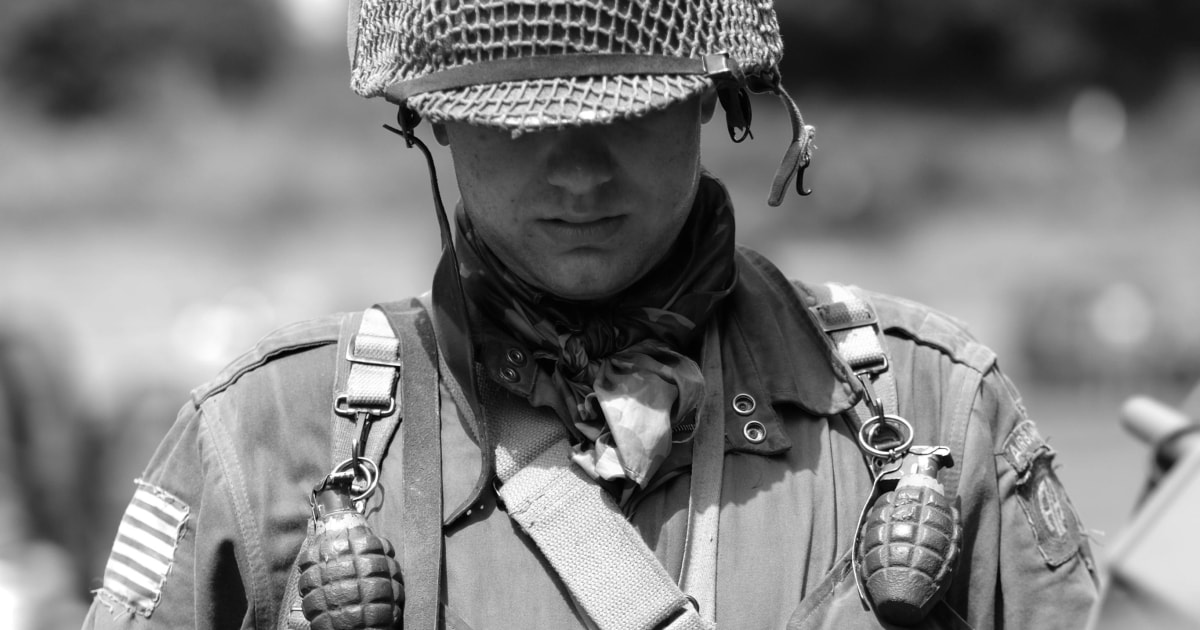
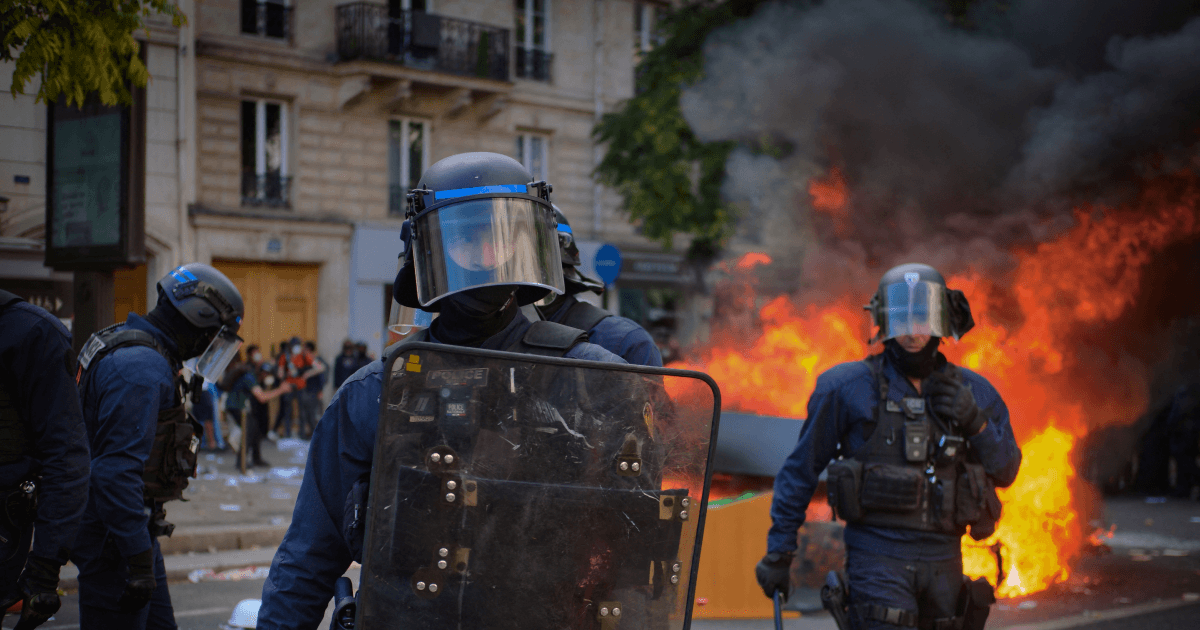
Such ‘collateral damage’ is, of course, not exceptional to the crusades. The repeated American strike on a school near an Islamic Revolutonary Guard Corps base in Minab on the first day of the war, which killed 150 civilians (most of them girls), is testimony to the enduring and universal mark left by armies on the innocent. Pope Leo has expressed his wish that aerial bombardment had been banned following the Second World War: even that archetypal ‘good war’ cannot be judged wholly just according to the ‘theory’, due to the Allies’ use of indiscriminate strategic bombing on civilian centres in both Germany and Japan. Nuclear weapons, as popes since Pius XII have recognised, exacerbate this problem exponentially. The modern ubiquity of drone warfare, moreover, introduces an inherent disproportion in the administration of violence: the remote dealer of death, seated in a chair in an office in Florida, risks neither life nor limb, only peril to psyche and soul.

Is it not time, as a number of Christian thinkers such as Stanley Hauerwas or Edward Hadas have argued, to dispense with the idea of ‘just war’? Pope Francis even went so far as to proclaim that no such thing exists. Countries rarely, after all, shape their foreign policy with reference to the criteria of ‘just war’; more often they use those criteria to justify their own aims and conduct, just as do their enemies: the Russo-Ukrainian war is a perfect example. On the other hand, as Augustine observed, the ‘desire to dominate’ is a persistent consequence of the Fall: the violent you will always have with you. Through the Incarnation, Christ permeates all of human experience, including politics and society, and thus the arbitrary will of the strong will always require the Christian defence of the weak.

Perhaps the problem lies in our attempt to fit the concept of the ‘just war’ into a theory, which then lends its aid to the legitimisation of conflict. Augustine never treats the subject in this way: any ‘theory’ is the construction of later thinkers rationalising his thought across his works. His way of thinking about war was never intended as a means for nation states to interrogate – much less to defend – the particular violence they inflict on other nation states. Augustine had no concept of the nation state, nor did any of those medieval thinkers who referred to the justice of violence in the Middle Ages. The intention of the considerations laid down by Augustine and others, at least before the late 13th century, was to facilitate not national propaganda, but the examination of conscience. Justice is a virtue, injustice a vice. Those participating or summoned to participate in wars should ‘with fear and trembling work out [their] salvation’ (Phil. ii. 12); those princes who led unjust wars could be constrained by spiritual penalties such as excommunication or – as in the early medieval Peace of God movements – the common military action of their neighbours, bound by oaths to keep the peace as a sort of local United Nations.

What does this mean for the spiritual blessing of the crusades, or indeed the problem of contemporary conflict? For the former, it means that the crusading indulgence was not, in fact, a magical ‘get-out-of-Hell-free card’. Though this point was admittedly often skirted by crusade preachers, responsibility for justice remained with the crusader. As the historian Jonathan Riley-Smith has shown, crusading could, in theory, be an act of love, oriented towards the restraint of the evildoer, for example in the protection of fellow Christians in the East from the violence of the Turks. But that did not mean that the campaigns or actions of the crusaders were automatically sanctioned: the warrior must squeeze his own camel through the eye of a needle. For Augustine, ‘the real evils of war are love of violence, revengeful cruelty, fierce and implacable enmity, wild resistance, and the lust for power’ (Contra Faustum, xxii. 74). Urban II or Innocent III have answered to God for the way in which they used His keys while on earth; every crusader has answered for the way in which he pursued that indulgence. As an amelioration of purgatory, indulgences depend on the sacrament of Confession, through which we are saved from Hell, and sin remains sin.  It may be that very few crusaders ever achieved the promised indulgence due to their compromises of intention and action while on campaign. Aside from St Louis, almost no crusaders have been canonised, and none have been recognised by the Church as martyrs.

For today, to understand the meaning of ‘just war’ properly requires a rejection of the label as a seal of approval for certain military actions, almost always those we want to undertake in any case. It must be not the sanction, but the constant critique of political violence. A just war does not mean God is on our side: rather, its near impossibility, like that of the crusading indulgence, means that we should approach the use of force with the greatest trepidation. When modern princes and their courtiers call for no quarter to be given to the enemy or threaten that ‘a whole civilisation will die tonight’, they are clearly not engaged in justice. This is why the just war tradition, rather than the nebulous ‘theory’, remains essential to Christian political engagement: it is a crucial part of how we are to live in the world – grappling with the reality of fallen and violent human nature – but not of it. That, as the Holy Father says, is the message of the Gospel.

G E M Lippiatt is a senior lecturer in medieval history at the University of Exeter and a former US Army officer.

Continue reading with a free account

Create a free account to read up to five articles each month
Create free account

You have # free articles remaining this month.

Subscribe to get unlimited access.
Sign up

subscribe to the catholic herald today

Our best content is exclusively available to our subscribers. Subscribe today and gain instant access to expert analysis, in-depth articles, and thought-provoking insights—anytime, anywhere. Don’t miss out on the conversations that matter most.
Subscribe