
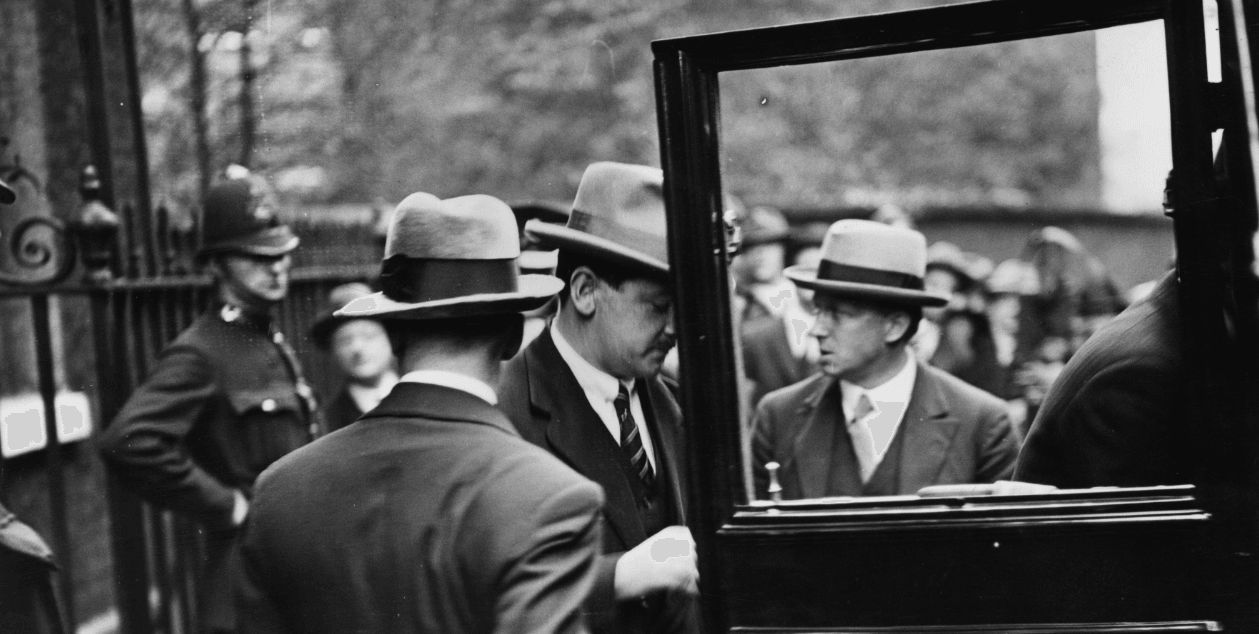
In the late autumn of 1921, Michael Collins, Arthur Griffith and their team of four others travelled to London to engage in talks with the British government about what we might now call a kind of “Irexit” – Ireland withdrawing from the United Kingdom. It followed a bitter Anglo-Irish war and a gradual realisation by both sides that politics would have to replace fighting. The “treaty talks” – as they came to be known – were tough. Lloyd George, Winston Churchill and Lord Birkenhead represented the might of the British Empire, facing across the table a small group of Irish rebels with no experience whatsoever of government. The negotiating authority, the power and the control were heavily weighted on the side of London, and Michael Collins was sometimes in despair about the terms offered: a more limited form of independence than the Irish hoped for, with Westminster still in control of the Atlantic ports and aspects of foreign affairs, insisting on an oath of allegiance to the Crown, and acceptance of the partition of Ireland. Collins knew he was “signing his own death warrant” by putting his name to the Anglo-Irish Treaty, but he put a brave face on it. Back in Ireland he told the people that this wasn’t what was sought, but it was “the freedom to achieve freedom”. Little by little, Ireland would be able to assert her own sovereignty. As he predicted, he was killed in the subsequent civil war, but his description was prescient: the treaty would indeed turn out to be “the freedom to achieve freedom”. Almost a century later, we could say that Theresa May is treading a similar path, and some of what she says is not dissimilar from Collins’s thinking. Her deal with the EU is not the full Brexit that the majority voted for: it is a compromise that allows the country to move forward. Today, it is the EU that is powerful, and the United Kingdom is, as Ireland once was, in the position of a supplicant nation. But as Collins knew, sometimes you have to take what you can get, and work with it. We must hope that every Member of Parliament examines his and her conscience before the meaningful vote next Tuesday. And perhaps considers too, the case of the Anglo-Irish Treaty of 1921.
2:30 PM
The leader who signed his own death warrant
in the late autumn of 1921, michael collins, arthur griffith and their team of four others travelled to london to engage in talks with the b...
Mary Kenny
4 min read



Already a subscriber? Sign in
5freearticles every month
Continue reading with a free account. No card needed.
- Five free articles every thirty days, on any device you sign in on
- The Catholic Herald newsletter, every morning
- Subscribe whenever you like for everything: every article and the magazine

subscribe to the catholic herald today
Our best content is exclusively available to our subscribers. Subscribe today and gain instant access to expert analysis, in-depth articles, and thought-provoking insights—anytime, anywhere. Don’t miss out on the conversations that matter most.
Subscribe