January 15, 2026
January 15, 2026

The liturgical limbo of Traditionis Custodes

Min read
share

Growing up, I remember wanting to slate Dante Alighieri for suggesting I was going to the outer circle of Hell because of my surname. However, as many would know, my surname does not derive from the limbus of medieval theology but from the Himalayan foothills of Gurkha lineage, and bears no relation whatsoever to Hell or any of its subsidiary layers. Any resemblance between a Nepali ethnonym and a Latin theological term is purely accidental.

That coincidence aside, limbus is a word worth lingering over. In the Church’s debated view, limbus puerorum named a condition neither punitive nor beatific, a borderland of suspension rather than decision. Put simply, it referred to the permanent state or place in the afterlife for souls who die in infancy, too young to have committed personal sins but not freed from original sin through baptism. It was not dogma, but it was widely believed because it instinctively refrained from closure where certainty was unavailable. Limbo was less a place than a posture, a way of living with unresolved tension without doing violence to truth or mercy.

In this situation, it is not hard to notice that the Traditional Latin Mass now occupies a remarkably similar position. Under Pope Leo XIV, neither condemned outright nor confidently affirmed, it exists in a carefully managed state of limbo, permitted yet discouraged, legal yet uneasy. Like Limbo, it is spoken of cautiously, not because the underlying question has been resolved, but because it has been administratively set aside.

It is clear that the Church has entered a new phase of managing disagreement by biding time rather than reaching settlement. The Church is not moving decisively in either direction. Instead, the Tridentine Rite inhabits a carefully maintained state of limbo. Interestingly, the Church’s historical view of Limbo functioned very differently from its present handling of the Traditional Latin Mass. Limbo was never a declaration of censure but a disciplined restraint, a refusal to speak definitively until the final curtain was drawn by Pope Benedict XVI.

Something similar is now unfolding in the Church’s approach to the Traditional Latin Mass. The 2021 motu proprio Traditionis Custodes was widely understood as a decisive attempt to curtail the spread of the Tridentine Rite, particularly where it had become associated with ideological opposition to the Second Vatican Council. From Rome’s perspective, unity required regulation, and regulation required enforcement. Yet what has emerged since is not uniform restriction but a patchwork of permissions, exceptions, gestures, and quiet contradictions that suggest a more complex reality.

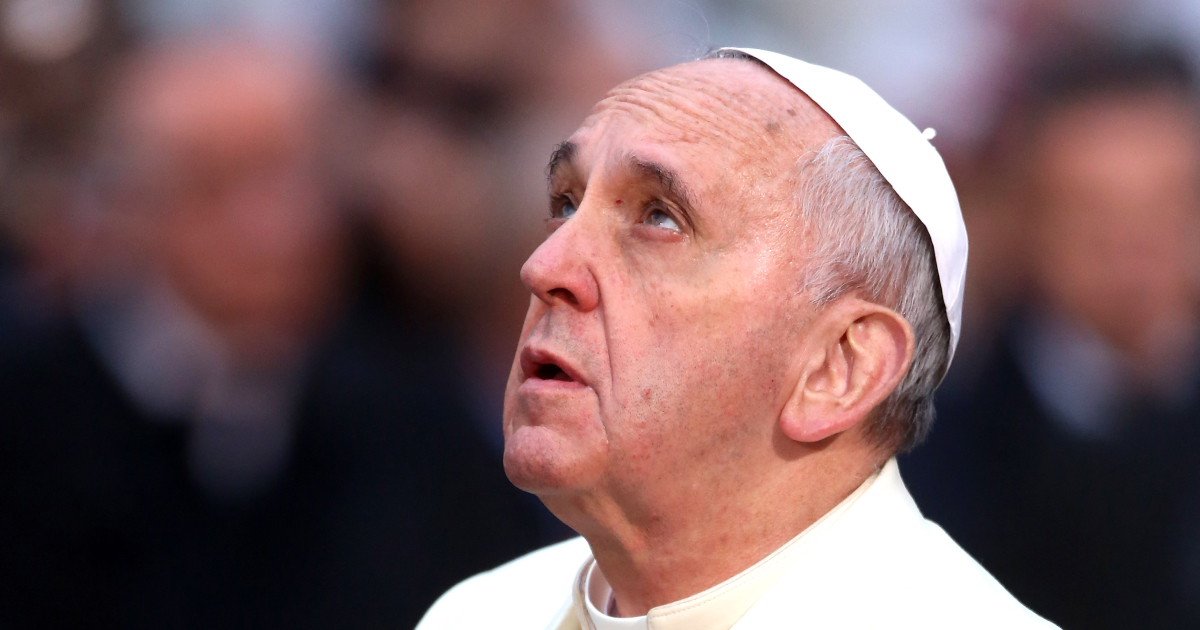
That view came earlier this year in a wide-ranging interview given by Pope Leo XIV to Crux. Asked directly about the liturgy and the tensions surrounding the so-called Latin Mass, in one of his first public interviews with the secular media, he acknowledged that the divide between the Tridentine Mass and the Novus Ordo remains “very complicated” and warned against the instrumentalisation of liturgy as a political tool on either side.

He further hinted at what was to come when he said: “I have not had the chance to really sit down with a group of people who are advocating for the Tridentine Rite. There’s an opportunity coming up soon, and I’m sure there will be occasions for that.”

What was showing was not just the Pope’s tone, but his diagnosis. His Holiness lamented a degree of polarisation, noting that some advocates of the Tridentine Rite no longer wish to listen or engage. His response did not announce a policy shift. Instead, it described a Church caught between legitimate longing and ideological hardening, uncertain how to move forward without deepening division.

Events in Rome since then have only reinforced that sense of deliberate ambiguity. In August, it was revealed that Cardinal Burke had met Pope Leo XIV. While details were not disclosed at the time, it later emerged that His Eminence had raised the question of the Latin Mass. In October, Cardinal Raymond Burke celebrated a Solemn Traditional Latin Mass in St Peter’s Basilica with the explicit permission of Pope Leo XIV. This suggested not a repeal of restrictions, but a willingness at the highest level to acknowledge the continued legitimacy of the old rite within the heart of the Church.

Nor did the signals stop there. Pope Leo’s meeting with Bishop Rifan, the Apostolic Administrator of Saint John Vianney, the only fully regularised bishop ordained and consecrated in the old rite, whose mission is explicitly dedicated to the Tridentine Mass, was quietly noted in Rome.

Further light was shed on these developments by Monsignor Enda Murphy, who sought to clarify reports emerging from the plenary meeting of the Catholic Bishops’ Conference of England and Wales suggesting that dispensations for the Traditional Latin Mass would now be routinely granted where bishops request them. Murphy explained that, in a private meeting between the bishops and Archbishop Miguel Maury Buendía, the nuncio made clear that Pope Leo XIV has no intention of abrogating Traditionis Custodes, but would permit diocesan ordinaries who apply to the Dicastery for Divine Worship and the Discipline of the Sacraments to grant a two-year, renewable exemption for celebrations according to the 1962 Roman Missal.

Yet this clarification has hardly settled the question. As The Pillar reported, Leo was expected to encourage Cardinal Arthur Roche to act generously in granting such requests. The contrast with the Francis pontificate is unavoidable. Under the same legal framework, similar applications were frequently refused. The prospect that dispensations might now be routinely renewed highlighted an inconsistency not only in policy but in principle. The result is a system that neither fully enforces restriction nor openly revises it, reinforcing the sense that the Traditional Latin Mass has been placed in a provisional holding pattern, a new kind of ecclesial limbo.

Beyond Rome, similar patterns are emerging. Auxiliary Bishop Robert Reed of Boston recently celebrated a Traditional Latin Mass at the SEEK Conference in Columbus, Ohio, with the assistance of the Priestly Fraternity of St Peter. The conference drew thousands of young Catholics. Meanwhile, in Corsica, Cardinal François-Xavier Bustillo administered the sacrament of Confirmation according to the Roman Rite at the Cathedral of Saint Mary in Bastia, in the presence of clergy from the FSSP. While not formally violating Traditionis Custodes, the act was widely seen as defying it.

Taken together, these developments reveal a Church living in liturgical limbo. The law remains on the books, but its application is uneven. The rhetoric of restriction persists, but practice tells a more nuanced story. For now, the Traditional Latin Mass waits, neither condemned nor embraced, inhabiting a position that reveals as much about the Church’s uncertainty as about her hope.

Growing up, I remember wanting to slate Dante Alighieri for suggesting I was going to the outer circle of Hell because of my surname. However, as many would know, my surname does not derive from the limbus of medieval theology but from the Himalayan foothills of Gurkha lineage, and bears no relation whatsoever to Hell or any of its subsidiary layers. Any resemblance between a Nepali ethnonym and a Latin theological term is purely accidental.

That coincidence aside, limbus is a word worth lingering over. In the Church’s debated view, limbus puerorum named a condition neither punitive nor beatific, a borderland of suspension rather than decision. Put simply, it referred to the permanent state or place in the afterlife for souls who die in infancy, too young to have committed personal sins but not freed from original sin through baptism. It was not dogma, but it was widely believed because it instinctively refrained from closure where certainty was unavailable. Limbo was less a place than a posture, a way of living with unresolved tension without doing violence to truth or mercy.

In this situation, it is not hard to notice that the Traditional Latin Mass now occupies a remarkably similar position. Under Pope Leo XIV, neither condemned outright nor confidently affirmed, it exists in a carefully managed state of limbo, permitted yet discouraged, legal yet uneasy. Like Limbo, it is spoken of cautiously, not because the underlying question has been resolved, but because it has been administratively set aside.

It is clear that the Church has entered a new phase of managing disagreement by biding time rather than reaching settlement. The Church is not moving decisively in either direction. Instead, the Tridentine Rite inhabits a carefully maintained state of limbo. Interestingly, the Church’s historical view of Limbo functioned very differently from its present handling of the Traditional Latin Mass. Limbo was never a declaration of censure but a disciplined restraint, a refusal to speak definitively until the final curtain was drawn by Pope Benedict XVI.

Something similar is now unfolding in the Church’s approach to the Traditional Latin Mass. The 2021 motu proprio Traditionis Custodes was widely understood as a decisive attempt to curtail the spread of the Tridentine Rite, particularly where it had become associated with ideological opposition to the Second Vatican Council. From Rome’s perspective, unity required regulation, and regulation required enforcement. Yet what has emerged since is not uniform restriction but a patchwork of permissions, exceptions, gestures, and quiet contradictions that suggest a more complex reality.

That view came earlier this year in a wide-ranging interview given by Pope Leo XIV to Crux. Asked directly about the liturgy and the tensions surrounding the so-called Latin Mass, in one of his first public interviews with the secular media, he acknowledged that the divide between the Tridentine Mass and the Novus Ordo remains “very complicated” and warned against the instrumentalisation of liturgy as a political tool on either side.

He further hinted at what was to come when he said: “I have not had the chance to really sit down with a group of people who are advocating for the Tridentine Rite. There’s an opportunity coming up soon, and I’m sure there will be occasions for that.”

What was showing was not just the Pope’s tone, but his diagnosis. His Holiness lamented a degree of polarisation, noting that some advocates of the Tridentine Rite no longer wish to listen or engage. His response did not announce a policy shift. Instead, it described a Church caught between legitimate longing and ideological hardening, uncertain how to move forward without deepening division.

Events in Rome since then have only reinforced that sense of deliberate ambiguity. In August, it was revealed that Cardinal Burke had met Pope Leo XIV. While details were not disclosed at the time, it later emerged that His Eminence had raised the question of the Latin Mass. In October, Cardinal Raymond Burke celebrated a Solemn Traditional Latin Mass in St Peter’s Basilica with the explicit permission of Pope Leo XIV. This suggested not a repeal of restrictions, but a willingness at the highest level to acknowledge the continued legitimacy of the old rite within the heart of the Church.

Nor did the signals stop there. Pope Leo’s meeting with Bishop Rifan, the Apostolic Administrator of Saint John Vianney, the only fully regularised bishop ordained and consecrated in the old rite, whose mission is explicitly dedicated to the Tridentine Mass, was quietly noted in Rome.

Further light was shed on these developments by Monsignor Enda Murphy, who sought to clarify reports emerging from the plenary meeting of the Catholic Bishops’ Conference of England and Wales suggesting that dispensations for the Traditional Latin Mass would now be routinely granted where bishops request them. Murphy explained that, in a private meeting between the bishops and Archbishop Miguel Maury Buendía, the nuncio made clear that Pope Leo XIV has no intention of abrogating Traditionis Custodes, but would permit diocesan ordinaries who apply to the Dicastery for Divine Worship and the Discipline of the Sacraments to grant a two-year, renewable exemption for celebrations according to the 1962 Roman Missal.

Yet this clarification has hardly settled the question. As The Pillar reported, Leo was expected to encourage Cardinal Arthur Roche to act generously in granting such requests. The contrast with the Francis pontificate is unavoidable. Under the same legal framework, similar applications were frequently refused. The prospect that dispensations might now be routinely renewed highlighted an inconsistency not only in policy but in principle. The result is a system that neither fully enforces restriction nor openly revises it, reinforcing the sense that the Traditional Latin Mass has been placed in a provisional holding pattern, a new kind of ecclesial limbo.

Beyond Rome, similar patterns are emerging. Auxiliary Bishop Robert Reed of Boston recently celebrated a Traditional Latin Mass at the SEEK Conference in Columbus, Ohio, with the assistance of the Priestly Fraternity of St Peter. The conference drew thousands of young Catholics. Meanwhile, in Corsica, Cardinal François-Xavier Bustillo administered the sacrament of Confirmation according to the Roman Rite at the Cathedral of Saint Mary in Bastia, in the presence of clergy from the FSSP. While not formally violating Traditionis Custodes, the act was widely seen as defying it.

Taken together, these developments reveal a Church living in liturgical limbo. The law remains on the books, but its application is uneven. The rhetoric of restriction persists, but practice tells a more nuanced story. For now, the Traditional Latin Mass waits, neither condemned nor embraced, inhabiting a position that reveals as much about the Church’s uncertainty as about her hope.
share

subscribe to the catholic herald today

Our best content is exclusively available to our subscribers. Subscribe today and gain instant access to expert analysis, in-depth articles, and thought-provoking insights—anytime, anywhere. Don’t miss out on the conversations that matter most.
Subscribe