
August 26, 2026

The Pope is not a Communist

Fr Dwight Longenecker
More
Related
Min read
share

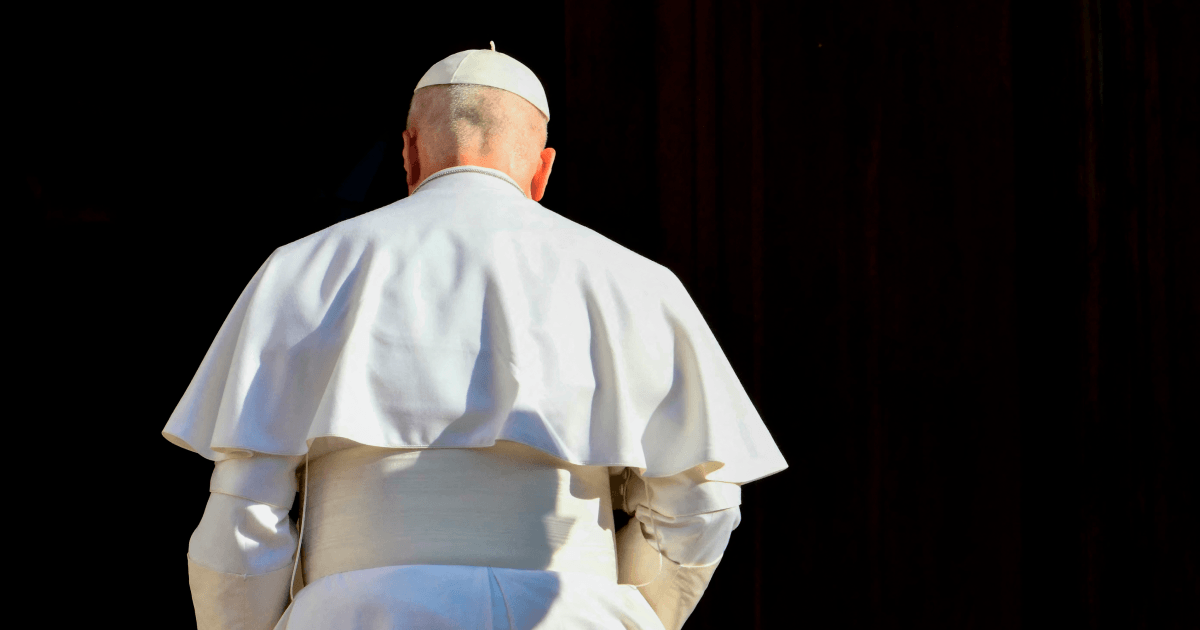
I’m sorry to admit that some of my fellow Americans, who also happen to be Catholics of a conservative hue, are known to make comments on social media in which their ignorance is matched by their vehemence. One such was the claim that Pope Leo – and Francis before him – is a communist, a charge that arose in reaction to the Holy Father’s call for generosity and gentleness towards immigrants. Indeed, whenever any Catholics call for the “preferential option for the poor” I shudder as MAGA Catholics hurl the “socialism/communism” curse words.

Of course, Catholic social teaching has consistently rejected communism as a political and economic option for society. The Church has judged Marxist communism incompatible with Christian anthropology, natural law and the Gospel. Pope Leo XIII’s Rerum Novarum (1891) already opposed socialist systems that would abolish private property, arguing that ownership is a natural right rooted in human dignity and labour, while also affirming the duties of owners towards the common good. Pope Pius XI sharpened the critique in Quadragesimo Anno (1931) and especially in Divini Redemptoris (1937), condemning atheistic communism for its materialist denial of God, its promotion of class warfare, its suppression of religion and the family and its reduction of the person to an economic unit. The notion that the Pope (and one who has enthused about Catholic social teaching) would espouse communism is absurd.

At the same time, people would not fall for socialist and communist ideologies if there were not some hint of truth in them, and if all truth is Catholic truth, we would expect to find some trace of communism in Catholicism – and indeed we do.

It is in the Acts of the Apostles that we find the first experiment in communism. Fresh from the fire of Pentecost, the first Christian community in Jerusalem is described as holding “all things in common”. Acts 2:44–45 states that the believers “were together and had all things in common; and they sold their possessions and goods and distributed them to all, as any had need”. Acts 4:32–35 elaborates: “The company of those who believed were of one heart and soul, and no one said that any of the things which he possessed was his own, but they had everything in common… There was not a needy person among them.”

The experiment did not last long, but down the ages various Christian groups were drawn to the ideal. In the fourth and fifth centuries the first monks – Pachomius in Egypt and Basil in the East – organised communities of shared labour, property and prayer, while Benedict in Italy and Patrick further west established monasteries where all was held in common.

In medieval times various movements such as the Franciscan Spirituals, the Brethren of the Common Life and the Beghards and Beguines lived out their vows of poverty through shared labour, egalitarian ideals and communal ownership of property.

After the Protestant Revolution idealistic Protestants attempted Christian communism. Anabaptist groups in Switzerland, Germany and Moravia practised community of goods, as did the Hutterites, who continue today along with their offshoot, the Bruderhof.

In the New World various sects – the Shakers, certain Pietist settlements, Amish and Mennonite groups – attempted their own simple Christian communism. One of the most famous was the Oneida Community founded in New York in 1848 by John Humphrey Noyes. Calling themselves “Christian Perfectionists”, the Oneida Community established various successful enterprises, but were perhaps best known for their practice of “complex marriage” – a kind of regulated free love – which took communal sharing to a new level.

Invariably communism crumbles under the weight of human frailty – envy, freeloading, leadership failures and the difficulty of sustaining motivation once initial fervour cools.

The one form of Christian communal living that has lasted across 15 centuries is Benedictine monasticism. Benedict’s monks do not take a vow of poverty like Franciscans; instead poverty is embraced as the monks follow Benedict’s command to renounce private ownership in favour of all property belonging to the monastery. On a monastic visit I once challenged a monk friend about the rule against private property. He explained cheerfully:

“Every week at the end of our chapter meeting we stand in a circle and remove our watch and hand it to the brother on our right. One week we might have a smart Rolex to use – the next week a cheap digital watch from Walmart.”

“What about the books you read?”

“They belong to the library. We are allowed the books we need for our particular study in our cells. That’s all.”

“And what about your cell? Isn’t that your own?”

“We are assigned new cells twice a year. Listen,” he said, “we don’t even have our own underwear. It all goes to the laundry, is folded and put in cubbyholes according to size and you pick up what you need once a week.”

My friend made the point very precisely that communism is a nitty-gritty ideal – right down to a man’s watch and underwear. No wonder most of the experiments don’t last very long.

While socialism and communism as political and economic systems will always fail, the ideal of communal life still echoes in the human heart. That the ideal has succeeded within monasticism, and continues even today, is a testimony to the heart of the matter: the monastery is not a political project imposed on society but a voluntary school of the Lord’s service. The communism is not an end in itself but a means to an end.

Because its primary end is the sanctification of the monks and the glory of God rather than the imposition of social and economic equality, it has proved resilient through barbarian invasions, feudal upheavals, Reformation conflicts, secularising revolutions and modern cultural change.

Fr Longenecker’s latest book, Bloodshed and Blessing, explores the connections between ancient blood sacrifice and the Catholic Mass. Read him on Substack and visit his website at dwightlongenecker.com.

Continue reading with a free account

Create a free account to read up to five articles each month
Create free account

You have # free articles remaining this month.

Subscribe to get unlimited access.
Sign up

subscribe to the catholic herald today

Our best content is exclusively available to our subscribers. Subscribe today and gain instant access to expert analysis, in-depth articles, and thought-provoking insights—anytime, anywhere. Don’t miss out on the conversations that matter most.
Subscribe