


February 11, 2026

The problem (and danger) of knowing absolutely everything

Horace Gates
More
Related
Min read
share

The esoteric fifteenth century philosopher Pico dell Miranda, was so confident as a polymath that he wrote a treatise called De omni re scibile: "Concerning every known thing". Fast forward and Pascal, who as inventor of a prototype for the modern computer was not lacking little grey cells, satirized this, and then Voltaire applied his mordant wit by adding to Pico's title et quibusdam alias ("and some other things").

Back in the tenth century like a flash in one of the bleakest times of the Church, Gilbert of Aurillac became the first French pope: and perhaps the most brilliant of pontiffs as well as one of the wisest if wisdom consists not just in knowing a lot of things, but also in knowing that there are a lot of things that one does not know. In his formative academic career he mastered the classical quadrivium of arithmetic, geometry, astronomy, and music which would be resources as he introduced to Christendom the decimal system of Hindu-Arabic numerals, an armillary sphere, the first mechanical clock, and an hydraulic musical
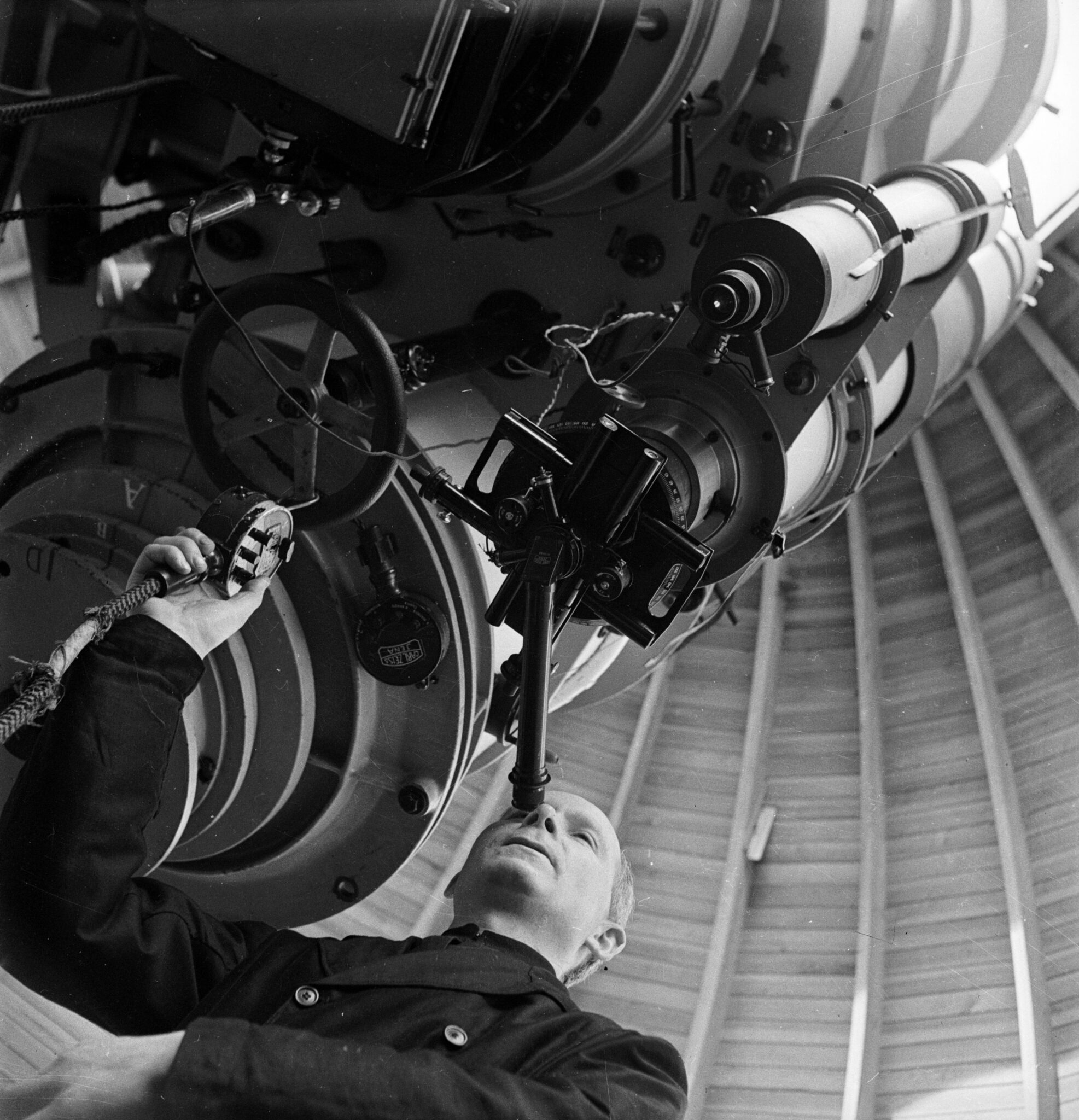
organ. The observatory for asteroidal and lunar occultation in Bukowiec, Poland is named for him.
In youth he realized that the quadrivium was inadequate for knowing what to do with so many things, and so he enrolled in the cathedral school at Reims to study the trivium of grammar, rhetoric, and logic: above all, logic, as taught by the master logician Garamnus. Soon enough as appointed head of the
cathedral school he became tutor to future princes including the son of the Holy Roman Emperor. He moved from Reims to become bishop of Ravenna and then bishop of Rome in the portentous year 999.

Those three R’s made some conspiratorial theorists anxious, rather like the Y2K sensationalists heading for the hills on the eve of 2000. At the turn of the new millennium, Sylvester offered Holy Mass in cautious vigil for a possible catastrophic end of the planet. When the world continued, he wisely dismissed the insistent crowds, but they invoked private revelations and hurled at Sylvester old calumnies of his jealous enemies, accusing him of wizardry and diabolic possession. While apokalyptein means to uncover what had been concealed, the apocalyptic doomsayers inverted logic to equate hysteria with science and theory with fact. For them, Sylvester was a shameless denier.

Pope Innocent III, reigning 1198 to 1216, had a less measured mind than Sylvester and did not hesitate to predict in the bull Quia major that the world would end 666 years after the death of Mohammed, which he fantastically dated to 666. The same pope declared Magna Carta null and void because it usurped his feudal rights over England. A predecessor, Innocent II, had a nearly apocalyptic horror of the relatively new crossbow as a weapon of mass destruction which he called a tool of Satan and harbinger of doom because it could pierce armour plate. In 1139 he had the Second Lateran Council ban its use among Christians, while a loophole permitted it against Muslims, presumably because King Roger II of Sicily had Islamic mercenaries.

This had little effect, and so for instance a revengeful youth named Pierre Basile killed Richard the Lionheart with a crossbow bolt in Limousin exactly sixty years later. The Second Lateran Council has little impact today, and crossbows are still legal in all the United States except for hunting in Oregon. In the United Kingdom they may be possessed by adults provided they are sober. On Christmas Day in 2021 a man broke into Windsor Castle armed with a crossbow and was later convicted of both treason and insanity, based on English common law and not papal decretals.

Invoking papal authority in matters irrelevant to its apostolic mandate is what Sylvester II would have acknowledged as an argumentum ad verecundiam. In our own time a prominent prelate has amalgamated modernism and Ultramontanism to claim a “special charism” he defines as a living and active gift, which is “at work in the person of the Holy Father.” Presumably it inspires popes to opine on phenomena not ordinarily accessible to clergymen, and to dignify controverted scientific theories as magisterial.

There is a cenotaph honoring Sylvester II in the Lateran basilica which, according to a superstition, sweats when there is a change in the papacy. Sylvester was probably wise enough to have perspired at any claim to such a vaunted charism. It would be as problematic now as the bull Vox in Rama in 1233 linking cats to
witchcraft, and the bull Inter caetera in 1493 dividing the New World by a meridian demarcation to regulate territorial rights and the practise of slavery.

Saint John Henry Newman explained in his Apologia that the papal magisterium is “not to enfeeble the freedom and vigour of human thought in religious speculation, but to resist and control its extravagance”.
That extravagance should be tamed by prudence even more delicately if it confuses physics and metaphysics, equates environmentalism with soteriology, and cloaks meteorological hypotheses with cultic dignity.

This, for example, is why Pope Pius XII humbly backed off when Fr Georges Lemaître told him that he should not cite his “First Atomic Moment” theory, now commonly known as the “Big Bang”, as evidence for the existence of a Creator. When the urge is to be eschatological even about things ecological, the appeal attributed to Reinhold Niebuhr applies, beseeching God for the serenity to accept the things that cannot be changed, the courage to change things that can be changed, and the wisdom to know the difference.

The esoteric fifteenth century philosopher Pico dell Miranda, was so confident as a polymath that he wrote a treatise called De omni re scibile: "Concerning every known thing". Fast forward and Pascal, who as inventor of a prototype for the modern computer was not lacking little grey cells, satirized this, and then Voltaire applied his mordant wit by adding to Pico's title et quibusdam alias ("and some other things").

Back in the tenth century like a flash in one of the bleakest times of the Church, Gilbert of Aurillac became the first French pope: and perhaps the most brilliant of pontiffs as well as one of the wisest if wisdom consists not just in knowing a lot of things, but also in knowing that there are a lot of things that one does not know. In his formative academic career he mastered the classical quadrivium of arithmetic, geometry, astronomy, and music which would be resources as he introduced to Christendom the decimal system of Hindu-Arabic numerals, an armillary sphere, the first mechanical clock, and an hydraulic musical
organ. The observatory for asteroidal and lunar occultation in Bukowiec, Poland is named for him.
In youth he realized that the quadrivium was inadequate for knowing what to do with so many things, and so he enrolled in the cathedral school at Reims to study the trivium of grammar, rhetoric, and logic: above all, logic, as taught by the master logician Garamnus. Soon enough as appointed head of the
cathedral school he became tutor to future princes including the son of the Holy Roman Emperor. He moved from Reims to become bishop of Ravenna and then bishop of Rome in the portentous year 999.

Those three R’s made some conspiratorial theorists anxious, rather like the Y2K sensationalists heading for the hills on the eve of 2000. At the turn of the new millennium, Sylvester offered Holy Mass in cautious vigil for a possible catastrophic end of the planet. When the world continued, he wisely dismissed the insistent crowds, but they invoked private revelations and hurled at Sylvester old calumnies of his jealous enemies, accusing him of wizardry and diabolic possession. While apokalyptein means to uncover what had been concealed, the apocalyptic doomsayers inverted logic to equate hysteria with science and theory with fact. For them, Sylvester was a shameless denier.

Pope Innocent III, reigning 1198 to 1216, had a less measured mind than Sylvester and did not hesitate to predict in the bull Quia major that the world would end 666 years after the death of Mohammed, which he fantastically dated to 666. The same pope declared Magna Carta null and void because it usurped his feudal rights over England. A predecessor, Innocent II, had a nearly apocalyptic horror of the relatively new crossbow as a weapon of mass destruction which he called a tool of Satan and harbinger of doom because it could pierce armour plate. In 1139 he had the Second Lateran Council ban its use among Christians, while a loophole permitted it against Muslims, presumably because King Roger II of Sicily had Islamic mercenaries.

This had little effect, and so for instance a revengeful youth named Pierre Basile killed Richard the Lionheart with a crossbow bolt in Limousin exactly sixty years later. The Second Lateran Council has little impact today, and crossbows are still legal in all the United States except for hunting in Oregon. In the United Kingdom they may be possessed by adults provided they are sober. On Christmas Day in 2021 a man broke into Windsor Castle armed with a crossbow and was later convicted of both treason and insanity, based on English common law and not papal decretals.

Invoking papal authority in matters irrelevant to its apostolic mandate is what Sylvester II would have acknowledged as an argumentum ad verecundiam. In our own time a prominent prelate has amalgamated modernism and Ultramontanism to claim a “special charism” he defines as a living and active gift, which is “at work in the person of the Holy Father.” Presumably it inspires popes to opine on phenomena not ordinarily accessible to clergymen, and to dignify controverted scientific theories as magisterial.

There is a cenotaph honoring Sylvester II in the Lateran basilica which, according to a superstition, sweats when there is a change in the papacy. Sylvester was probably wise enough to have perspired at any claim to such a vaunted charism. It would be as problematic now as the bull Vox in Rama in 1233 linking cats to
witchcraft, and the bull Inter caetera in 1493 dividing the New World by a meridian demarcation to regulate territorial rights and the practise of slavery.

Saint John Henry Newman explained in his Apologia that the papal magisterium is “not to enfeeble the freedom and vigour of human thought in religious speculation, but to resist and control its extravagance”.
That extravagance should be tamed by prudence even more delicately if it confuses physics and metaphysics, equates environmentalism with soteriology, and cloaks meteorological hypotheses with cultic dignity.

This, for example, is why Pope Pius XII humbly backed off when Fr Georges Lemaître told him that he should not cite his “First Atomic Moment” theory, now commonly known as the “Big Bang”, as evidence for the existence of a Creator. When the urge is to be eschatological even about things ecological, the appeal attributed to Reinhold Niebuhr applies, beseeching God for the serenity to accept the things that cannot be changed, the courage to change things that can be changed, and the wisdom to know the difference.

subscribe to
the catholic herald

Continue reading your article with a subscription.
Read 5 articles with our free plan.
Subscribe

subscribe to the catholic herald today

Our best content is exclusively available to our subscribers. Subscribe today and gain instant access to expert analysis, in-depth articles, and thought-provoking insights—anytime, anywhere. Don’t miss out on the conversations that matter most.
Subscribe