



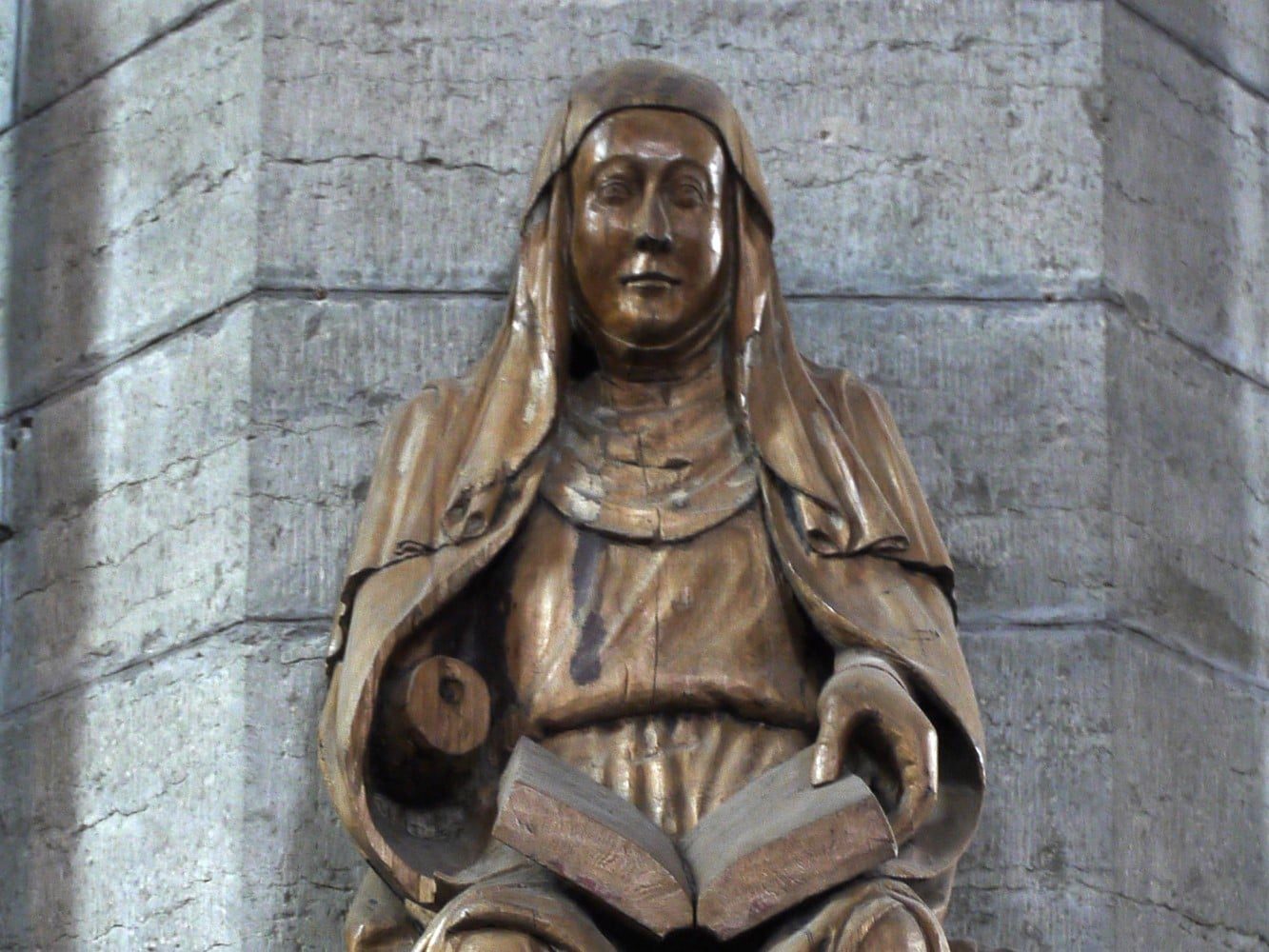
Christianity in Sweden has been both nourished and bedevilled by legend. The life of the country’s patron saint, King Eric the Holy (d 1160), is recounted in a single hagiographic text. The old Norse myths have also shaped the history of the faith. Although Christianity arrived in Sweden in the ninth century, pagans were still stoning Christians some 200 years later. Even in the 20th century, myths blighted the lives of the faithful. These were not tales of Odin, Loki and Thor, but sensational fables that smeared Catholicism in favour of the national Lutheran Church. In 1921, the country’s Apostolic Vicar petitioned the government to correct schoolbooks that painted Catholicism as a malign, superstitious cult. The response was a resounding no, accompanied by an accusation that this was typical Catholic censorship. From the arrival of the first missionary, Ansgar, in 829, Christianity has had a turbulent history in Sweden. After establishing a congregation of converts and foreign Christians, Ansgar secured permission to build a church in Birka and a promise that Christianity would be tolerated. However, when he visited his flock around 20 years later he found the community had all but collapsed. Later missionaries won more souls but they remained a beleaguered minority. Even Olof Skötkonung, Sweden’s first Christian king, limited his practice of Christianity to appease his pagan people. A chronicler claims that Olof’s plans to raze a pagan temple were thwarted when his subjects threatened rebellion should he seek to spread his religion. Yet, in the shadows of falsehood and persecution, Sweden has produced true champions of the faith. In 2014 the remains of Eric the Holy underwent thorough scientific analysis. The results confirmed the details of the legend of his crusades and martyrdom. Even before this verification, Eric’s story inspired Swedish Christians to bold action. When fire ravaged the cathedral at Old Uppsala in 1204, a new, larger church was commissioned in the modern-day city – a church built on the site of Eric’s martyrdom. As the new cathedral arose, another Swedish saint was growing up nearby. As an adult Bridget of Sweden would become a royal lady-in-waiting and a charitable patron of unwed mothers. But Bridget was not merely a 14th-century Lady Bountiful; her charity was fuelled by a profound spirituality. From the age of ten, Bridget had visions of Christ born and crucified. After the death of her husband she founded the Order of the Most Holy Saviour or the Bridgettines. By the Jubilee of 1350 Bridget was in Rome, calling for higher moral standards in the Church. By the 14th century, Swedes were not only Christian but playing a significant role in building up the faith across Europe. Even the young Martin Luther pored over Bridget’s Revelations. Yet this unknown friar would soon mock her visions and inspire the expulsion of her order from its homeland. In 1524, King Gustav I rejected the Catholic Church. Soon he would adopt the new Lutheran creed.
1:00 AM
The rise and fall of Swedish Catholicism
Jessica M Dalton

5 min read



Already a subscriber? Sign in
5freearticles every month
Continue reading with a free account. No card needed.
- Five free articles every thirty days, on any device you sign in on
- The Catholic Herald newsletter, every morning
- Subscribe whenever you like for everything: every article and the magazine
Related articles
 Newsroom
First parish named for Bl Fulton Sheen established in Illinois
Bishop Louis Tylka of Peoria announced the new Blessed Fulton Sheen Parish two days after Sheen became the first American-born bishop to be beatified
Christine Rousselle Newsroom
Injured priest tells Poles: ‘Do not blame Ukraine’ for convent attack
Corrie Douglas-Young Newsroom
Church leaders urge Drumcree dialogue: ‘Too much is at stake’
Corrie Douglas-Young Newsroom
Thousands of Irish children to join global Rosary campaign
Corrie Douglas-Young Newsroom
TikTok priest urges young people to stand with persecuted Christians
Nathalie Raffray
subscribe to the catholic herald today
Our best content is exclusively available to our subscribers. Subscribe today and gain instant access to expert analysis, in-depth articles, and thought-provoking insights—anytime, anywhere. Don’t miss out on the conversations that matter most.
Subscribe



