


February 12, 2026

The synod is all too respectable

Matthew Schmitz
More
Related
Min read
share

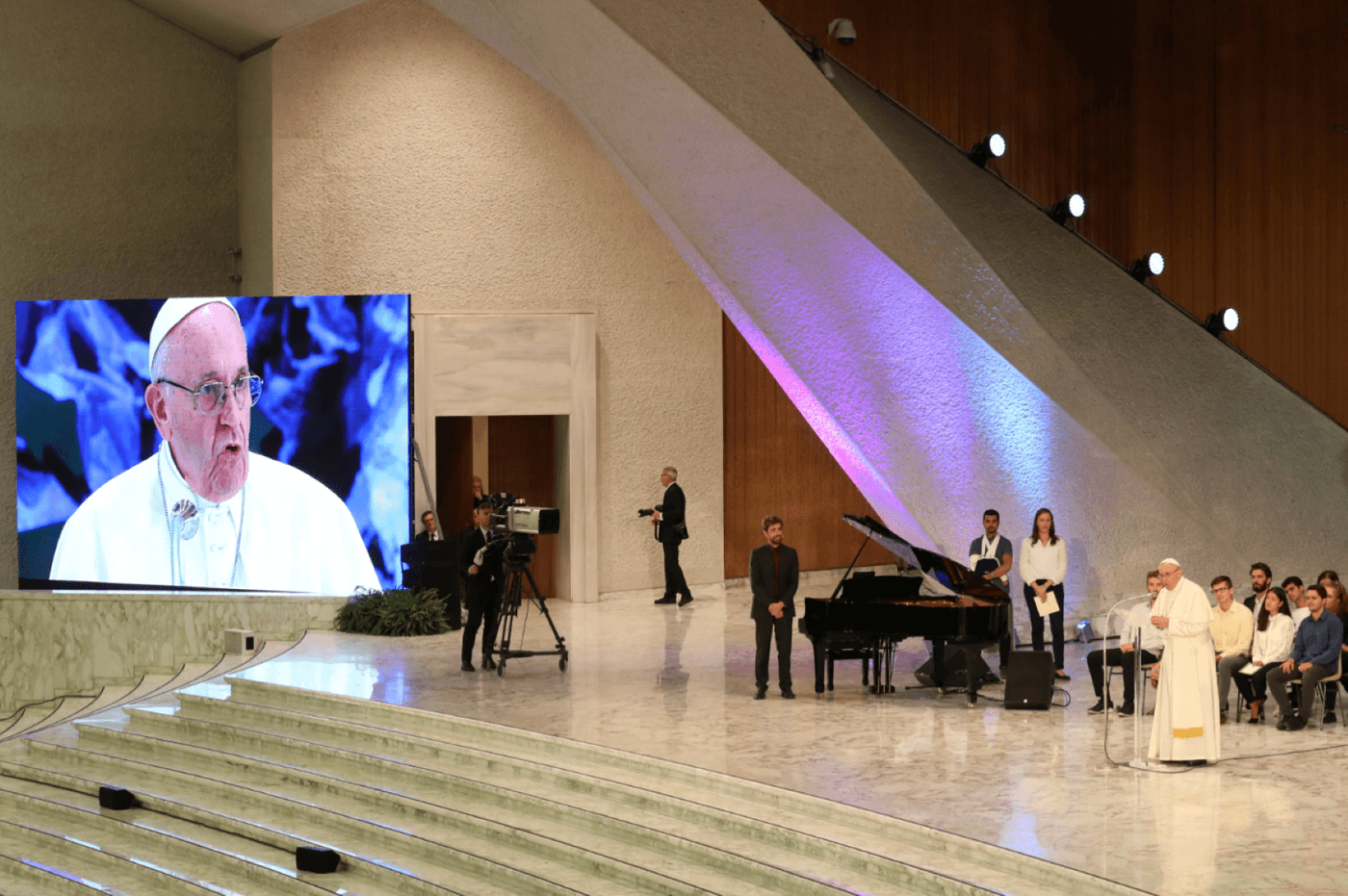
When Pope Francis was elected five years ago, he announced that he wanted to build a “poor Church for the poor”. At the Synod on Youth taking place this month in Rome, a different kind of Church is coming into being: one that caters to the bourgeoisie.

Journalists often suggest that the election of an Argentine pope has perforce put the Church in touch with the world’s poor. But this is misleading. For the first twenty-five years of Pope Francis’ life, Argentina had a higher per-capita GDP than Japan, Italy, and Austria. Poland, the home of St. John Paul II, is still a poorer country than Argentina. So is conservative Hungary.


The Synod on Youth is the latest battle in the Church’s long-running culture war – which is also a class war. On one side are the managerial and professional classes clustered in wealthy countries, especially Germany, the UK, and the U.S. On the other side are dissenters from the developed world, allied with Africa’s bishops.

In public controversies preceding the Synod, the two sides tangled over the Synod’s Instrumentum laboris (working paper). As its critics have pointed out, the Instrumentum scants references to Scripture and the Church’s tradition in favor of a sociological summation of the needs and experiences of today’s “young people.” It indulges in the Sixties-era illusion that young people have prophetic insight, and insists on their desire to be “listened to” by an institutional Church that sometimes seems out of touch. But out of touch with what? The Instrumentum seems to assume that all young people are bourgeois Westerners.

The young people of the Instrumentum want a Church that “listens”; they want to be able to speak of sexuality “without taboo”; they want to exercise discernment and not be bound by “rigid” codes. These are bourgeois desires. As the anthropologist Mary Douglas argued, the poor do not want to dispense with “rigid” codes; those codes distinguish their style of religious practice, which emphasizes obedience over discernment. When elites destroy these codes – as they did with Friday abstinence after the Second Vatican Council – they deprive the poor of their religious discipline, and the result is spiritual and even material disorder. When Francis characteristically polemicizes against rigidity and “fundamentalism,” he polemicizes against the poor.

By contrast, what Communists used to call “the bourgeois vice” has gained respectability during the Francis pontificate. One flashpoint in the Instrumentum controversies has been the use of the term “LGBT,” a small matter with high symbolic stakes. As Richard Florida has argued, endorsing LGBT rights is a way for countries and organisations to signal their openness to the bourgeois members of the “creative class.” These people may care very little about actual LGBT people, but they associate openness to LGBT identity with their own values of consumption, cosmopolitanism, and spontaneity. Pope Francis’ exhortation to “Make a mess!” is oddly reminiscent of “Break s--t” – Silicon Valley’s favourite phrase. Those with ample moral, social, and financial capital will thrive in this moral economy. But what will become of the poor?

Oscar Wilde once said that the Catholic Church was “for saints and sinners. For respectable people, the Anglican Church will do.” The Francis party seems to want the Catholic Church to resemble the Anglican in this sense. They suggest that the most forgivable sins are those of of the bourgeoisie – those done with planning, foresight, and an eye to respectability. As Archbishop Mark Coleridge put it at the last synod, “A second marriage that is enduring and stable and loving and where there are children who are cared for is not the same as a couple skulking off to a hotel room for a wicked weekend.”

Every time a bishop urges Catholics to speak with parrhesia of the importance of the new pastoral paradigm of discernment in dialogue and encounter with the concrete situations of the lay faithful whose well-formed consciences must be respected in light of the new historical reality of our increased understanding of human dignity, I want to chew off my hand. Progressive Catholicism has become so obsessed with avoiding offence that it now offers little more than a concatenation of clichés. Its jargon is far more incomprehensible than the Latin Mass, which at least communicates a sense of wonder and dread.

Happily, when the forces of blandness seek to remake the Church, they meet organized resistance. Characters as disparate as Cardinal Robert Sarah and Mariae Gloria, Princess of Thurn and Taxis can find something to hate in bourgeois Catholicism. Ultimately, I think theses people will be able to build a Church that is more capacious and welcoming, more tolerant of human variety, than the one that the organizers of the Synod on Youth are trying to sing into being.

Matthew Schmitz is senior editor at First Things and a Robert Novak journalism fellow

When Pope Francis was elected five years ago, he announced that he wanted to build a “poor Church for the poor”. At the Synod on Youth taking place this month in Rome, a different kind of Church is coming into being: one that caters to the bourgeoisie.

Journalists often suggest that the election of an Argentine pope has perforce put the Church in touch with the world’s poor. But this is misleading. For the first twenty-five years of Pope Francis’ life, Argentina had a higher per-capita GDP than Japan, Italy, and Austria. Poland, the home of St. John Paul II, is still a poorer country than Argentina. So is conservative Hungary.

The Synod on Youth is the latest battle in the Church’s long-running culture war – which is also a class war. On one side are the managerial and professional classes clustered in wealthy countries, especially Germany, the UK, and the U.S. On the other side are dissenters from the developed world, allied with Africa’s bishops.

In public controversies preceding the Synod, the two sides tangled over the Synod’s Instrumentum laboris (working paper). As its critics have pointed out, the Instrumentum scants references to Scripture and the Church’s tradition in favor of a sociological summation of the needs and experiences of today’s “young people.” It indulges in the Sixties-era illusion that young people have prophetic insight, and insists on their desire to be “listened to” by an institutional Church that sometimes seems out of touch. But out of touch with what? The Instrumentum seems to assume that all young people are bourgeois Westerners.

The young people of the Instrumentum want a Church that “listens”; they want to be able to speak of sexuality “without taboo”; they want to exercise discernment and not be bound by “rigid” codes. These are bourgeois desires. As the anthropologist Mary Douglas argued, the poor do not want to dispense with “rigid” codes; those codes distinguish their style of religious practice, which emphasizes obedience over discernment. When elites destroy these codes – as they did with Friday abstinence after the Second Vatican Council – they deprive the poor of their religious discipline, and the result is spiritual and even material disorder. When Francis characteristically polemicizes against rigidity and “fundamentalism,” he polemicizes against the poor.

By contrast, what Communists used to call “the bourgeois vice” has gained respectability during the Francis pontificate. One flashpoint in the Instrumentum controversies has been the use of the term “LGBT,” a small matter with high symbolic stakes. As Richard Florida has argued, endorsing LGBT rights is a way for countries and organisations to signal their openness to the bourgeois members of the “creative class.” These people may care very little about actual LGBT people, but they associate openness to LGBT identity with their own values of consumption, cosmopolitanism, and spontaneity. Pope Francis’ exhortation to “Make a mess!” is oddly reminiscent of “Break s--t” – Silicon Valley’s favourite phrase. Those with ample moral, social, and financial capital will thrive in this moral economy. But what will become of the poor?

Oscar Wilde once said that the Catholic Church was “for saints and sinners. For respectable people, the Anglican Church will do.” The Francis party seems to want the Catholic Church to resemble the Anglican in this sense. They suggest that the most forgivable sins are those of of the bourgeoisie – those done with planning, foresight, and an eye to respectability. As Archbishop Mark Coleridge put it at the last synod, “A second marriage that is enduring and stable and loving and where there are children who are cared for is not the same as a couple skulking off to a hotel room for a wicked weekend.”

Every time a bishop urges Catholics to speak with parrhesia of the importance of the new pastoral paradigm of discernment in dialogue and encounter with the concrete situations of the lay faithful whose well-formed consciences must be respected in light of the new historical reality of our increased understanding of human dignity, I want to chew off my hand. Progressive Catholicism has become so obsessed with avoiding offence that it now offers little more than a concatenation of clichés. Its jargon is far more incomprehensible than the Latin Mass, which at least communicates a sense of wonder and dread.

Happily, when the forces of blandness seek to remake the Church, they meet organized resistance. Characters as disparate as Cardinal Robert Sarah and Mariae Gloria, Princess of Thurn and Taxis can find something to hate in bourgeois Catholicism. Ultimately, I think theses people will be able to build a Church that is more capacious and welcoming, more tolerant of human variety, than the one that the organizers of the Synod on Youth are trying to sing into being.

Matthew Schmitz is senior editor at First Things and a Robert Novak journalism fellow

subscribe to
the catholic herald

Continue reading your article with a subscription.
Read 5 articles with our free plan.
Subscribe

subscribe to the catholic herald today

Our best content is exclusively available to our subscribers. Subscribe today and gain instant access to expert analysis, in-depth articles, and thought-provoking insights—anytime, anywhere. Don’t miss out on the conversations that matter most.
Subscribe