



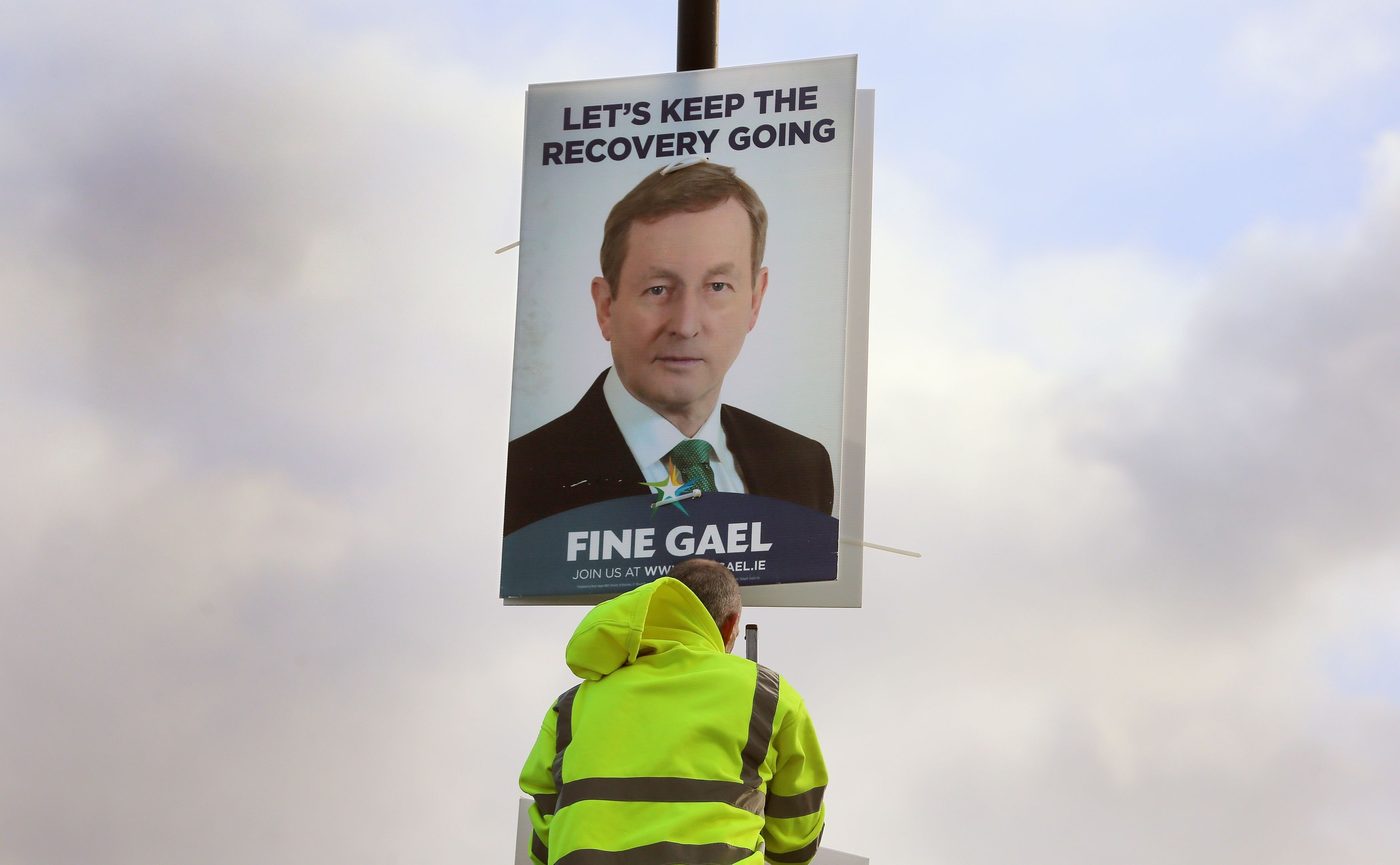
Ireland’s bishops have urged voters to press candidates on life issues before the country’s general election on Friday. In a statement, the four Irish archbishops said they “strongly oppose any weakening of the affirmation of the right to life of the unborn”. In 1983, Ireland introduced a constitutional ban on abortion and gave an equal right to life to the mother and the child.But, in 2013, the government introduced the country’s first abortion law, the Protection of Life During Pregnancy Act, which allows abortion where there is a risk to the life of the mother, including a risk of suicide. Last June, health minister Leo Varadkar reported that 26 abortions – including three based on the risk of suicide – were carried out in Irish hospitals in 2014. Some political parties and individual candidates are now pushing for a further liberalisation of the grounds for abortion. The Labour Party is campaigning on a ticket of repealing the Eighth Amendment, the 1983 ban on abortion, and has said it will insist on an abortion referendum as a prerequisite to re-entering a coalition with Fine Gael. The bishops’ statement was issued the day the Labour Party unveiled its plans for a referendum and the introduction of legislation similar to Britain’s 1967 Abortion Act. Archbishop Diarmuid Martin of Dublin told RTÉ’s Morning Ireland radio that the right to life should be an important issue for voters because it was about ensuring that “the interests of all children are respected and nobody’s life is considered less valuable than others”. “Let politicians have the courage also to say where they stand up on this issue.” He added: “You cannot pretend to be a Catholic and leave aside a very vital part of Catholic teaching.” The archbishops’ statement followed other statements from individual bishops. Bishop Kevin Doran of Elphin said he found it “very difficult to see how any Catholic could, in good conscience, vote for a candidate or a political party whose policy it is to legalise abortion”. Referring to arguments favouring abortion for children diagnosed with a fatal fetal abnormality, Archbishop Michael Neary of Tuam dismissed it as “simplistic” and “an outright attack on the unborn” and an “affront to the charter of human rights enshrined in Ireland’s basic law”. “If an unborn child has a life-limiting condition, it would be inhumane to withdraw the protection of the constitution to their right to life,” he said. Ireland is currently governed by a coalition of Fine Gael and the Labour Party. This coalition is hoping to be re-elected. If so Enda Kenny, the Taoiseach, would be the first Fine Gael leader to win a successive term since 1933. The Labour Party is only supported by six per cent of the electorate, according to an Ipsos MRBI poll earlier this week. Fine Gael is predicted to win 28 per cent of the vote, the same share as independent candidates, while Sinn Fein is polling at 15 per cent.
12:00 PM
Think pro-life, Ireland’s bishops urge voters
Staff writers

5 min read



Already a subscriber? Sign in
5freearticles every month
Continue reading with a free account. No card needed.
- Five free articles every thirty days, on any device you sign in on
- The Catholic Herald newsletter, every morning
- Subscribe whenever you like for everything: every article and the magazine
Related articles
 Newsroom
Church leaders urge Drumcree dialogue: ‘Too much is at stake’
The Catholic and Church of Ireland Archbishops of Armagh have urged a renewed commitment to peace and reconciliation amid the Drumcree stand-off
Corrie Douglas-Young Newsroom
Thousands of Irish children to join global Rosary campaign
Corrie Douglas-Young Newsroom
TikTok priest urges young people to stand with persecuted Christians
Nathalie Raffray Newsroom
Baby born at 25 weeks reunites with neonatologist two years after leaving hospital
The Catholic Herald Newsroom
Joe Biden honoured by Planned Parenthood after defending abortion rights
Christine Rousselle
subscribe to the catholic herald today
Our best content is exclusively available to our subscribers. Subscribe today and gain instant access to expert analysis, in-depth articles, and thought-provoking insights—anytime, anywhere. Don’t miss out on the conversations that matter most.
Subscribe



