


One third of French monasteries have closed since 2007, a new study has revealed, but no community celebrating the liturgy exclusively in Latin has closed.
In an interview with the publication La Vie, sociologist Isabelle Jonveaux of the University of Fribourg previewed the results of her wide-ranging study of French monastic closures which revealed that communities that celebrate the liturgy exclusively in Latin have withstood the trend of closure.
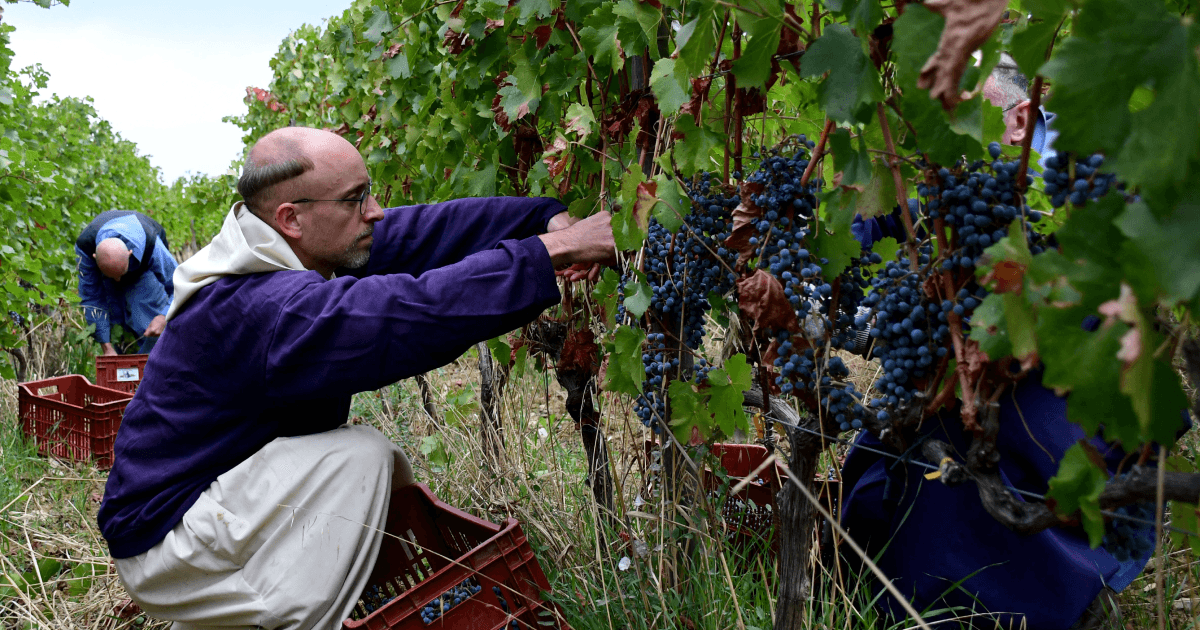
Jonveaux focused her research exclusively on Catholic monasteries with contemplative orders in France from 2007 to 2026, finding that about 30 per cent had closed. Women’s monasteries, of which there are more in France, were more affected at 32 per cent compared to 21 per cent of men’s monasteries.
She said: “Women's religious life is more in crisis, because it is less adapted to the profile of young women today than in the past. In the past, religious life was a path of emancipation for women, allowing them to form or escape patriarchal authority.
“Today, in Europe, women who enter the monastery are often in their thirties, they have studied and are autonomous. As a result, the great distance from the world or what is perceived as a form of infantilisation in some structures no longer works for them.”
The Carmelite and Poor Clares monasteries were particularly affected, with about 40 per cent closing since 2007, and the Trappists seeing 36.4 per cent close. Dominican convents fared much better, at only 8 per cent closing, as did Benedictine monasteries and convents at 18 per cent.
However, it was noted that traditional communities have fared much better. Of the communities whose liturgical service was French in 2007, 34 per cent closed, dropping to 19 per cent for those who used French and Latin. The research found that no communities closed for those whose liturgy was celebrated exclusively in Latin.
“This shows that communities that claim a certain tradition now attract a certain audience,” she said.
The figures match global trends in the Church. The Priestly Fraternity of St Peter (FSSP), a traditional society of priests, recorded 162 seminarians last year. Its strong vocations mean that its 387 priests were of an average age of 39 years. The Institute of Christ the King Sovereign Priest (ICKSP), another traditional society, has had to expand its formation capacity by developing a pre-seminary programme in several apostolates throughout the US.
Jonveaux noted that there has been “a real acceleration” in the closure of French monasteries since the end of the 2010s.
She said: “Until 2015, we generally had fewer than four closures per year. The average figure is now around 10 per year. France has a somewhat special situation because it had a lot of monasteries (a level comparable to Italy).”
Jonveaux stated that the central issue is that there are far too many monasteries in relation to the number of people interested. She noted there has been, for the last 20 years, a public fascination with monasteries and their “exotic and alternative side: you can see an ecological life, close to nature, offering healthy and traditional products.
“Influencers participate in this strong romanticisation of monastic life, which attracts a non-believing audience in search of alternative spirituality. Nevertheless, this interest does not translate into real vocations. Those who enter the monastery do so for the quality of spiritual and fraternal life, which the communities that have become ageing now struggle to offer.”