It is now five years since Pope Francis issued the motu proprio Traditionis Custodes and declared that the Novus Ordo is the “unique expression of the lex orandi of the Roman Rite”. In the ensuing years, the Church has been plunged into a new era of chaos and strife, with traditional communities subjected to apparently arbitrary restrictions and large numbers of Catholics attesting that they feel like second-class members of the Church.
Francis attested that his restrictions were necessary based on the results of a survey carried out by the Dicastery for the Doctrine of the Faith, but revelations of the responses from the global episcopate demonstrated that no such restrictions were called for or even deemed helpful. In fact, quite the opposite.
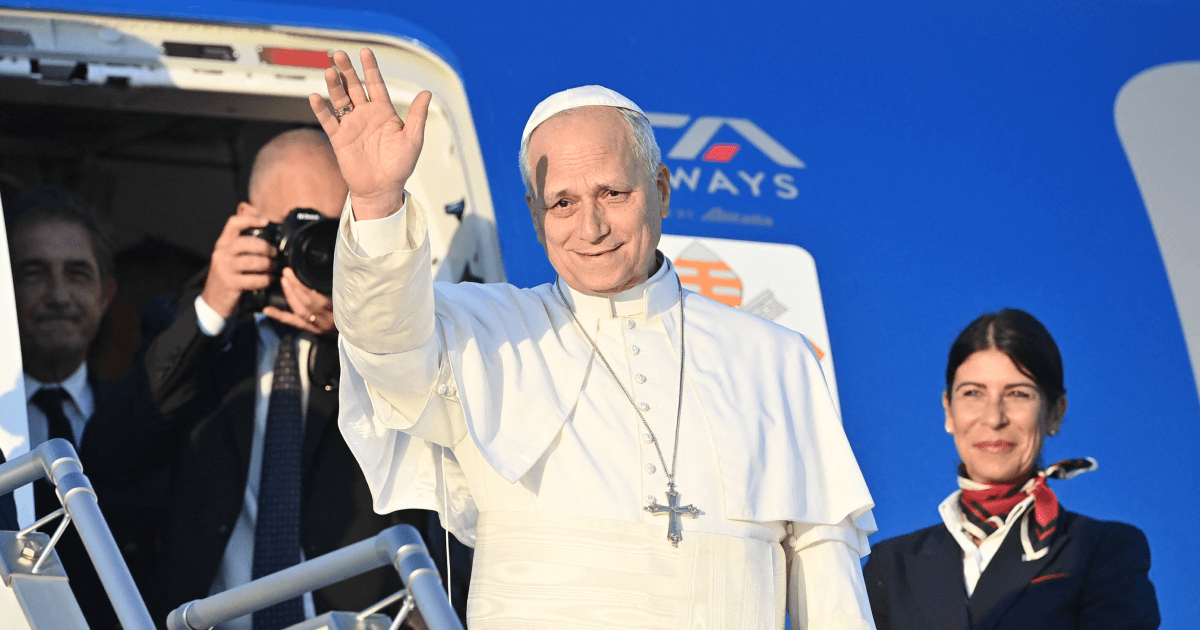
So destructive have been the results of the document that there is now a steadily growing body of prelates who repeatedly lament the imposition of such restrictions and make vocal appeals for Pope Leo XIV to return to the arrangement established by Benedict XVI in Summorum Pontificum.
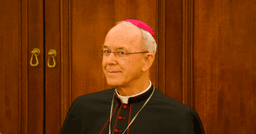
“I believe we should return to Summorum Pontificum, which the majority of bishops have viewed positively in terms of its impact on liturgical life in their dioceses,” Bishop Marian Eleganti OSB told me. “The so-called Vetus Ordo is today one rite among others and should be treated as such. It is not an expression of a backward-looking faith that rejects the liturgical reform and other documents of the Council.”
Indeed, Traditionis Custodes (TC) was cited by the Society of St Pius X as a key element in its decision to consecrate new bishops against the Pope’s wishes. Though great debate about the Society rages within the Church, there is no denying the fact that the SSPX saw the continued enforcement of TC as a key justification for its actions.
Highlighting this aspect, Cardinal Gerhard Müller told me this week that because of TC, the SSPX can attest that they “are persecuted for fidelity to the traditional Mass and not for the schismatic act of episcopal ordinations without the consensus of the successor of St Peter, the principle and permanent fundamental of the unity of the visible Church.”
“It was superfluous and opened new fronts about not dogmatic questions but only liturgical discipline,” said Müller about Francis’s 2021 motu proprio.
Theologian and prolific author Dr Peter Kwasniewski echoed the cardinal’s thoughts. “There is no doubt whatsoever that TC was a factor in further distancing the SSPX from Rome,” he told me. However, he cautioned against attributing too much weight to the motu proprio in this regard.
“In reality,” said Kwasniewski, “even though Francis was generous to the Society in his granting of privileges, his pontificate was, from their point of view, an absolute train wreck, a doctrinal nightmare, and a sign brighter than a cross in the heavens that the Church has lost its way after Vatican II, and that God is calling them to remain staunchly faithful in the face of an unimaginable apostasy.”
For many in the pews and at the altar, the stated rationale for the Vatican issuing TC has continued to be as perplexing as the day it was promulgated, particularly in the wake of the revelations that the reason given by the Vatican did not align with reality.
“It seems to me that TC further undermined the confidence and trust Catholics have in their leaders, who seem increasingly out of touch, driven by ideology, even nostalgic for the 1970s,” said Kwasniewski.
Having followed the impact of the document closely, Kwasniewski opined that the motu proprio “provoked a library full of apologetics from the traditionalist side that utterly dwarfs and defeats the arguments for the conciliar reforms. Pope Francis’s move has backfired more dramatically than perhaps any other papal act in history.”
The cancellation of traditional Masses has been a particular burden for those who sought to nourish their spiritual life via the ancient rites, as Mass after Mass was suddenly ordered to cease despite often having been celebrated for years without issue.
In addition to this is the consequent deleterious effect on the relationship between shepherd and flock. According to Kwasniewski, TC provoked “another wave of scepticism and even anger towards bishops as, apparently, middle managers of Church decline who were only too willing to stamp out some of the most vibrant communities under their care.”
But the motu proprio has also had a devastating impact on priests. Clergy ordained after July 16, 2021, have had to seek permission to offer the rite that was cherished by the Church for centuries, and priests’ existing permission to offer the old rite was suddenly withdrawn. The punitive measures have thus been felt on both sides of the pew, and many diocesan priests have lamented the strict prohibition placed on them after many years of celebrating such a venerated form of the liturgy. It is not just for the congregation that the traditional Mass contains such spiritual treasures.
“For me personally, the prayers recited in the old rite – which help the priest celebrate the mystery – have become particularly important,” said Bishop Eleganti, the former auxiliary bishop of Chur, who has developed a strong love for the old rite in recent years.
“In this respect, engaging with the old rite and learning it is also inspiring and very helpful for the priest,” he told this correspondent. “I personally have felt this way and have always missed certain prayers in the New Rite that the priest recites in the traditional rite. The mystery – or the sacrament – remains the same. But we need more depth and more silence.”
Devotees of the traditional rite have made no secret of the riches and spiritual benefits of the ancient form of the Mass. Dr Kwasniewski is one such example, having authored numerous books on the topic. But he also points to unintended benefits of TC, noting how the restrictions “increased public awareness” of the Latin Mass and the communities that celebrate it, both among Catholics and non-Catholics.
“Given the internet age we live in, TC was bound to alert a huge number of people to the long-standing critique of the liturgical reform that is now readily found online, together with a rich array of catechetical, devotional and musical resources for the old rite,” he opined.
“In short, Pope Francis gave the traditional movement a massive advertising campaign it could never have afforded.”
This is something that goes without question. Since July 2021, the topic of the traditional Mass has regularly dominated Catholic media headlines, thanks – as more than one cleric has commented – to the renewal of the liturgical wars ignited by Pope Francis.
Commenting on the fallout from the motu proprio, Cardinal Raymond Burke stated in 2024 that “if the intention with the latest legislation Traditionis Custodes and other documents which followed it was to discourage or to decrease the attraction of the holy liturgy according to the Usus Antiquior, it had, I would say, the exactly opposite effect.”
Indeed, admissions to the former Ecclesia Dei priestly orders have seen unabatedly high intakes, often record breaking, and SSPX admissions have similarly flourished. TC has squeezed the traditional Mass in some areas of the Church, while in others it has unintentionally aided the old rite’s flourishing.
This effect should not be surprising, Burke has opined:
“One has to think that a form of the Roman rite which has nourished so profoundly and produced so many saints, the declared saints, even let’s say hidden saints, it is not possible that this rite be cancelled, that it be eliminated from the life of the Church.”
As Dr Kwasniewski commented to me, “many Catholics began to question a certain version of ultramontanism that led to a reductio ad absurdum of a pope cancelling out tradition and declaring that words can mean whatever we want them to mean, as in Alice in Wonderland.”
In his assessment, the last straw for many was finding out that TC was based on more fiction than fact. Then “a blow was struck to the Vatican agenda against traditionalists”.
For Catholics who deem themselves unaffected by the liturgical debate and the implications of TC, the focus given to the issue often seems unnecessary. Even the Pope himself ascended to the papal throne without a well-formed understanding of the topic, as he admitted last summer.
But events from this past year will have shown him that Traditionis Custodes is not something that can be quietly forgotten. As long as it remains on the statute books it will, in the opinion of many, continue to leave a gaping, haemorrhaging wound in the side of the Church.
Michael Haynes is an English journalist in the Holy See Press Corps. He serves as Vatican Correspondent for the Catholic Herald, while readers can follow him at Per Mariam and on X/Twitter @MLJHaynes.