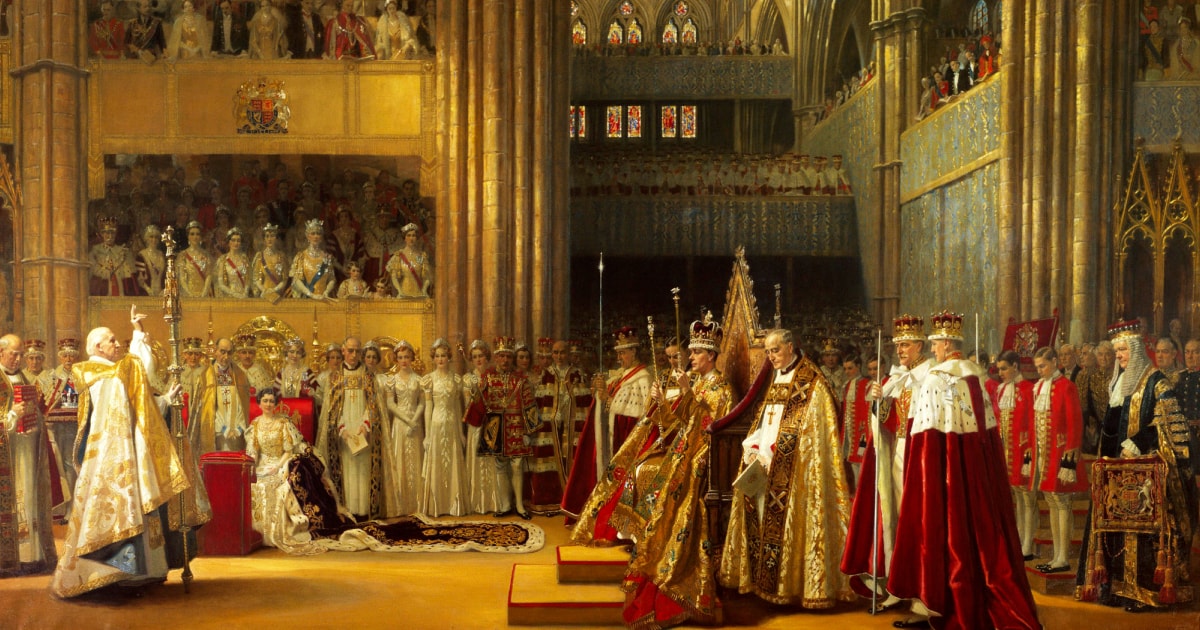


Faithful Witness: The Confidential Diaries of Alan Don, Chaplain to the King, the Archbishop and the Speaker, 1931-1946. Edited by Robert Beaken (SPCK)
Catholics in England, if they think much about the Church of England at all, tend to assume that it is straightforwardly a “State” church, run by the government like the Duchy of Lancaster, the Atomic Energy Authority and the Milk Marketing Board. I recall, when I was a vicar in Sevenoaks, the astonishment of the local Catholic parish priest when he learned that I was not in fact paid by “the government”, but apart from £350 a year from the Church Commissioners my congregation had to raise all the money themselves, as his did. The Church of England is not a “State” church, like some of the continental Lutheran ones, and it is not a “concordat” church like the Catholic Church still is in Alsace-Lorraine. But it is an Established church, with a complex and sometimes baffling interweaving with politics, government and the constitution, and this book is an outstanding and often highly amusing account of this nexus before secularisation did for it in the 1960s.
During the high imperial days of late Victorian England the higher ranks of the Church of England were taken over by Scots on the make, and William Cosmo Gordon Lang was the most conspicuous of them. Son and brother of two Moderators of the (Presbyterian) Church of Scotland, he found a bigger stage for himself at Oxford and converted to high-church Anglicanism. Archbishop of York at 44, a close friend of King George V and a consummate self-dramatist, he was once described as having the ambition of FE Smith but the stultifying vision of Baldwin. A bachelor, and remembered for his very close relationships with his much younger chaplains, Robert Beaken (the editor of this book) discovered in his outstanding biography of Lang that he had a long-standing emotional relationship with the actress Ann Todd, over 40 years his junior, into whose flat he moved for a time during the most traumatic public crisis of his time as Primate: the Abdication Crisis of 1936.
Alan Don – another Scot on the make who would go on to become Dean of Westminster – was at the heart of all this as Lang’s chaplain, while at the same time serving as an honorary chaplain to four monarchs and, for a time, the Speaker of the House of Commons. These latter chaplaincies involved not much more by way of duties than turning up in a lot of silk robes with a tricorn hat for state ceremonials, but they did mean Don was always on hand for observation and conversation with the great, and it is our good fortune that he kept this diary, and did so with candour and wit.
The diaries begin in 1931, when Lang had been Archbishop of Canterbury for just over two years, having served 20 in the second Primacy of York. Lang’s “high” Anglicanism needs some explanation to Catholics: characterised by a complete loyalty to the text of the Book of Common Prayer, his was a religion that was scrupulous about the Eucharistic fast and regular private confession, but had no Marian piety and discountenanced devotions like Benediction. A moderate ritualist, he was the first Anglican Archbishop of Canterbury to wear a mitre, and he introduced Eucharistic vestments to his private chapel, which Don mentions in an entry for October 1935. In fact, Lang is largely responsible for what was until recently the public ceremonial “look” of the Church of England on state occasions: when he was Bishop of Stepney before the First World War and wore a cope and mitre in a street procession, this was so unfamiliar that he was thought to be the Pope by bemused locals, until one decided that actually he must be “the ’Oly Ghost”.
Don gives some interesting vignettes of ecumenical activity, as the appalling political turn of the 1930s drew Catholics and Anglicans closer together in England, particularly after Cardinal Hinsley became Archbishop of Westminster. Don mentions in particular the situation after the Italian invasion of Abyssinia in 1935, when Hinsley went so far as to call Pope Pius XI “a helpless old man”, and a serious proposal in 1939 that Lang should just turn up in Rome and try to see the newly elected Pope Pius XII. Don also gives some useful details about the so-called “Dutch touch”: the attempt to satisfy Roman objections to Anglican orders by having Old Catholic bishops participate in Anglican consecrations, which began in 1932. More informal contacts with Catholics are also noted: Lang and Don listen on the radio to the Eucharistic Congress Mass at Phoenix Park in 1932, with Don speculating: “What would our good English Protestants say if they knew that the Archbishop of Canterbury was thus trafficking with the Scarlet Woman?” Don is also impressed by the organ recital given for his benefit on a visit to Downside by Dom Gregory Murray in July 1937.
The public centrepiece of the diaries is undoubtedly the very detailed inside account of how the Abdication Crisis of 1936 unfolded, in which Lang and Baldwin effectively secured the removal of the King. But perhaps just as engaging is the description of how life worked for the “upper 10,000” before the War: Lang, the Lord Chancellor and Baldwin having lunch in 1937 and discussing the fatuity of hereditary peers before the cigarettes are passed round; the decrepit but chauffeured pre-1914 car Lang used, and which the King banned from Balmoral; the loyal but irascible servants (Lang never entered a shop after he became an archbishop); the rhododendrons which Lang liked to talk to on his garden perambulations. A vanished ecclesiastical world, this book is the best one published in my lifetime for understanding the way in which public Christianity in England really used to work, and indeed the character and industry of those who dedicated themselves to the relentless labour this asked of them.