

Archbishop Visvaldas Kulbokas, Apostolic Nuncio to Ukraine, has said that it is as if Pope Leo is “the only voice raised in defence of peace” as he detailed the humanitarian cost on the Ukrainian capital of Kyiv.
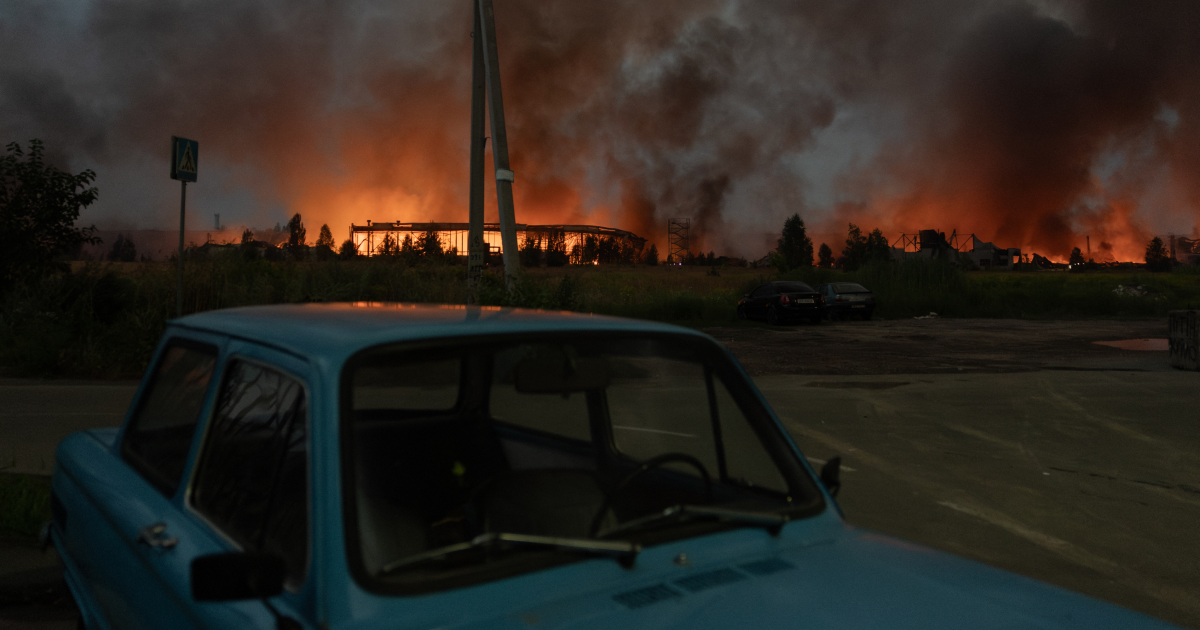
Kyiv has sustained continued Russian missile attacks throughout the war, including on August 5 as Archbishop Kulbokas spoke to Vatican News. Ukrainian President Volodymyr Zelenskyy confirmed on Wednesday that 17 people were killed and 44 injured during the attack.
Archbishop Kulbokas said: "In Ukraine, for some time now, when we meet with other ambassadors, priests or bishops, the greeting has often been: 'Thank God you are alive, you are alive', because civilian deaths are constantly increasing".
The archbishop noted that in July there were at least 10 ballistic missile attacks on Kyiv, an average of one every three days. He said that between 45,000 and 50,000 people often spend the night in the city’s metro stations, which are used to protect civilians from the attacks.
“I have just checked the numbers, which for many are only statistics, but when I think of the dead, I carry them first of all in my prayers. On August 1, there were 10 civilians killed in Kyiv; on August 2, 7 dead in Zaporizhzhia; on August 3, 16 deaths in the various regions,” he said on August 5.
“So, there is deep psychological and physical suffering. Due to the intensity of the shelling, you never know where the missiles will fall. I, not having a family, can face this situation with a certain serenity; But when I think of parents, fathers and mothers who do not care so much about themselves as they do about their children, I understand how dramatic this experience really is.”
The archbishop said that the bombings cause road and rail closures that disrupt daily life and require areas to be regularly cleared of unexploded ordnance. The attacks leave a lingering smell from the missile fuel and burning buildings that remains in the air “for days, sometimes weeks, and that affects everyone's life. Unfortunately, this reality has become, so to speak, normal".
As the attacks brought about more civilian deaths, Archbishop Kulbokas voiced his appreciation for Pope Leo’s repeated calls for peace in the region. Last month, Secretary for Relations with States Archbishop Paul Richard Gallagher concluded his second diplomatic mission to Ukraine.
Whilst there, he met with acting Foreign Minister, Andrij Sybiha and called for a lasting, just peace and conveying the Holy Father’s closeness to the war-torn country. Concurrently, Cardinal Matteo Maria Zuppi, visited Kyiv the day following a Russian missile attack on the capital.
Archbishop Kulbokas said papal meetings with Ukrainian authorities were not superficial, “but in-depth discussions, and this is the aspect that I consider most significant”.
“These visits allow us to really deepen the issues, because both the theme of peace and the related humanitarian issues are not superficial topics: they require a lot of work, understanding and continuity. Often there is no other way to address them in depth than through these working visits.”
The archbishop reflected on the continued Papal commitment to peace: “Even for our Orthodox friends, this commitment and this clarity of Pope Leo, in reiterating that there can be no justification for war, are greatly appreciated. It is as if it were the only voice that is raised in defence of peace. I therefore wanted to emphasise how much this message is appreciated here in Ukraine.”
The Holy See’s attempts to foster dialogue between Russia and Ukraine began immediately following the full-scale invasion, when Pope Francis called Zelenskyy and visited the Russian embassy to the Vatican. Under Pope Leo, the Vatican repeated its offer to host talks in May 2025.
The Pope has consistently spoken on the conflict, which has now lasted longer than the First World War, recently calling on Catholics to dedicate constant prayers to peace efforts while speaking at Castel Gandolfo on July 19.