
The president of the Pontifical Academy for Life has issued a blunt rejection of proposed changes to abortion law in the United Kingdom.
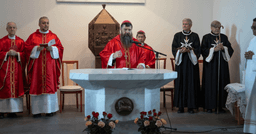
Mgr Renzo Pegoraro made the remarks during a March 24 press conference when asked a question on clause 208 of the Crime and Policing Bill.
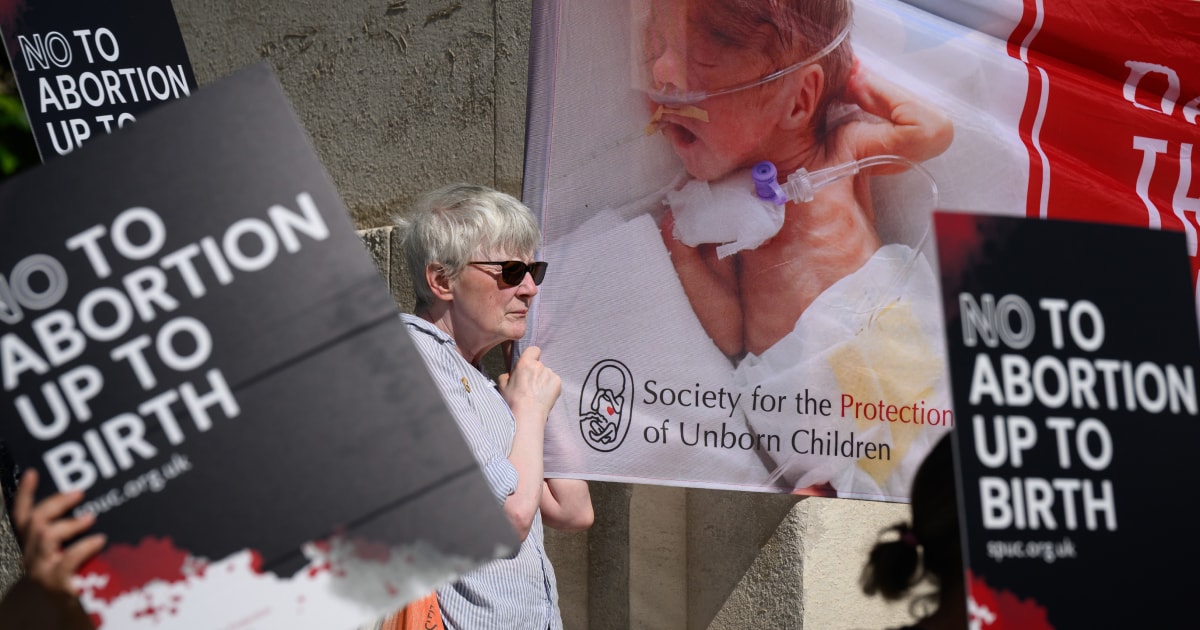
Clause 208 is the provision, approved by peers in the House of Lords on March 18, that would remove criminal liability for women who carry out their own abortions at any stage of pregnancy.
The Catholic Herald asked the president for his views on the current progression of the Bill and what is happening so far. Mgr Pegoraro put it bluntly:
“I’m completely against this kind of legislation, and to enlarge abortion and enable it, of course, it’s not a good thing,” Mgr Pegoraro said. “So it’s completely a disaster, and I hope that the UK is able to avoid it, with the contribution also of the Catholic Church to avoid this kind of approach to abortion.”
The measure itself originated in the House of Commons, where it was introduced by Labour MP Tonia Antoniazzi during a short backbench debate last summer. The speed of its progress has drawn criticism, with opponents pointing to the absence of a full committee stage, formal evidence sessions or wider public consultation.
Under the proposed change, it would cease to be an offence for a woman to end her own pregnancy for any reason, including sex-selective purposes, at any point up to and during birth.
The bishops have framed their objections in terms of both moral principle and practical consequence. Archbishop John Sherrington of Liverpool, the lead bishop for life issues, said the vote was “deeply distressing” and warned it is “likely to lead to more late-term abortions, putting pregnant women and their babies at risk”. He added that many women may face “even greater risks of isolation, coercion, and pressure”.
In south London, Archbishop John Wilson of Southwark described the development as “a devastating moment for our country” and “a truly tragic moment for our nation”. He said, “We can never underestimate the challenges that women and men face when making difficult decisions,” but added that there is “another life involved which is now to be ignored and silenced. There are also serious concerns for the safety of women.”
Liam Gibson of the John Paul II Academy for Human Life and the Family told the National Catholic Register: “It would be difficult to overstate the gruesome reality that will result,” adding that the change would “usher in ever-increasing levels of violence towards the most vulnerable in our society.”
Furthermore, support for the content of the amendment appears limited, as polling by Whitestone Insight of 2,000 adults across Britain, commissioned by Right to Life UK, found just 16 per cent thought abortions later than 24 weeks should be decriminalised.
The Crime and Policing Bill is due to face its Third Reading and final vote in the House of Lords on March 25, marking its last realistic opportunity for peers to block or amend clause 208 before the Bill completes its passage through Parliament. With previous amendments already defeated at Report Stage, any further procedural intervention is now extremely limited, leaving only the most exceptional constitutional step, intervention by King Charles III through the withholding of Royal Assent, as a theoretical but highly unlikely final obstacle should the legislation pass unaltered.