




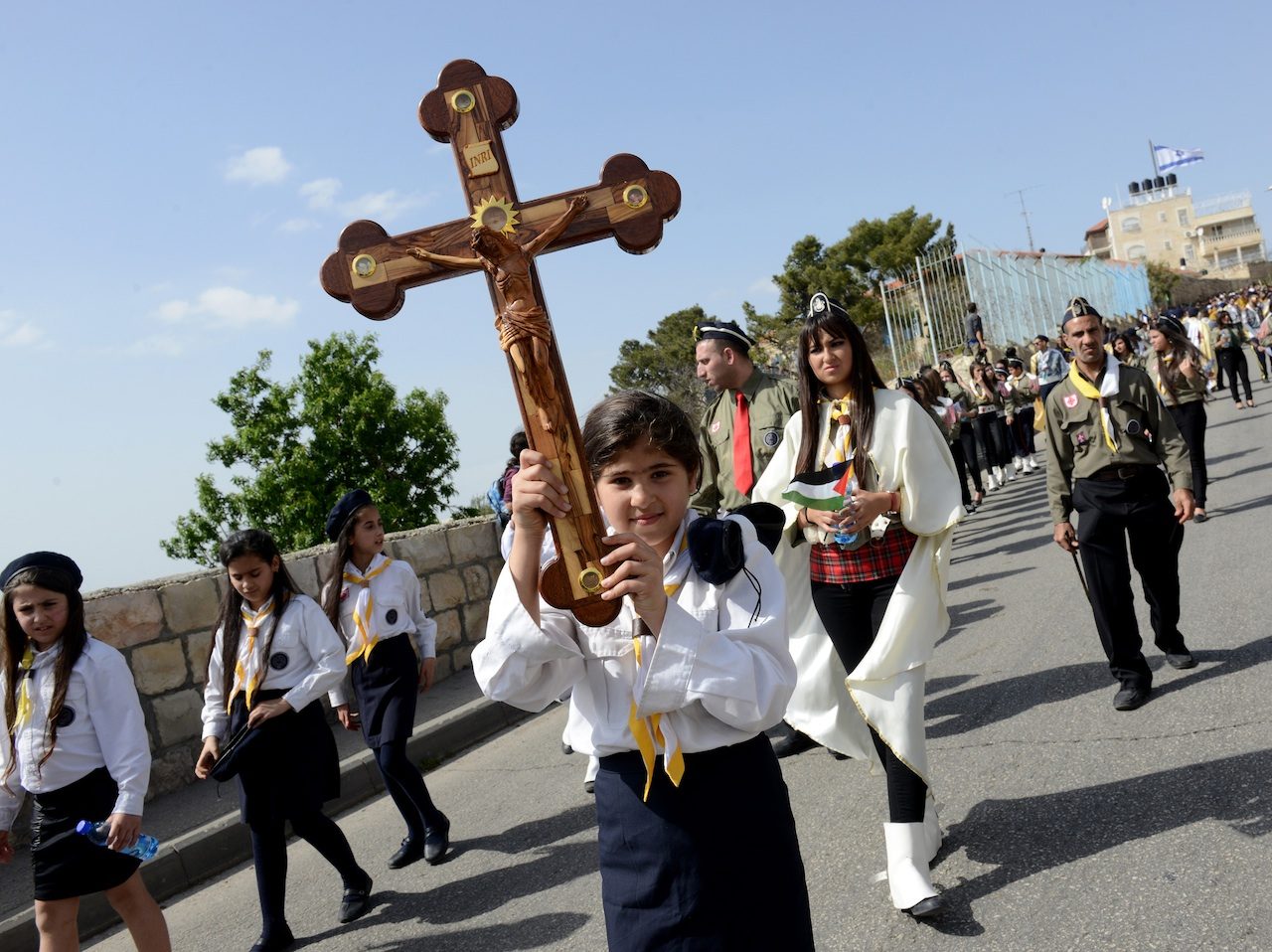
Vatican and Palestinian representatives have finalised the text of a formal agreement recognising freedom of religion in the "state of Palestine" and outlining the rights and obligations of the Catholic Church, its agencies and its staff in the territory. Without fanfare, the Vatican has been referring to the "state of Palestine" at least since January 2013. The "Annuario Pontificio", the Vatican's official yearbook, lists a diplomatic relationship with the "state of Palestine." An Israeli foreign ministry official, however, expressed dismay at the agreement. "Israel heard with disappointment the decision of the Holy See to agree a final formulation of an agreement with the Palestinians including the use of the term 'Palestinian state'. "Such a development does not further the peace process and distances the Palestinian leadership from returning to direct bilateral negotiations. Israel will study the agreement and consider its next step," the official said. The Vatican, which praised the United Nations' recognition of Palestinian sovereignty in 2012, said this week that the bilateral commission working on the agreement had finalised the text. "The agreement will be submitted to the respective authorities for approval" and a formal signing ceremony should be held soon, the statement said. Palestinian President Mahmoud Abbas was scheduled to meet Pope Francis on Saturday, the day before attending a canonisation Mass at the Vatican for two new Palestinian saints. Mgr Antoine Camilleri, the Vatican undersecretary for relations with states and head of the Vatican delegation at the negotiations, said the Vatican wanted the agreement to "promote the life and activity of the Catholic Church and its recognition on a juridical level". The text of the agreement will not be released until it receives top-level approval. However, Mgr Camilleri described the general contents to L'Osservatore Romano, the Vatican newspaper. The agreement, he said, expresses hope for an end to Palestinian-Israeli tensions and supports the existence of two separate, independent nations living side by side in security and peace. The chapter on "freedom of religion and conscience", he said, is "very elaborate and detailed". Other chapters deal with "various aspects of the life and activity of the Church in the Palestinian territories: its freedom of action, its personnel and jurisdiction, its personal status, houses of worship, social and charitable activity [and] means of social communication. Finally, a chapter is dedicated to financial and property questions." Asked if the agreement could be a model for agreements with other Muslim-majority countries, Mgr Camilleri said every bilateral treaty dealt with the specific situation of the countries involved. "In this case, because it deals with the presence of the Church in the land where Christianity was born, the agreement has a unique value and significance," he said. At the same time, though, he said the agreement's recognition of the Church and of religious freedom "could be followed by other countries, including those with a Muslim majority, and demonstrate that such recognition is not incompatible with the fact that the majority of the country's population belongs to another religion". The monsignor said he hoped the agreement would help Palestinians reach the point of seeing "established and recognised an independent, sovereign and democratic state of Palestine that lives in peace and security with Israel and its neighbours". The Vatican, he said, also wanted to encourage "the international community, especially the parties most directly interested, in undertaking more decisive action to contribute to reaching a lasting peace and the hoped-for solution of two states".
8:39 AM
Vatican formally recognises 'state of Palestine'
A Vatican-Palestine accord also upheld the principle of religious freedom
Cindy Wooden

3 min read



Already a subscriber? Sign in
5freearticles every month
Continue reading with a free account. No card needed.
- Five free articles every thirty days, on any device you sign in on
- The Catholic Herald newsletter, every morning
- Subscribe whenever you like for everything: every article and the magazine
Related articles
 Newsroom
Church leaders urge Drumcree dialogue: ‘Too much is at stake’
The Catholic and Church of Ireland Archbishops of Armagh have urged a renewed commitment to peace and reconciliation amid the Drumcree stand-off
Corrie Douglas-Young Newsroom
Thousands of Irish children to join global Rosary campaign
Corrie Douglas-Young Newsroom
TikTok priest urges young people to stand with persecuted Christians
Nathalie Raffray Newsroom
Baby born at 25 weeks reunites with neonatologist two years after leaving hospital
The Catholic Herald Newsroom
Joe Biden honoured by Planned Parenthood after defending abortion rights
Christine Rousselle
subscribe to the catholic herald today
Our best content is exclusively available to our subscribers. Subscribe today and gain instant access to expert analysis, in-depth articles, and thought-provoking insights—anytime, anywhere. Don’t miss out on the conversations that matter most.
Subscribe



