


February 14, 2026

What Alberto Ravagnani’s exit from the priesthood gets wrong about celibacy

Fr Gavan Jennings
More
Related
Min read
share

Leo Tolstoy famously begins his novel Anna Karenina with the simple observation: “All happy families are alike; each unhappy family is unhappy in its own way.” This has become known as the “Anna Karenina principle”. In a word, there is one way of getting it right and many ways of getting it wrong.

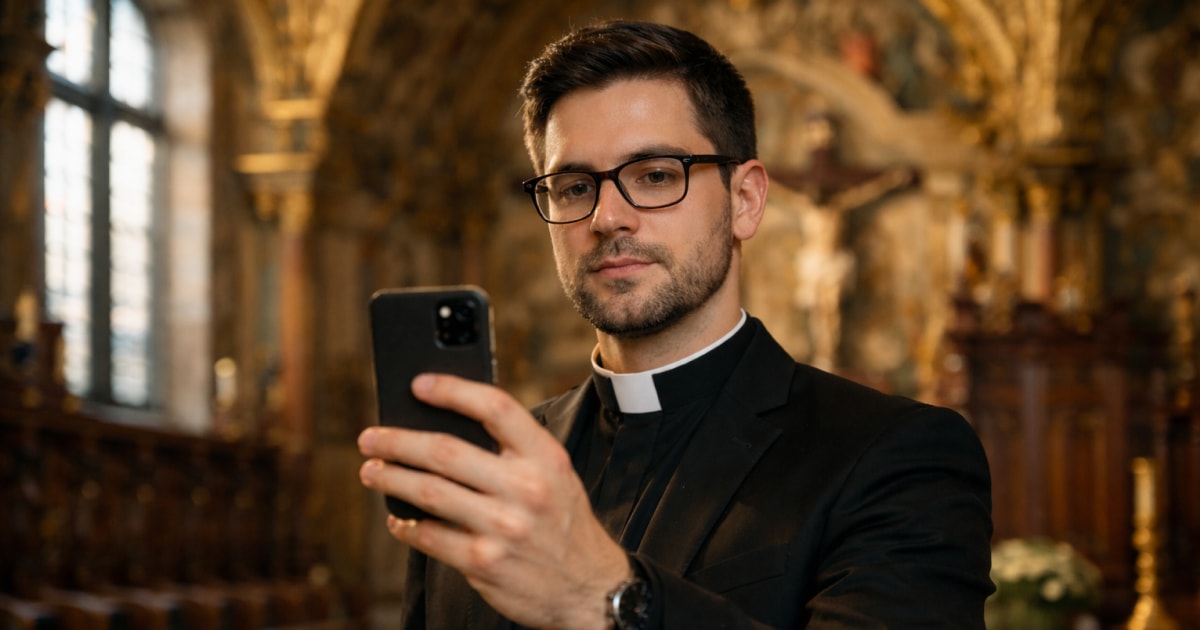
This principle was brought to mind by the very high-profile renunciation of the priesthood by the 32-year-old Milanese priest and influencer Alberto Ravagnani. Ordained in 2018, Ravagnani had developed an online presence that made him one of the most followed priests in Italy, with hundreds of thousands of followers – especially among young people. In January he announced that he would be leaving the priesthood, citing struggles with celibacy and the pressures of ministry.

Normally, the failure of a priestly vocation – much like the failure of a marriage – is something too personal and complex to be the subject of public comment or scrutiny. In this case, however, Ravagnani has gone very public with tendentious justifications for his decision to leave the priesthood. In sum, for Ravagnani celibacy stifles a man’s affectivity: “I find it hypocritical that my affectivity, my sexuality and my ability to have a relationship with someone else is not considered beautiful.”

This criticism rests on a fundamental misunderstanding of both celibacy and sexuality. Granted, a celibate man – or even many celibate men – may approach celibacy in unhealthy ways: as the violent suppression of his affectivity or, perhaps even worse, as the rejection of sex and marriage as quasi-evils. But this is not, nor ever has been, the Catholic view of celibacy. How could the Church, following St Paul, call celibacy a higher good than marriage were marriage not already a good? Hence, in the words of the Second Vatican Council: “They renounce marriage for the sake of the Kingdom … but this renunciation presupposes a high esteem for marriage itself” (Presbyterorum Ordinis §16).

And this brings us back to Tolstoy. There are many ways of getting sex wrong, but only one way of getting it right. This is equally true of the use of sex and of abstinence from sex: both sex and celibacy are intimately and inseparably linked to the gift of self. All other views – including those that see sex primarily as the “affirmation” of one’s affectivity or sexual urges – simply get it wrong. The reduction of sexuality to self-expression rather than self-giving unfortunately appears to be the logic at work in Ravagnani’s account.

Approaching my 30th anniversary of ordination, I have become increasingly convinced that the vocation to marriage and the vocation to the priesthood are very alike, with very similar joys and sufferings. Pope St John Paul II defined the priest as “a man for others”, but he could equally have used this definition for a husband and a father. I think I am almost as encouraged in my priestly vocation by the example of excellent husbands and fathers as I am by the example of excellent priests.

Recently I was speaking with a priest friend, and we were commenting on just how hard married life has turned out to be for many friends of our own vintage (in their fifties): how they have had to make enormous sacrifices for their spouses and for their children – sacrifices far greater, we felt, than those that have been part of our lives as priests. Furthermore, while a married man does have the consolation of feminine companionship that we priests lack, he too must say a firm no to all the other attractive women in the world. That is only one fewer woman than is required of us priests.

Unfortunately, the Ravagnani affair has meant that many of the old chestnuts about celibacy have been dusted off and given an airing. One of these is the claim that “celibacy is important because it frees the priest to serve”. Certainly, service is part of the motivation for celibacy, but to reduce celibacy to the merely logistical is to do a grave disservice to priests. It would be like saying that a married man is faithful to one wife simply because he does not have the time or the money for more. We priests love too. Could it not be that we give our whole hearts, in love, to Christ and to his Church – regardless of logistical considerations?

In my experience, celibacy does not make itself felt as a “requirement” or an “obligation” imposed by the Church. Rather, it makes itself felt as a deeply personal invitation from Jesus Christ himself to leave everything – including the beautiful companionship of women – and to follow him.

Leo Tolstoy famously begins his novel Anna Karenina with the simple observation: “All happy families are alike; each unhappy family is unhappy in its own way.” This has become known as the “Anna Karenina principle”. In a word, there is one way of getting it right and many ways of getting it wrong.

This principle was brought to mind by the very high-profile renunciation of the priesthood by the 32-year-old Milanese priest and influencer Alberto Ravagnani. Ordained in 2018, Ravagnani had developed an online presence that made him one of the most followed priests in Italy, with hundreds of thousands of followers – especially among young people. In January he announced that he would be leaving the priesthood, citing struggles with celibacy and the pressures of ministry.

Normally, the failure of a priestly vocation – much like the failure of a marriage – is something too personal and complex to be the subject of public comment or scrutiny. In this case, however, Ravagnani has gone very public with tendentious justifications for his decision to leave the priesthood. In sum, for Ravagnani celibacy stifles a man’s affectivity: “I find it hypocritical that my affectivity, my sexuality and my ability to have a relationship with someone else is not considered beautiful.”

This criticism rests on a fundamental misunderstanding of both celibacy and sexuality. Granted, a celibate man – or even many celibate men – may approach celibacy in unhealthy ways: as the violent suppression of his affectivity or, perhaps even worse, as the rejection of sex and marriage as quasi-evils. But this is not, nor ever has been, the Catholic view of celibacy. How could the Church, following St Paul, call celibacy a higher good than marriage were marriage not already a good? Hence, in the words of the Second Vatican Council: “They renounce marriage for the sake of the Kingdom … but this renunciation presupposes a high esteem for marriage itself” (Presbyterorum Ordinis §16).

And this brings us back to Tolstoy. There are many ways of getting sex wrong, but only one way of getting it right. This is equally true of the use of sex and of abstinence from sex: both sex and celibacy are intimately and inseparably linked to the gift of self. All other views – including those that see sex primarily as the “affirmation” of one’s affectivity or sexual urges – simply get it wrong. The reduction of sexuality to self-expression rather than self-giving unfortunately appears to be the logic at work in Ravagnani’s account.

Approaching my 30th anniversary of ordination, I have become increasingly convinced that the vocation to marriage and the vocation to the priesthood are very alike, with very similar joys and sufferings. Pope St John Paul II defined the priest as “a man for others”, but he could equally have used this definition for a husband and a father. I think I am almost as encouraged in my priestly vocation by the example of excellent husbands and fathers as I am by the example of excellent priests.

Recently I was speaking with a priest friend, and we were commenting on just how hard married life has turned out to be for many friends of our own vintage (in their fifties): how they have had to make enormous sacrifices for their spouses and for their children – sacrifices far greater, we felt, than those that have been part of our lives as priests. Furthermore, while a married man does have the consolation of feminine companionship that we priests lack, he too must say a firm no to all the other attractive women in the world. That is only one fewer woman than is required of us priests.

Unfortunately, the Ravagnani affair has meant that many of the old chestnuts about celibacy have been dusted off and given an airing. One of these is the claim that “celibacy is important because it frees the priest to serve”. Certainly, service is part of the motivation for celibacy, but to reduce celibacy to the merely logistical is to do a grave disservice to priests. It would be like saying that a married man is faithful to one wife simply because he does not have the time or the money for more. We priests love too. Could it not be that we give our whole hearts, in love, to Christ and to his Church – regardless of logistical considerations?

In my experience, celibacy does not make itself felt as a “requirement” or an “obligation” imposed by the Church. Rather, it makes itself felt as a deeply personal invitation from Jesus Christ himself to leave everything – including the beautiful companionship of women – and to follow him.

subscribe to
the catholic herald

Continue reading your article with a subscription.
Read 5 articles with our free plan.
Subscribe

subscribe to the catholic herald today

Our best content is exclusively available to our subscribers. Subscribe today and gain instant access to expert analysis, in-depth articles, and thought-provoking insights—anytime, anywhere. Don’t miss out on the conversations that matter most.
Subscribe