February 12, 2026

Catholic Oxford’s quiet revival

Jan C. Bentz
More
Related
Min read
share

On a weekday evening in Oxford, the pews at Blackfriars are filled with students. At the Oratory, young people and families line up patiently for Confession. In side chapels across the city, undergraduates kneel before the Blessed Sacrament long after lectures have ended. Neither nostalgia nor a mere anomaly, there is a genuine return of Catholic life in Oxford – and across the country.

Something unexpected is happening in England. For decades, the story seemed settled: religion retreated into the private sphere, churches emptied, and the Christian imagination became, at best, a cultural memory. Yet beneath the surface – particularly among the young – a growing hunger for meaning and transcendence has emerged once more. In recent years, Catholicism has not only held its ground but in some areas has even overtaken its post-Reformation rival. Among younger churchgoers in the United Kingdom, Catholics now significantly outnumber Anglicans, and Mass attendance is rising, indicating a quiet revival in Catholic life that few predicted.

England, of course, is a peculiar case. The English Reformation did not sweep away Catholic forms in the same way as in parts of continental Europe. Anglicanism preserved some of the vesture, the rhythm, the language and even the architecture of Catholicism, but gradually loosened the sacramental and metaphysical grammar that once gave those forms their meaning. The result was a kind of ‘Catholicism of appearance’ – dare one speak of catholic ‘cosplay’? – a preservation of ritual without the full theological substance that once animated it. That memory, however, never entirely disappeared. It lingered in architecture, in poetry, in cultural instinct, and now, for many, it has become an invitation to rediscover the source.

The Canadian philosopher Charles Taylor famously described modernity as an age of ‘disenchantment’. Reality becomes something to be controlled rather than contemplated – explained and controlled rather than loved. God, once encountered as a living presence, is reduced first to a hypothesis, then finally to an absence. The world becomes efficient but thin. It turns out that young people, more than many expected, feel this thinness acutely. The supposed substitutes for religion – careerism, activism, entertainment and ideology – fail to fill the vacuum left by the loss of transcendence.

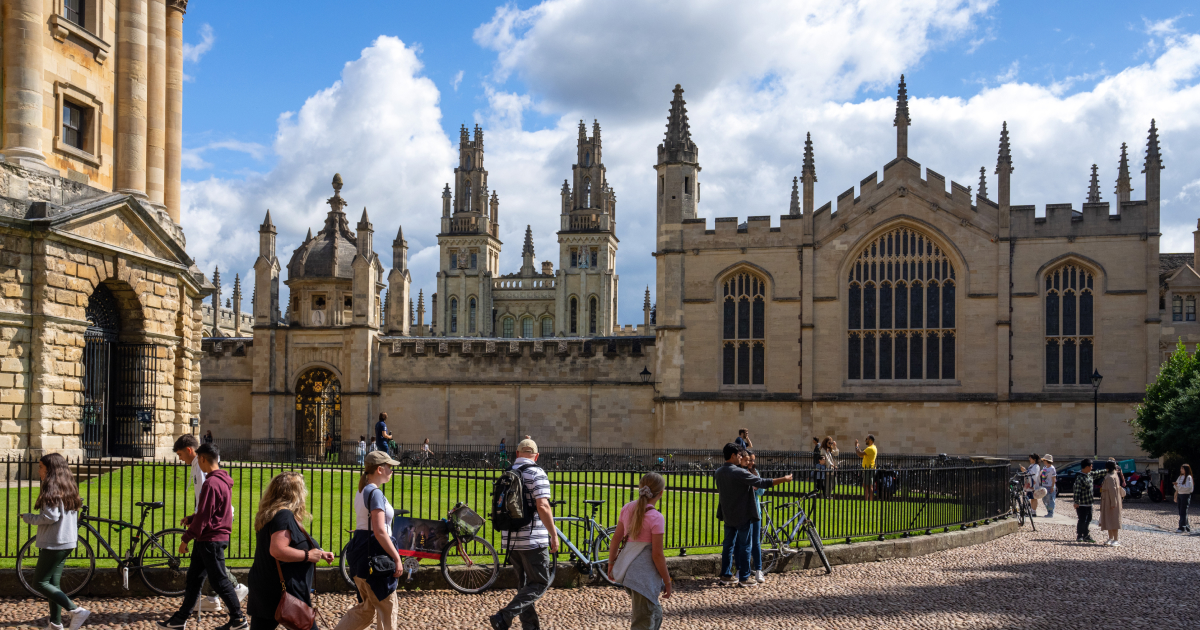
Nowhere is this hunger more visible than in Oxford.

Oxford provides a rare combination of elements that together form fertile ground for revival. First, there is the intellectual humus. Students arrive here explicitly engaged upon the search for truth. They are accustomed to asking large questions and are often more open to following arguments wherever they may lead. In such an environment, Catholicism appears not as a sentimental refuge but as a coherent, intellectually serious vision of reality.

Second, there is an unusually rich social and spiritual ecosystem. Catholic life in Oxford is not confined to Sunday Mass. There are young adult groups, family groups, student societies, Dominican simplicity at Blackfriars, the classical solemnity of the Oratory, the older rite widely available, pastoral parish life at St Gregory and St Augustine, Rosary groups, study circles and shared meals. What might look from the outside like ‘shopping for liturgy’ is in fact something else: exposure to the fullness of Catholic tradition. For many, this is the first time they realise how broad, deep and varied Catholic spirituality actually is.

It is no longer unusual to see students praying the Rosary together after lectures, or to find real queues forming for Confession – not only before Sunday Mass, but regularly during the week. The ready and generous availability of the sacrament, often offered on weekdays as well as weekends, has made a quiet but decisive difference. Many of those filling these pews are not cradle Catholics but converts or returning Catholics, drawn not by habit but by conviction.

Third, there is the cultural memory of the place itself. Oxford has the peculiar memory of a city that once was entirely Catholic and, luckily, never fully forgot it. The later presence of figures such as JRR Tolkien, the continuing fascination with CS Lewis, the poetry of Gerard Manley Hopkins and the historical memory of the university’s Catholic origins all contribute to an atmosphere in which Catholicism feels less like an import and more like a homecoming.

What is striking is that this revival is not driven by novelty but by rediscovery. Young Catholics here are not searching for something new. They are searching for something solid, timeless and all-encompassing, something that speaks to the whole of life – intellectually, socially, spiritually and culturally. They are discovering Catholicism not primarily as a set of doctrines but as living truth, a way of inhabiting reality, the gate to a meaningful existence.

In England, the ‘Dowry of Our Lady’, where many assumed Christianity had become a cultural afterthought, Oxford is quietly proving the opposite. The young are rediscovering something very old and finding in it a world that is no longer flat, but alive with meaning.
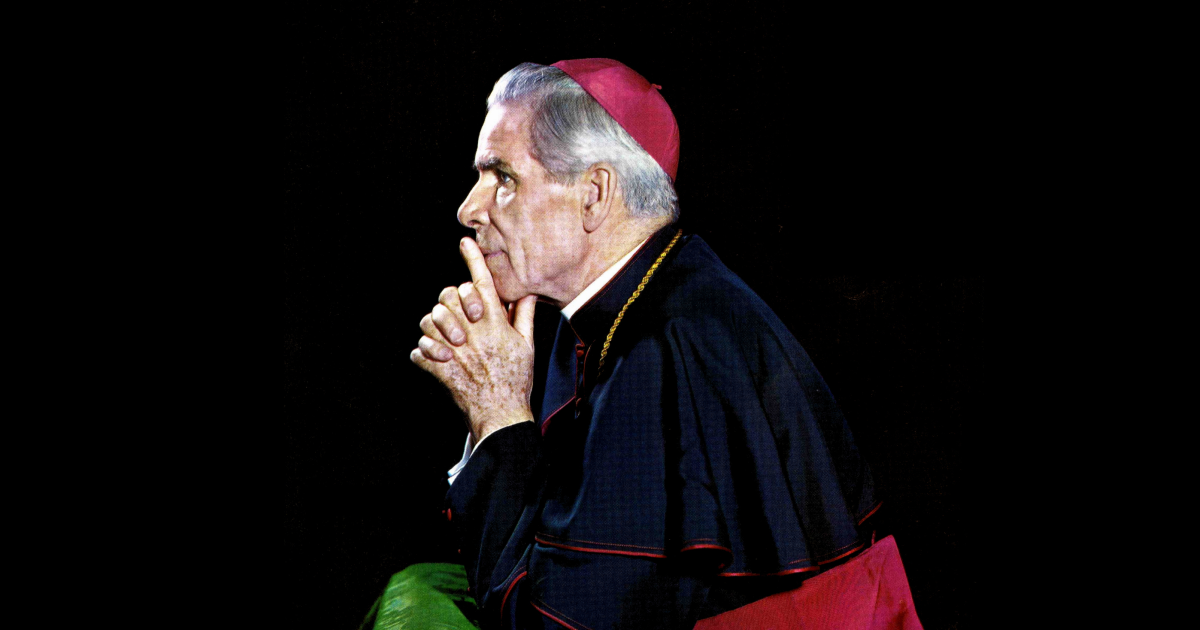
On a weekday evening in Oxford, the pews at Blackfriars are filled with students. At the Oratory, young people and families line up patiently for Confession. In side chapels across the city, undergraduates kneel before the Blessed Sacrament long after lectures have ended. Neither nostalgia nor a mere anomaly, there is a genuine return of Catholic life in Oxford – and across the country.

Something unexpected is happening in England. For decades, the story seemed settled: religion retreated into the private sphere, churches emptied, and the Christian imagination became, at best, a cultural memory. Yet beneath the surface – particularly among the young – a growing hunger for meaning and transcendence has emerged once more. In recent years, Catholicism has not only held its ground but in some areas has even overtaken its post-Reformation rival. Among younger churchgoers in the United Kingdom, Catholics now significantly outnumber Anglicans, and Mass attendance is rising, indicating a quiet revival in Catholic life that few predicted.

England, of course, is a peculiar case. The English Reformation did not sweep away Catholic forms in the same way as in parts of continental Europe. Anglicanism preserved some of the vesture, the rhythm, the language and even the architecture of Catholicism, but gradually loosened the sacramental and metaphysical grammar that once gave those forms their meaning. The result was a kind of ‘Catholicism of appearance’ – dare one speak of catholic ‘cosplay’? – a preservation of ritual without the full theological substance that once animated it. That memory, however, never entirely disappeared. It lingered in architecture, in poetry, in cultural instinct, and now, for many, it has become an invitation to rediscover the source.

The Canadian philosopher Charles Taylor famously described modernity as an age of ‘disenchantment’. Reality becomes something to be controlled rather than contemplated – explained and controlled rather than loved. God, once encountered as a living presence, is reduced first to a hypothesis, then finally to an absence. The world becomes efficient but thin. It turns out that young people, more than many expected, feel this thinness acutely. The supposed substitutes for religion – careerism, activism, entertainment and ideology – fail to fill the vacuum left by the loss of transcendence.

Nowhere is this hunger more visible than in Oxford.

Oxford provides a rare combination of elements that together form fertile ground for revival. First, there is the intellectual humus. Students arrive here explicitly engaged upon the search for truth. They are accustomed to asking large questions and are often more open to following arguments wherever they may lead. In such an environment, Catholicism appears not as a sentimental refuge but as a coherent, intellectually serious vision of reality.

Second, there is an unusually rich social and spiritual ecosystem. Catholic life in Oxford is not confined to Sunday Mass. There are young adult groups, family groups, student societies, Dominican simplicity at Blackfriars, the classical solemnity of the Oratory, the older rite widely available, pastoral parish life at St Gregory and St Augustine, Rosary groups, study circles and shared meals. What might look from the outside like ‘shopping for liturgy’ is in fact something else: exposure to the fullness of Catholic tradition. For many, this is the first time they realise how broad, deep and varied Catholic spirituality actually is.

It is no longer unusual to see students praying the Rosary together after lectures, or to find real queues forming for Confession – not only before Sunday Mass, but regularly during the week. The ready and generous availability of the sacrament, often offered on weekdays as well as weekends, has made a quiet but decisive difference. Many of those filling these pews are not cradle Catholics but converts or returning Catholics, drawn not by habit but by conviction.

Third, there is the cultural memory of the place itself. Oxford has the peculiar memory of a city that once was entirely Catholic and, luckily, never fully forgot it. The later presence of figures such as JRR Tolkien, the continuing fascination with CS Lewis, the poetry of Gerard Manley Hopkins and the historical memory of the university’s Catholic origins all contribute to an atmosphere in which Catholicism feels less like an import and more like a homecoming.

What is striking is that this revival is not driven by novelty but by rediscovery. Young Catholics here are not searching for something new. They are searching for something solid, timeless and all-encompassing, something that speaks to the whole of life – intellectually, socially, spiritually and culturally. They are discovering Catholicism not primarily as a set of doctrines but as living truth, a way of inhabiting reality, the gate to a meaningful existence.

In England, the ‘Dowry of Our Lady’, where many assumed Christianity had become a cultural afterthought, Oxford is quietly proving the opposite. The young are rediscovering something very old and finding in it a world that is no longer flat, but alive with meaning.
subscribe to
the catholic herald

Continue reading your article with a subscription.
Read 5 articles with our free plan.
Subscribe

subscribe to the catholic herald today

Our best content is exclusively available to our subscribers. Subscribe today and gain instant access to expert analysis, in-depth articles, and thought-provoking insights—anytime, anywhere. Don’t miss out on the conversations that matter most.
Subscribe