

A French bishop has ordained a priest using the pre-Vatican II Pontificale Romanum in a ceremony that has renewed unresolved tensions surrounding the implementation of Pope Francis’s restrictions on the traditional liturgy.
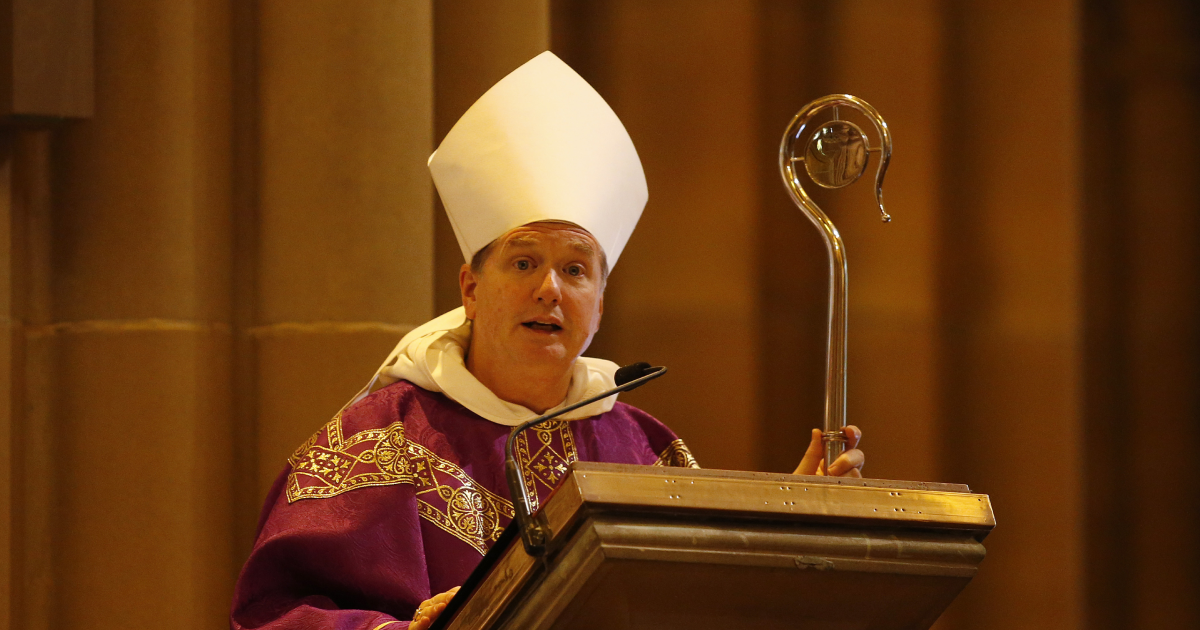
On Saturday January 17, Bishop Alain Castet, the 75-year-old emeritus bishop of Luçon, ordained Brother Thomas-Marie Warmuz to the priesthood at Chémeré-le-Roi in western France. The ordination took place within the Fraternity of Saint Vincent Ferrer, a Dominican-inspired clerical fraternity known for its exclusive use of traditional liturgical rites. During the same ceremony, Brother André-Marie Mwanza was ordained as a subdeacon.
The ordination was conducted according to the Pontificale Romanum in force before the reforms of the Second Vatican Council. The Vatican’s Congregation for Divine Worship and the Discipline of the Sacraments stated in December 2021 that bishops are not authorised to confer Holy Orders using the older pontifical. That clarification was issued in the form of Responsa ad dubia, responding to questions raised by Pope Francis’s motu proprio Traditionis custodes.
Traditionis custodes, promulgated in July 2021, declared that the liturgical books promulgated after the Council are the “unique expression” of the Roman Rite. It placed new restrictions on the celebration of the pre-conciliar liturgy, reversing the broader permissions granted under Benedict XVI’s Summorum Pontificum. The Pope said the measure was necessary to protect ecclesial unity and to counter what he described as an ideological use of the older rites.
The December responsa went further by addressing sacramental questions, including ordinations. They stated that the use of the older Pontificale Romanum is not permitted, even in communities where the celebration of the traditional Mass has been authorised. Responsibility for enforcing these norms lies with the diocesan bishop, acting under the authority of the Holy See.
The ceremony at Chémeré-le-Roi therefore raises questions about how Traditionis custodes and its subsequent clarifications are being interpreted and applied in practice. Bishop Castet, who led the Diocese of Luçon from 2008 until his retirement in 2017, has not publicly commented on the decision to use the older pontifical.
The Fraternity of Saint Vincent Ferrer was founded in France in 1979 by Fr Louis-Marie de Blignières. It emerged in the wake of post-conciliar liturgical and doctrinal upheaval, drawing inspiration from Dominican spirituality and the preaching tradition of the Valencian Dominican St Vincent Ferrer. From its beginnings, the fraternity sought to preserve pre-conciliar Dominican customs, theology and liturgical practice.
In 1988, following a period of theological clarification and dialogue with Rome, the fraternity was erected as a clerical religious institute of pontifical right under the auspices of the Pontifical Commission Ecclesia Dei, established by Pope St John Paul II to assist communities attached to the older liturgical books while remaining in full communion with the Holy See.
The fraternity is headquartered at the Couvent Saint-Thomas-d’Aquin in Chémeré-le-Roi and maintains a single principal house. Its apostolate focuses on preaching, catechesis and theological formation rooted in Thomistic thought, alongside the celebration of the traditional Dominican Rite for Mass and the Divine Office.
Unlike some other traditionalist institutes, the Fraternity of Saint Vincent Ferrer does not belong to the group of former Ecclesia Dei societies such as the Priestly Fraternity of St Peter or the Institute of Christ the King Sovereign Priest.
Pope Francis later clarified that the Priestly Fraternity of St Peter was not affected by the new restrictions and could continue to use the 1962 liturgical books for all its sacramental life. However, sources close to Cardinal Arthur Roche have told the Catholic Herald that the prefect of the Congregation for Divine Worship would want the provisions of Traditionis custodes to apply to the wider family of traditionalist communities, including those erected under Ecclesia Dei.
While the Vatican's responsa ad dubia on Traditionis Custodes explicitly states that the prohibitions on using the older Pontificale Romanum for ordinations and confirmations do not apply to the former Ecclesia Dei institutes, such as the Priestly Fraternity of St. Peter (FSSP) and the Institute of Christ the King Sovereign Priest (ICKSP), whose liturgical practices remain governed by their approved constitutions and oversight by the Congregation for Institutes of Consecrated Life, for progressives it would seem to undermine the spirit of Traditionis Custodes, which seeks to promote unity around the post-Vatican II liturgical reform as the unique expression of the Roman Rite's lex orandi.
The ordination at Chémeré-le-Roi illustrates the continuing uncertainty surrounding the scope of the legislation and the degree of discretion available to bishops and institutes of pontifical right. More than four years after Traditionis custodes came into force, its practical consequences remain unevenly applied across the Church. Previously in the Catholic Herald, this situation was described as a moment of “liturgical limbo”, in which neither the old nor the new settlement has been fully secured.
The core issue is that Traditionis custodes established a framework that aspires to decisiveness but operates in practice with ambiguity. The policy states clearly that bishops are not empowered to permit ordinations using the pre-conciliar pontifical, and priests ordained after July 2021 must seek explicit authorisation from Rome even to celebrate the older Mass. In practice, however, implementation has varied. Some traditional communities have received explicit reassurances from the Holy See allowing them to continue established practices, while others operate under tighter restrictions. Statements from Roman authorities have sometimes appeared to qualify earlier clarifications, creating uncertainty about which norms are definitive and which remain subject to interpretation. The result is not a fully settled legal regime but a patchwork sustained by case-by-case decisions.
Since Vatican II, liturgical reform has been presented both as irreversible and as pastorally flexible. Traditionis custodes represents an attempt to resolve that tension decisively, yet its implementation has shown the difficulty of moving from pastoral exhortation to juridical enforcement without provoking confusion or resistance. The result is a system that relies heavily on episcopal discretion while simultaneously constraining it.