Cardinal Pietro Parolin has defended the Holy See’s agreement with China while warning that international law is increasingly applied selectively.
Speaking to the Italian Catholic Action magazine Dialoghi, the Vatican Secretary of State drew attention to what he described as inconsistent responses by governments to contemporary conflicts, observing that outrage over attacks on Ukrainian civilians had not been matched elsewhere.
“Many governments have expressed outrage over the attacks on Ukrainian civilians by Russian missiles and drones, imposing sanctions on the aggressors,” he said. “It does not seem to me that the same has happened in the case of the tragedy of Gaza’s destruction.”
The cardinal warned that there was a growing “logic of the strongest” in international relations, in which the use of force is presented as a necessary or even inevitable solution to disputes. He said he was “struck by the determination … with which the war option is presented as the definitive solution,” adding that diplomacy now appears “silent” and “incapable of activating alternative instruments”.
This shift, he suggested, reflects a deeper erosion of shared norms, with states placing greater reliance on power than on agreed rules. The result, he warned, is the emergence of “double standards” and the weakening of multilateral institutions established to uphold international law.
Despite these concerns, Cardinal Parolin reaffirmed the Holy See’s support for the United Nations, describing it as an essential forum for international cooperation. “The Holy See continues to believe in the importance of the United Nations,” he said, while acknowledging that “vetoes have limited the UN’s capacity to intervene”. He added that the international community must resist any drift “from the force of law to the law of force”.
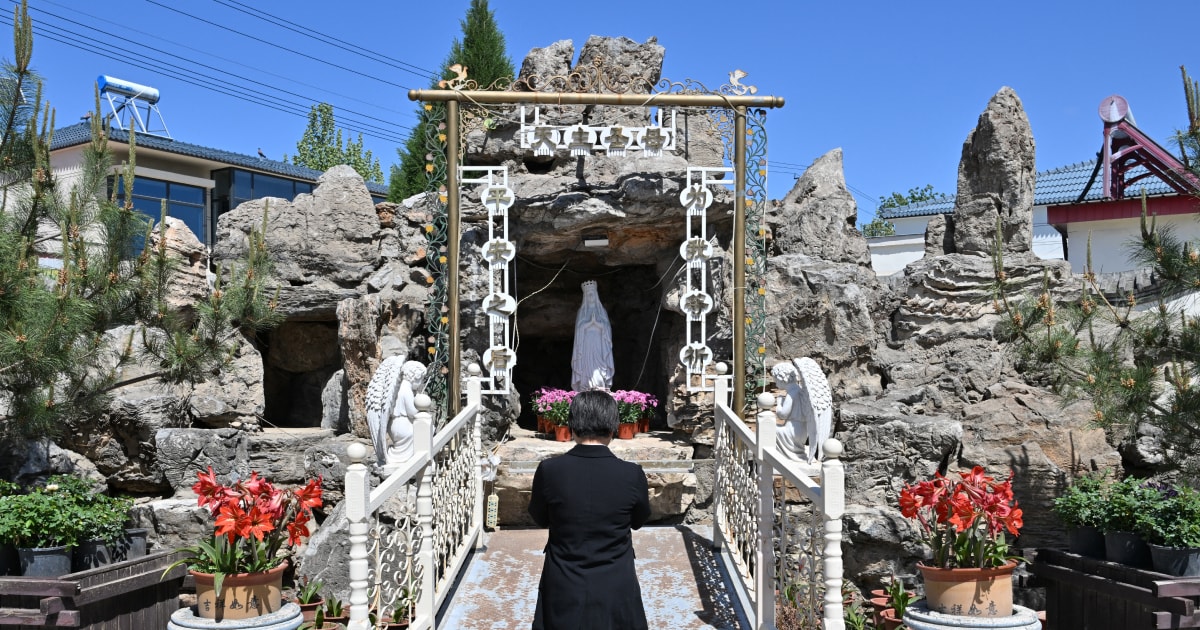
The secretary of state also commented on the Holy See’s controversial agreement with China on the appointment of Catholic bishops, first concluded in 2018 and renewed periodically since. Cardinal Parolin emphasised that the arrangement should not be understood as a political or diplomatic accord, but as a practical mechanism governing episcopal nominations. “It is not a concordat or a political-diplomatic agreement,” he said, but rather “a regulation of the process for appointing bishops”.
He argued that the principal objective of the agreement has been to ensure ecclesial unity, pointing to what he described as a significant development in the life of the Church in China. “The fact that all bishops in China today are in communion with the Pope is fundamental,” he said.
The agreement has been the subject of sustained criticism, particularly from those who argue that it has enabled the Chinese authorities to exert undue influence over the Church. Since its introduction, there have been instances in which bishops have been appointed unilaterally by the state, with subsequent recognition by Rome. The Vatican has maintained that dialogue remains the only viable path to safeguarding the Church’s presence and sacramental life in the country.
Cardinal Parolin did not directly address specific cases but situated the China policy within a broader commitment to dialogue, which he presented as a consistent thread in the Holy See’s approach to international affairs.
The cardinal also used the interview to underline the importance of supporting the Pope’s appeals for peace, particularly in the context of an increasingly fragmented international landscape. He said that the voice of the Pontiff, though “prophetic”, risks remaining unheard if it is not reinforced by wider support. “The voice of the Pontiffs is prophetic,” he said, but “it risks being a voice crying in the wilderness if it is not supported and given concrete help.”
The interview ranged further, touching on the role of Europe, which the cardinal described as struggling to act with unity. He said the continent risks losing its influence if it fails to recover a shared sense of purpose, arguing that Europe is defined not merely by geography but by “common values” that must be renewed.
He also highlighted the role of Christians in public life, calling for a greater witness to human dignity, religious freedom and social teaching. While noting that some political leaders identify as Christian, he cautioned against a selective approach to the faith. “The Christian faith, with its consequences, is not a display of various products whose choice is left in the hands of the buyer,” he said.
Alongside geopolitical concerns, Cardinal Parolin reflected on cultural and technological developments, warning that the rapid flow of information can distort perception and foster division. “We are bombarded by millions of news items, but only seemingly informed,” he said, adding that misinformation can encourage fear and the construction of “nonexistent ‘enemies’”.
He concluded by urging a renewed commitment to human relationships in an age of digital communication. “Digital can never replace humanity,” he said, linking this observation to his wider appeal for dialogue and mutual recognition.
The Holy See’s policy towards China, and its continuing defence by Cardinal Pietro Parolin, indicates that it seeks to preserve its institutional presence even as the political and moral context becomes more complex.
Rome has consistently framed its agreement with the Chinese authorities as a pastoral necessity, designed to heal a long-standing division between the state-recognised Church and the underground Catholic community. However, President Xi Jinping’s consolidation of power has coincided with a far-reaching campaign to subordinate all religious life to the priorities of the Communist Party.
Since the agreement was first signed, China has intensified its control over religious expression. Reports from Human Rights Watch and findings by the United Nations Office of the High Commissioner for Human Rights have documented widespread abuses, particularly in Xinjiang, where as many as a million Uyghurs and other Muslim minorities have been detained. The UN has stated that such actions may constitute crimes against humanity.
Within this framework, the policy of “Sinicisation” has taken on a distinctly ideological character. Religious communities are required not merely to comply with administrative oversight but to internalise the values of the state. Churches must display national symbols, adapt their liturgical and artistic life to approved cultural forms, and promote what are termed “socialist core values”. In effect, religion is being reconfigured to reinforce loyalty to the Party and, ultimately, to Xi himself.
Pope Francis has described the agreement as “diplomacy” and “the art of the possible”, drawing implicit comparisons with the Holy See’s Ostpolitik during the Cold War. Then, as now, Rome sought to preserve sacramental life and ecclesial structures under hostile regimes through cautious engagement rather than open confrontation.
The Vatican’s stated objective has been clear: to ensure that all Catholic bishops in China are in communion with the Pope. In formal terms, this aim has largely been achieved. Yet the means by which it has been realised have raised persistent questions, including the recognition of bishops appointed unilaterally by state bodies. The balance of initiative appears to lie firmly with Beijing.
Since 2018, there have been repeated instances of bishops being appointed without apparent Vatican consent, alongside moves to reorganise diocesan structures in ways not recognised by Rome. Each time, the Holy See has sought to accommodate the situation retrospectively, invoking the “greater good” of unity and stability. The pattern suggests a gradual shift from mutual agreement to de facto acceptance of faits accomplis.
Defenders of the Vatican’s approach argue that the alternatives are limited. A rupture with Beijing would likely expose Chinese Catholics to harsher repression and risk returning the Church to a condition of open division. Cardinal Parolin has described continued dialogue as a “rather obligatory path”, reflecting the constraints within which Vatican diplomacy operates.
Yet the cost of this strategy is becoming increasingly apparent. By accommodating state control over appointments, structures and aspects of religious expression, the Church risks conceding not only administrative authority but also a measure of its prophetic voice.
What emerges from the present situation is a pattern of incremental concession driven by a desire to maintain presence and avoid rupture.
The immediate implications are already visible. The underground Church, once a symbol of fidelity under persecution, faces pressure to integrate into state-approved structures. At the same time, the official Church operates within constraints that limit its freedom to act independently.