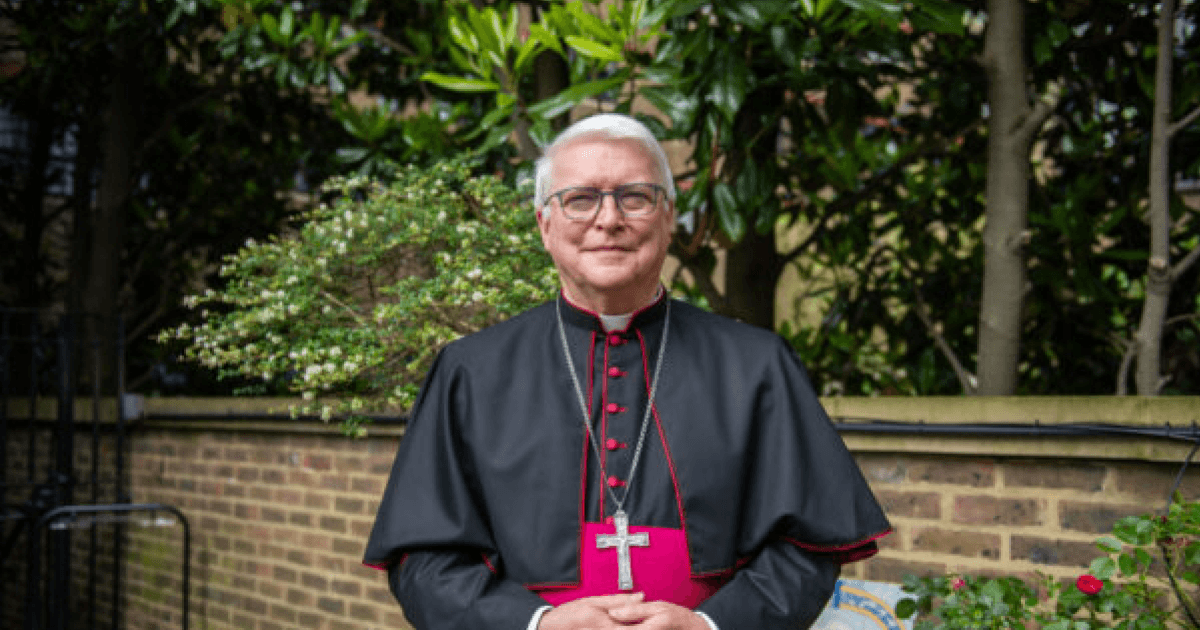


Indonesian Bishop Paskalis Bruno Syukur has resigned as head of the Diocese of Bogor amid allegations of mismanagement, abruptly ending a tenure that had attracted international attention after he declined a cardinalate in 2024.
The 63-year-old Franciscan announced his resignation before the diocesan curial council on 19 January, with the Holy See accepting it the same day, according to sources in the diocese. The Vatican appointed Bishop Christophorus Tri Harsono of Purwokerto as apostolic administrator until a new bishop is named.

In a farewell address, Bishop Syukur said he stepped down “not with a sense of loss but with freedom of heart”, adding that he did not see the decision “as a human and worldly defeat”. He insisted: “I resigned not because I was guilty, but because I love the brotherhood and unity of the Church, especially in the Diocese of Bogor.”
The resignation is highly unusual. Bishops are normally expected to offer their resignation at the age of 75, and there have been no public indications that Bishop Syukur was suffering from ill health. The Vatican did not give a formal reason for accepting his resignation.
Tensions in the diocese had escalated in recent months following the publication of an article by two diocesan priests, Father Yosep Sirilus Natet, rector of the Bogor diocesan major seminary, and Father Yoseph Kristinus Guntur, a staff member. They accused the bishop of authoritarian leadership, abuse of power, and financial mismanagement, as well as of maintaining personal relationships that they claimed influenced diocesan policy.
Central to the dispute was the bishop’s decision to take over a hospital run by the Franciscan Sisters of Sukabumi and transfer it to lay management, a move described by critics as an “expulsion” of the sisters. The priests also questioned his replacement of senior curial officials in December, alleging that the changes were carried out secretly and without a spirit of synodality involving the former curia.
In statements issued before his resignation, the bishop defended his actions as having been taken “out of love for the Church and to avoid further confusion” and “as a form of my moral responsibility”. On the hospital dispute, he said it was “a reorganisation effort for the sake of a healthier mission”, rejecting claims that the sisters had been expelled.
He also dismissed allegations of financial crisis or bankruptcy in the diocese and described claims that diocesan funds had been used for personal purposes as “baseness”. Accusations of inappropriate personal relationships were brushed aside as professional contacts undertaken “for the advancement of the diocese”. Reflecting on the conflict with clergy and curial officials, Bishop Syukur remarked that “leadership is often a lonely path”.
The controversy prompted the Holy See to appoint an investigative team led by Bishop Antonius Subianto Bunjamin of Bandung, president of the Indonesian Bishops’ Conference. Bishop Bunjamin has not commented publicly on the case. According to a Church source cited by UCA News, Bishop Syukur travelled to Rome earlier this month to respond personally to the accusations before tendering his resignation.
The episode follows the bishop’s unexpected refusal last October of a cardinalate conferred by Pope Francis, a move that drew widespread attention. Bishop Syukur later said he had been asked to decline the honour after being accused of allowing sexual abuse to occur in his diocese. He has maintained that he properly handled two abuse cases and ensured that the perpetrators were imprisoned.
Born in 1962 on the Catholic-majority island of Flores, Bishop Syukur entered the Franciscan order and was ordained a priest in 1991. He later studied spirituality in Rome and served twice as Franciscan provincial of Indonesia before his appointment as Bishop of Bogor in 2013. From 2021 to 2025 he served as secretary general of the national bishops’ conference, making him one of the most prominent figures in the Indonesian Church. His departure places him among a small but growing number of relatively young bishops appointed under Pope Francis who have left office well before retirement age, often amid internal conflict and Vatican intervention.
The current situation involving Bishop Syukur illustrates what can occur when a shepherd loses the confidence of his own flock and Rome concludes that governance has become untenable. While synodality has shown the damaging effects of excessive lay control, bishops do not govern in isolation. When a diocese becomes fractured, the consequences are pastoral before they are juridical. The case raises serious questions about how the Church discerns bishops and what signals Rome sends when it accepts a resignation well before the canonical age. This resignation reads less like a verdict on guilt or innocence and more like a judgment on credibility and confidence. A bishop may be formally cleared yet still be judged unable to lead.
The core story is that a bishop who loses the confidence of his priests and people has very few paths left. Appeals to Rome, apostolic investigations, and ultimately resignation become almost inevitable. In the Diocese of Bogor, those mechanisms were clearly set in motion. Allegations were raised publicly by clergy, certain decisions were reversed after Vatican engagement, an investigation was carried out, and then, at just 63, Bishop Syukur stepped aside.
Bishops normally remain in office until the age of 75 unless illness or grave cause intervenes. Early resignations are rare precisely because they risk undermining episcopal stability. When they do occur, they signal that Rome has judged the situation to be pastorally damaging in a way that cannot be remedied by quiet correction. In this sense, the acceptance of Bishop Syukur’s resignation points to a situation Rome considered untenable, even in the absence of a public explanation.
Bishop Syukur was not an obscure figure. Appointed by Pope Francis, he later served nationally and was named a cardinal before declining the honour. That trajectory suggested confidence from Rome. Yet confidence can erode, and in this situation allegations of authoritarian governance, internal division, and contested administrative decisions emerged. Under the new pontificate of Pope Leo XIV, this appears to have resulted in a reassessment. The reversal of certain policies, while not an admission of wrongdoing, pointed to dysfunction in diocesan leadership.
There is also a wider pattern at work. Bishop Syukur is not the first relatively young episcopal appointment of the Francis era to leave office early. Each case has its own facts, but taken together they suggest a reassessment of earlier judgments. This appears to be less about ideology and more about prudence. Under Pope Leo XIV, there is an emerging impression of a more restrained approach to episcopal governance, even if no pope can claim immunity from misjudgment.