


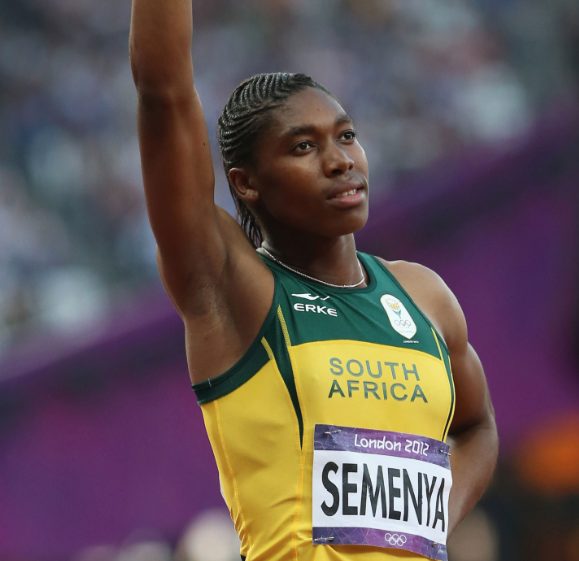
So now we are told, by campaigners and even the British Medical Association, that it’s not “women” who bear a pregnancy – it’s “people”. This week the Foreign Office was forced to deny that it had asked for the phrase “pregnant women” to be replaced by “pregnant people” in a UN treaty. Whatever the truth of the matter, activists are undoubtedly lobbying for this change in order, they say, to avoid giving offence to transgender individuals. Feminists are mightily displeased with this development, and rightly so, just as women were outraged by the Office of National Statistics’ suggestion that the census should not necessarily distinguish between male and female. Germaine Greer said that such a move denies a woman’s “right to exist”. The transgender movement arose – to some extent – from the influence of women’s liberation, but the relationship is not at all comfortable. Outspoken feminists like the lawyer Julie Bindel and the BBC presenter Jenni Murray have said that a transgendered man can never be a woman, because his/her formative experiences are different. So are the chromosomes. Of course we should look compassionately on anyone who feels they have been born into the wrong body. But many feminists believe that the movement is progressively stealing women’s identity – by appropriating pregnancy, for example, and by altering language from “motherhood” to “parenting”. Many women actually feel threatened by male-to-female transgendering. Personally, I don’t object to shared loos, but many women really dislike the idea of transgender-inclusive public toilets. In sport, feelings can be even more hostile: since an athlete born male will almost always out-run an athlete born female, sportswomen feel it’s unfair competition. The case of Caster Semenya, the South African sprinter, has illuminated this: Caster identifies as a female, but she benefits from certain male characteristics and higher testosterone, so she nearly always beats female-born competitors, who, understandably, consider this unfair. Princess Anne once said that the only occasion a man and a woman compete equally on a sports field – “it usually involves a horse”. Quite so! Women have had the privilege – and sometimes the sorrows – of being mothers, throughout human history, as European painting illuminates. Feminists are right to resist efforts to extinguish that fact. ...... I presented myself at the local railway station to buy a return train ticket, but, distressingly, I couldn’t find my Senior Rail card, which allows a third off the ticket price. The young man in the booking office knew me by sight, and said, reassuringly, there was no problem: he would issue me the reduced ticket anyway, and supply me with a note to the train inspector explaining the situation. The next day, the railcard turned up and all was well. But how important these little encounters are, when human beings trust one another, rather than falling back on rigid rules which allow no exception. In another situation, I can imagine an unbending railway official saying: “No rail card, no reduction – they’re the regulations!” And a railway run by robots would certainly not allow any leeway for a temporary forgetfulness. A little kindness can make all the difference in the course of a day. ...... On overnight stays in various hotels – usually when I’m a guest at a conference or suchlike – I have noticed the gradual disappearance from the hotel bedroom of the Gideon Bible, once such a constant feature of a hotel stay. Hotels are stridently neutral spaces these days, and I suppose managements feel they shouldn’t “offend” by “imposing” any particular religious book or image. But the Gideons – an Evangelical Christian organisation, originally American – have been distributing Bibles since 1899, and it’s another sad little sign of a tradition lost, and Christian culture occluded. The Gideon Bibles had these comforting navigational aids, at the beginning of the book, on where to find help when “anxious… bitter… discouraged… friends fail… leaving home… in sorrow… in trouble… weary”, with corresponding references to Scriptural texts. It is true that these Gideon Bibles seldom seemed well-used, but it was somehow nice to know they were there. People can choose to go online and find Bible passages from the Gideon website. But it’s never the same as the book at hand. Mary’s book reviewing feminist ideas over the past 40 years, Am I a Feminist? Are You?, is just published by New Island (newisland.ie). Follow her on Twitter: @MaryKenny4
1:00 PM
Why feminists are fighting the trans movement
Mary Kenny

4 min read



Already a subscriber? Sign in
5freearticles every month
Continue reading with a free account. No card needed.
- Five free articles every thirty days, on any device you sign in on
- The Catholic Herald newsletter, every morning
- Subscribe whenever you like for everything: every article and the magazine
Related articles
 Newsroom
Injured priest tells Poles: ‘Do not blame Ukraine’ for convent attack
Fr Adrian Mantykiewicz, who was injured in the attack that killed a fellow priest, has urged Catholics to pray for the assailant and not blame Ukrainians for his actions
Corrie Douglas-Young Newsroom
Church leaders urge Drumcree dialogue: ‘Too much is at stake’
Corrie Douglas-Young Newsroom
Thousands of Irish children to join global Rosary campaign
Corrie Douglas-Young Newsroom
TikTok priest urges young people to stand with persecuted Christians
Nathalie Raffray Newsroom
Baby born at 25 weeks reunites with neonatologist two years after leaving hospital
The Catholic Herald
subscribe to the catholic herald today
Our best content is exclusively available to our subscribers. Subscribe today and gain instant access to expert analysis, in-depth articles, and thought-provoking insights—anytime, anywhere. Don’t miss out on the conversations that matter most.
Subscribe



