



“We are on a mission from God,” declare the Blues Brothers. It’s a line played for laughs – but it lands because it hints at something serious. A life with purpose. A task that isn’t self-invented.
That same idea runs like a thread through Christian tradition. Pope Francis put it bluntly: “I am a mission on this earth and that is the reason why I am here in this world.” Not just having a mission, but being one. And long before him, St John Henry Newman wrote with characteristic precision: “God has created me to do Him some definite service; He has committed some work to me which He has not committed to another. I have my mission… He has not created me for naught. I shall do good; I shall do His work.”
It is a bracing claim. Each life has a purpose. Each person, a task. No substitutes. But what is that task? And how do we find it?
St Thérèse of Lisieux asked herself exactly that. In her autobiography, she runs through a litany of ambitions – apostle, martyr, priest, missionary. She wanted everything, all at once. Then comes the turn. The realisation that cuts through the noise: “In the heart of the Church I will be love.” Not one role among many, but the core of all of them. It defined her life. It has shaped countless others since.
If that is true – if our lives are not ultimately about ourselves, but about a mission that serves others – then the obvious question follows: how do we discover it?
For Catholics, the traditional answer is almost disarmingly simple. You stop. You step away. You go on retreat.
Once, this was taken for granted. Annual retreats were part of the rhythm of life. Popes still withdraw each Lent with the Roman Curia. Religious orders build retreats into their rule. Diocesan priests are expected to make them. It is understood as maintenance – like servicing an engine that would otherwise grind down.
But for lay people, the idea may seem unrealistic. Work deadlines, family commitments, constant notifications. Even the thought of switching off a phone for a weekend can feel like a minor act of heroism. Retreat sounds like a luxury, or worse, an irrelevance.
And yet that instinct sits uneasily with modern Catholic teaching. The Second Vatican Council, especially in Lumen Gentium, reasserted something both ancient and disruptive: the universal call to holiness. Not a two-tier Church of “serious” Christians and everyone else. Not a spiritual aristocracy. Everyone is called to holiness. Everyone is on the front line.
And if holiness is real, it has consequences. It implies a life of prayer – not as an optional extra, but as its foundation.
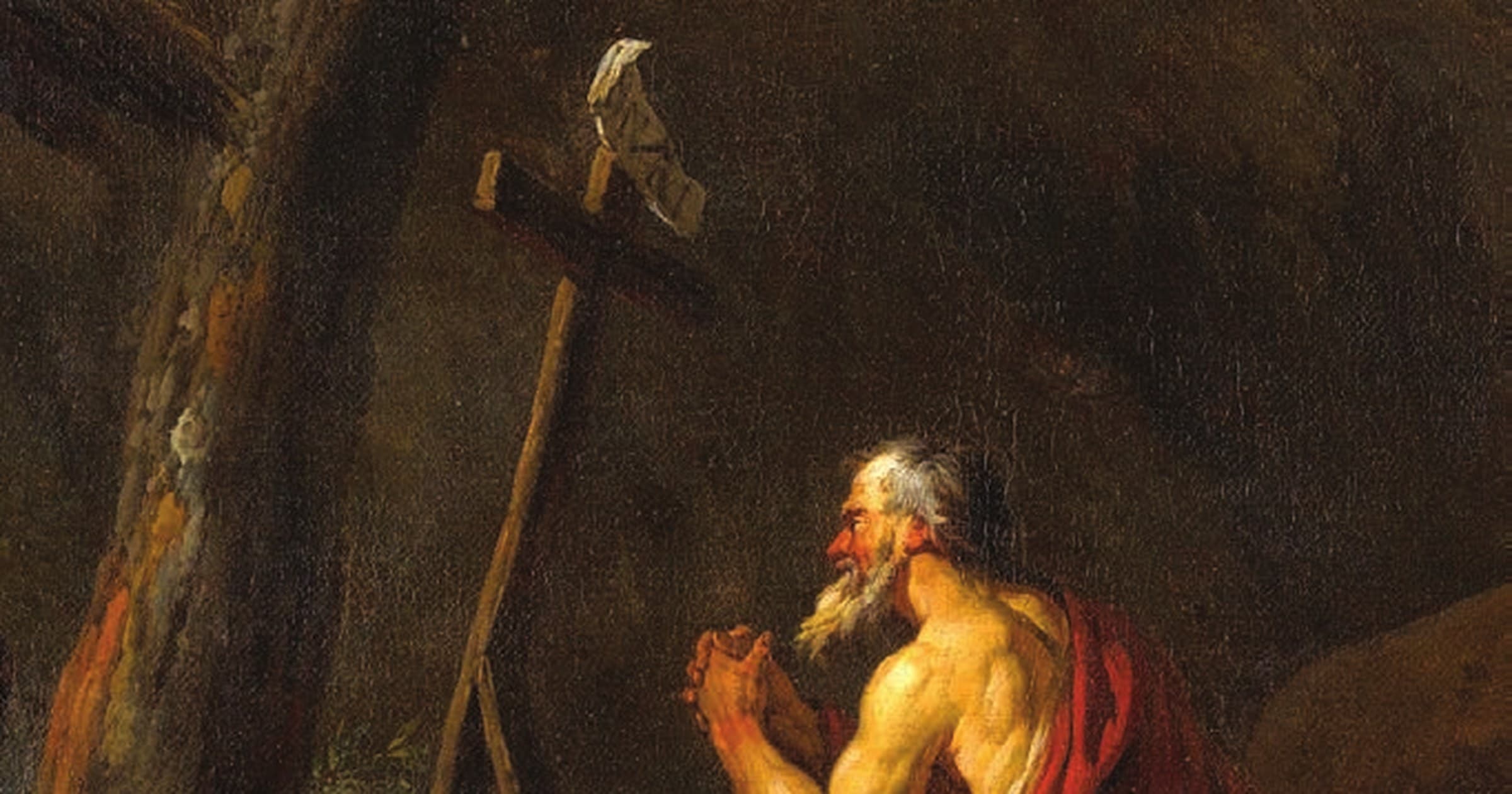
St Ignatius of Loyola was not an obvious candidate for sanctity. A soldier driven by honour and glory, he was wounded in battle and forced into a long convalescence. That enforced stillness became, in effect, a retreat. Later, he chose it deliberately, withdrawing to a cave in Manresa for months of prayer and reflection. What emerged from that period was not just personal conversion but a method – the Spiritual Exercises – a structured way of making a retreat that continues to shape lives centuries later.
A retreat is not primarily about rest, though it may include it. It is about attention. It creates the conditions in which the deeper questions – usually buried under noise and routine – can finally be heard. What have I done with my life so far? How did I get here? Where am I drifting? What needs to change? What is my mission – and am I living it?
These are not comfortable questions. But they are necessary ones.
More than that, a retreat is not just introspection. It is, at its core, relational. The Christian claim is specific: prayer is not a technique or a vague spirituality, but an encounter – with God as Father, with Christ as a person, with the Holy Spirit as present and active. The spiritual life is not a collection of practices; it is a relationship.
Even outside explicitly religious contexts, the effect of silence is striking. On television, The Monastery and its successor The Convent, participants with little or no religious background agree to live, briefly, within monastic rhythms. No phones. No distractions. Just structure, silence and time. Again and again, something shifts. Given the right conditions, people begin to confront themselves – and often, unexpectedly, to find God.
Sometimes, the consequences reach far beyond the retreat itself. Mother Teresa had already given her life to God as a Loreto sister when, during prayer, she experienced what she would later call a “call within a call”: a new mission to serve the poorest of the poor. It redirected her life – and, through her, the lives of countless others.
Which brings the question uncomfortably close to home. What is God’s call for you? And is there, perhaps, a “call within a call” that has gone unheard?
The Psalmist’s warning feels contemporary: “Oh that today you would listen to his voice.” Listening, however, requires silence. And silence, in a noisy world, rarely happens by accident. It has to be chosen.
There is no shortage of ways to do it. Ignatian retreats following the Spiritual Exercises. Monastic guesthouses offering structured days of prayer. Programmes run by religious orders and newer movements. Silent weekend retreats designed specifically for lay people trying to integrate faith with ordinary life. The forms vary, but the aim is the same: to create space for God to speak – and for us to respond.
So the invitation is simple, if not easy. Step out of the noise. Leave, for a time, the routines that fill every hour. Put down the phone. Enter the silence.
Go on retreat. Not as an escape, but as a decision.
And not eventually, when life becomes less busy – that moment rarely comes – but now.


.jpg)