




A seminarian I know recently went to a party on a Friday evening at a local university campus. The group was a crowd of young students and when he was introduced as a seminarian, as someone who was trying to become a priest and who had taken a vow of celibacy, the mention of celibacy evoked giggles in the room, some banter and a number of jokes about how much he must be missing out on in life. Poor, naïve fellow! Initially, within this group of millennials, his religious beliefs and what this had led to in his life was regarded as something between amusing and pitiful. But, before the evening was out several young women had come to him, cried on his shoulder, and shared with him their frustration with their boyfriends’ inability to commit fully to their relationship. This incident might serve as a parable describing today’s young people in our secularised world. They exhibit what might aptly be called a bipolar character about faith, Church, family, sexual ethos and many other things that are important to them. They present an inconsistent picture. On the one hand, by and large, they are not going to church, at least with any regularity; they are not following the Christian ethos on sexuality; they seem indifferent to and even sometimes hostile to many cherished religious traditions; and they can appear unbelievably shallow in their addiction and enslavement to what’s trending in the world of entertainment, fashion and information technology. Looked at from one perspective, our kids today can appear irreligious, morally blasé and on a heavy diet of the kind of superficiality that characterises reality television and video games. More seriously still, they can also appear myopic, greedy, pampered and excessively self-interested. Not a pretty picture. But this isn’t exactly the full picture. Beneath that surface, in most cases, you will find someone who is very likeable, sincere, soft, good-hearted, gracious, moral, warm, generous and searching for all the right things (without much help from a culture that lacks clear moral guidance and is fraught with over-choice). The good news is that most young people, at the level of their real desires, are not at odds at all with God, faith, Church and family. For the most part, youth today are still very good people and want all the right things. But that isn’t always so evident. Sometimes their surface seems to trump their depth so that who they really are and what they really want is not so evident. We see the surface and, seen there, our youth can appear more self-interested than generous, more shallow than deep, more blasé than morally sensitive, and more religiously indifferent than faith-filled. They can also manifest a smugness and self-sufficiency that suggests little vulnerability and no need for guidance from anyone beyond themselves. Hence their bipolarity. Mostly they want all the right things, but too often, because of a lack of genuine guidance and their addiction to the culture, they aren’t making the kinds of choices that will bring them what they more deeply desire. Sexuality is a prime example here. Studies done on millennials indicate that most of them want, at the end of the day, to be inside a monogamous, faithful marriage. The problem is that they also believe that they can first allow themselves 10 to 15 years of sexual promiscuity, without having to accept that practising 10 to 15 years of infidelity is not a good preparation for the kind of fidelity needed to sustain a marriage and family. In this, as in many other things, they are caught between their cultural ethos and their own fragile securities. The culture trumpets a certain ethos, liberation from the timidities of the past, complete with a smugness that belittles whatever questions it. But much of that smugness is actually whistling in the dark. Deep down, our youth are pretty insecure and, happily, this keeps them vulnerable and likeable. Maybe Louis Dupré, the retired philosopher who taught for many years at Yale, captures it best when he says that today’s young people are not bad, they’re just not finished. That’s a simple insight that captures a lot. Someone can be wonderful and very likeable, but still immature. Moreover, if you’re young enough, that can even be attractive, the very definition of cool. The reverse is also often true. More than a few of us adults suffer from our own bipolarity: we are mature, but far from wonderful and likeable. This makes for some strange, paradoxical binaries. So who is the actual young person of today? Is it the person who is wrapped up in his or her own world, obsessive about physical appearance, addicted to social media, living outside marriage with his or her partner, smug in his or her own non-traditional moral and religious views? That, I believe, is the surface appearance. The actual young person of today is warm, good-hearted, generous and waiting, waiting consciously for love and affirmation, and waiting unconsciously for God’s embrace.
1:00 PM
Youth today: who are they really?
Fr Ronald Rolheiser

5 min read



Already a subscriber? Sign in
5freearticles every month
Continue reading with a free account. No card needed.
- Five free articles every thirty days, on any device you sign in on
- The Catholic Herald newsletter, every morning
- Subscribe whenever you like for everything: every article and the magazine
Related articles
 Newsroom
Church leaders urge Drumcree dialogue: ‘Too much is at stake’
The Catholic and Church of Ireland Archbishops of Armagh have urged a renewed commitment to peace and reconciliation amid the Drumcree stand-off
Corrie Douglas-Young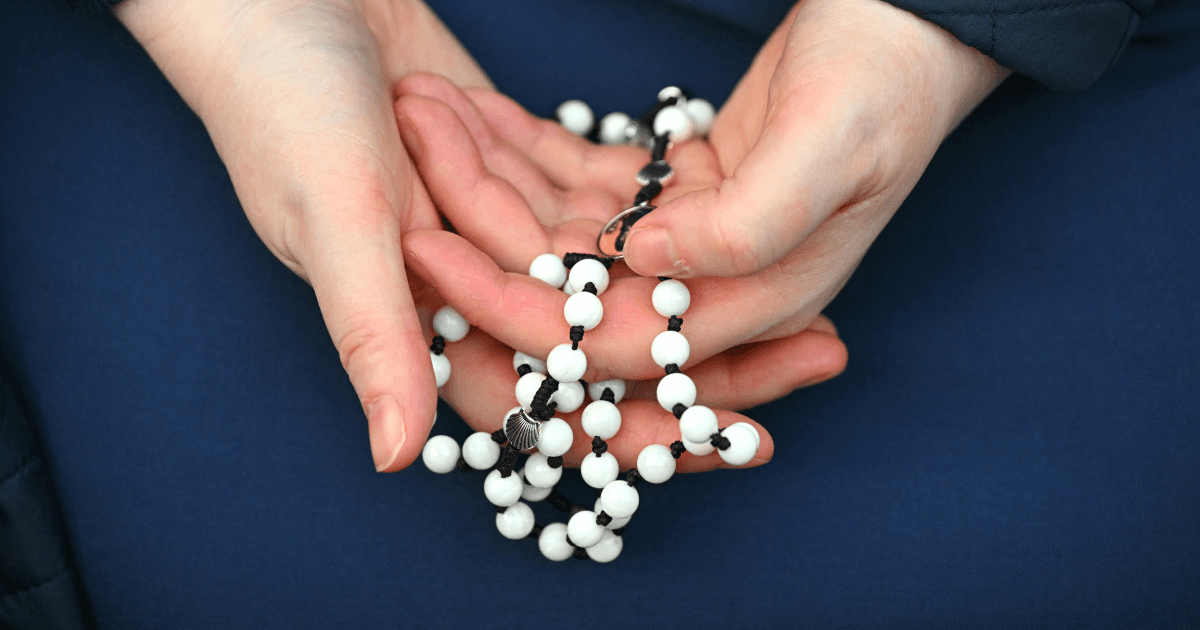 Newsroom
Thousands of Irish children to join global Rosary campaign
Corrie Douglas-Young Newsroom
TikTok priest urges young people to stand with persecuted Christians
Nathalie Raffray Newsroom
Baby born at 25 weeks reunites with neonatologist two years after leaving hospital
The Catholic Herald Newsroom
Joe Biden honoured by Planned Parenthood after defending abortion rights
Christine Rousselle
subscribe to the catholic herald today
Our best content is exclusively available to our subscribers. Subscribe today and gain instant access to expert analysis, in-depth articles, and thought-provoking insights—anytime, anywhere. Don’t miss out on the conversations that matter most.
Subscribe



