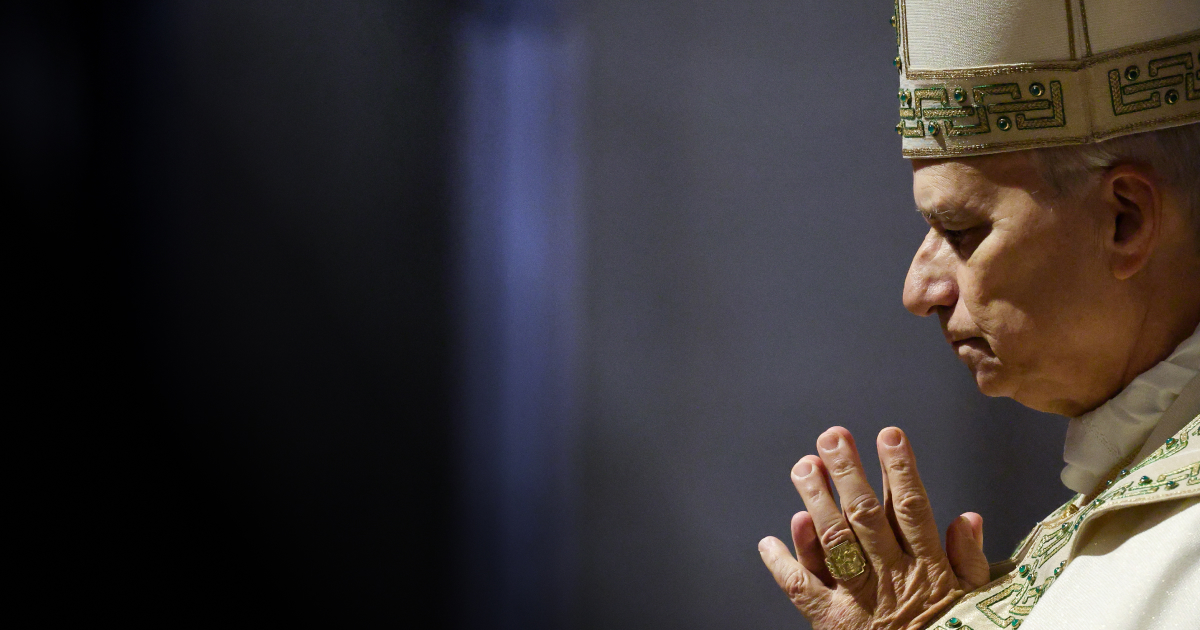


The College of Cardinals is “not called primarily to be a mere group of experts, but a community of faith,” Pope Leo XIV informed the princes of the Church on Thursday – but is that possible?
Leo’s comments formed part of his homily during the concelebrated Mass he offered with the cardinals gathered for the extraordinary consistory on Thursday morning. The early hour – doubtless not greatly appreciated by many – gave further proof of the hasty style and pace of the consistory.
One and a half days, with less than two hours of free interventions scheduled, was hardly what many observers anticipated for the event hailed as the beginning of Leo’s own agenda. Indeed, some cardinals were expressing concerns about the brevity of the meeting before it had even begun.
Members of the College of Cardinals proclaimed during the May conclave that they were surprised by how united the College was, and based on such remarks one might readily believe that Leo’s call for them to be both experts and a faithful community is easily achievable.
In truth, what Vaticanists have seen is somewhat the opposite. Far from experts, many of the cardinals chosen by Pope Francis lack the traditional qualifications and academic pedigree suitable for the office. If that sounds rather grandiose coming from a mere journalist, consider the fact that only months ago one very high-ranking cardinal was lamenting this very issue to me, while another professed during the conclave that he did not know why he had been raised to the office since he was not qualified. “Experts” many of them are not.
But perhaps “a community of faith,” then? It is true that many have shown this week that they are united, but not so much united in the faith as in synodal activism.
Take, for example, England’s own Cardinal Timothy Radcliffe OP, who gave an interview published on the Epiphany in which he called for the female diaconate, despite the Church’s clear and unchanging teaching prohibiting this. He also opined that the Church has already had a gay pope: “I’m sure there has been one already! I’ve no idea who. But I don’t think people’s sexual identity is particularly important. I’m not worried about somebody being gay – I’d be worried if they didn’t love anybody.”
Then examine the other members of the consistory. Cardinal Jean-Claude Hollerich and Cardinal Victor Manuel Fernández were both present, despite their openness to LGBT issues being entirely at odds with the beliefs held by fellow attendees Cardinals Raymond Burke and Joseph Zen.
The consistory was billed as being dedicated to four themes – Evangelii Gaudium, Praedicate Evangelium, synodality, and the liturgy. The “community of faith” was then told to select only two, of which they chose synodality and Evangelii Gaudium. The most highly anticipated topic, the liturgy, was thus effectively sidelined at the behest of the organisers, about whom the Holy See Press Office could not or would not give any details.
The College as a “community” also appears, sadly, not yet to be the case.
What, then, did this week reveal about the cardinals and the Pope? Many prelates arrived saying they were looking for Pope Leo to set the tone of the discussions and to have the final say. For his part, Leo informed the College that “I am here to listen,” and thus these past few days saw an abbreviated return of the Synod on Synodality, this time populated only by cardinals.
This has demonstrated a rather unimpressive refusal to make decisions – not, however, that this charge could be levied at all at the Vatican. Those who certainly were not demure in exercising their authority were the unknown figures involved in actually orchestrating the consistory, responsible for implementing the round table small groups and deciding on each cardinal’s place. By avoiding the customary format of gathering in plenary assembly in the New Synod Hall, the organizers thus managed to lessen the impact of any dissenting voices by ensuring that cardinals were mainly heard only by their tables, and not the whole room. When asked repeatedly who was responsible for this organizational work, the Holy See Press Office did not explain.
But perhaps this is somewhat unfair to Leo XIV. Fervently scribbling notes throughout the consistory, it appears the American Pope is committed to meeting regularly with his cardinals, such that another consistory is due in June, followed by a longer gathering every year. This, at least, is a welcome development and suggests his passivity during the consistory may lead to activity afterwards.
Now concluded, this first extraordinary consistory of Leo’s pontificate was without doubt the most prominent event in the Vatican’s calendar for many weeks, although it did not seem to deliver on the hype.
But the first of The Catholic Herald’s new weekly dispatches from the Vatican would be incomplete if one’s gaze were not cast further afield than the consistory. There is a danger that the closing of the Jubilee Year may easily be overshadowed by the consistory, and though it might not garner as much interest, it certainly marks the end of a momentous chapter.
It was a Jubilee Year opened by one pope and closed by another, something that has happened only a handful of times in history. It saw some 33 million pilgrims come to Rome and make their way through the various Holy Doors, though distinguishing between tourist and pilgrim passing through the same door is no simple task. Both traditionalists and LGBT activists were catered for with respective Jubilee events, and on the Epiphany it all came to an end.
Roman locals are breathing a sigh of relief. The crowds have taken their toll, and the ever-changing rules regarding entry into the Vatican have infuriated many accustomed to quieter times. The removal of the plethora of Jubilee barricades and pointlessly changing queuing systems cannot come soon enough.
The closing of the Jubilee also provides an occasion to reminisce about what was intended to be a year focused squarely on the Jubilee itself, yet which became overshadowed in nearly every month by other ecclesial events: the hospitalisation, death, and funeral of Pope Francis, followed by the conclave and the intense interest in Pope Leo during his first months.
The Jubilee Year, dedicated to the theme of hope, offered numerous opportunities for Catholics to avail themselves of indulgences. As someone who passed through the Vatican’s Holy Door almost daily during much of the year, such moments readily came to be taken for granted.
The culmination of the Jubilee, however, offers a chance to correct this. And if, dear reader, like your correspondent, such opportunities have lost some of their original significance, the new calendar year may be the perfect moment to renew the spiritual aspect of daily life.