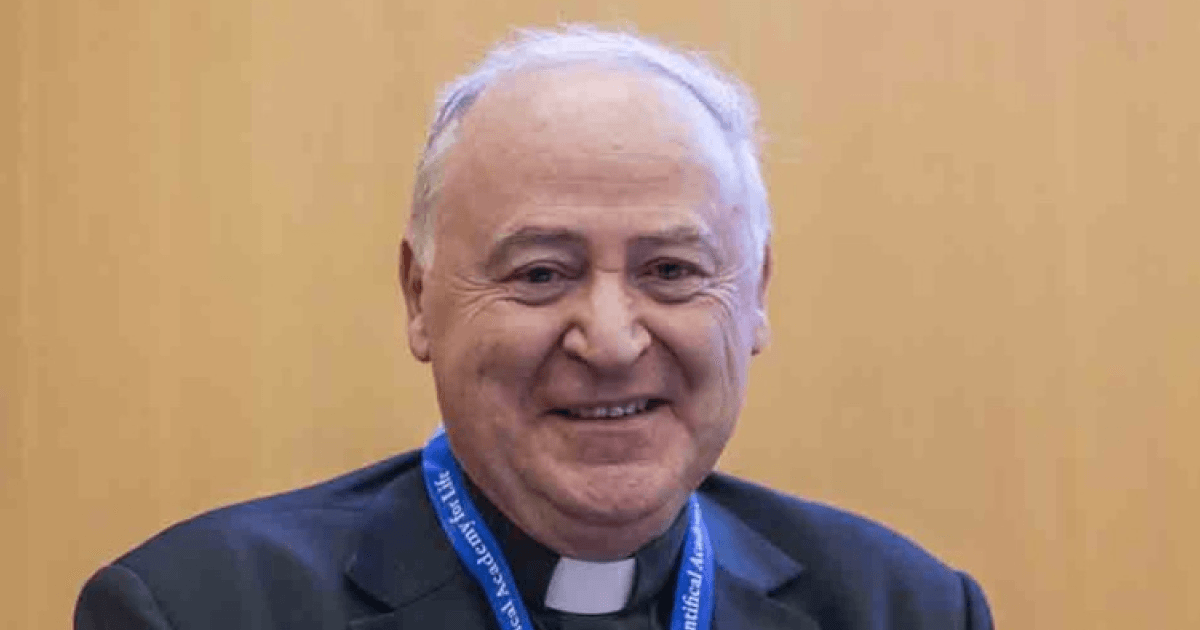

The president of the Pontifical Academy for Life has argued that Catholics can support an assisted suicide law if it is an alternative to more permissive laws.
Speaking to the news outlet of the Italian bishops’ conference, Archbishop Renzo Pegoraro weighed into the topic of end of life care and assisted suicide. Pegoraro took over from Archbishop Vincenzo Paglia in May last year as president of the Pontifical Academy for Life (PAV), after having served as chancellor since 2011.
Pegoraro first defended the offering of “palliative care” by noting Italy’s constitution requires the state “to care for the sick, by providing treatment appropriate to a specific personal situation.”
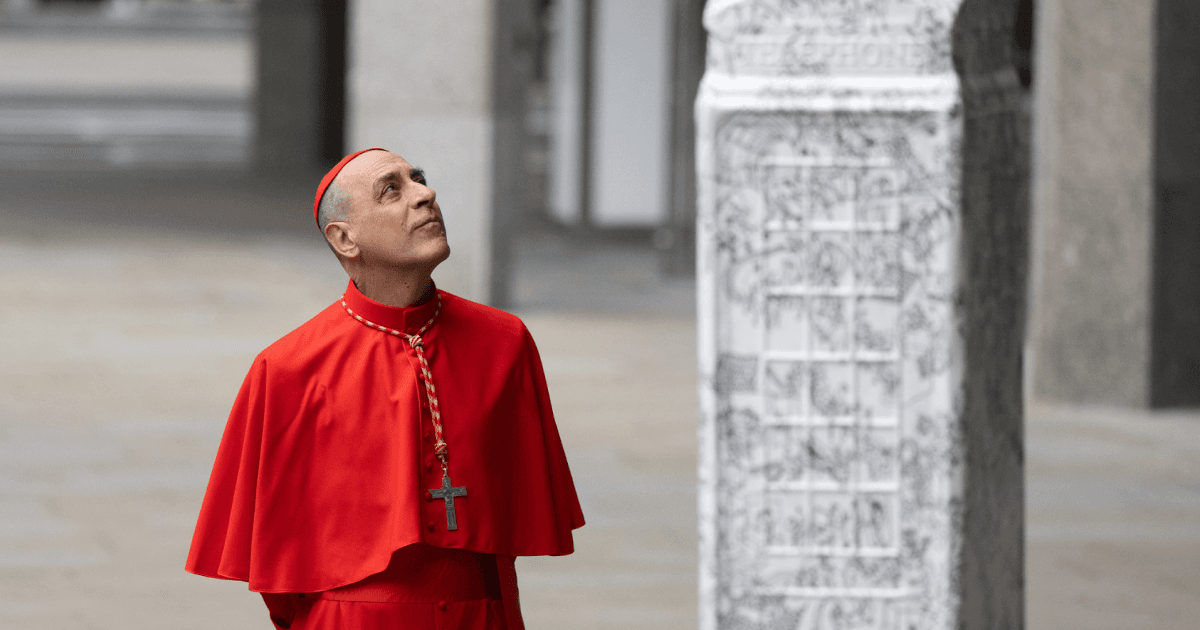
However, he then proceeded to equivocate on what response Catholics should make regarding assisted suicide legislation.
“There is no such thing as a right to assisted suicide,” Pegoraro noted. The state has the “obligation to provide care” for the sick and dying.
Continuing, Pegoraro argued that Catholics could support an assisted suicide law which he described as “imperfect law” if – somehow – their support meant that a worse bill might be avoided. The PAV president stated:
But from the Catholic perspective, the issue boils down to assessing whether we are dealing with an “imperfect law,” to which it would nonetheless be morally right to give one’s consent, given that Parliament might instead readily approve more permissive and libertarian laws that are far more detrimental to the dignity of the sick and the value of life.
Pegoraro did not expand on how support for one law might prevent another from coming into force. Historical evidence on both abortion and euthanasia shows that once an opening for either is granted in law, then it becomes far easier to remove any safeguards.
Such a claim by the PAV president has caused instant consternation among some of Italy’s Catholics, particularly those who have closely followed the turmoil which has characterised the PAV since Pope Francis overhauled it beginning in 2016.
Philosopher Dr. Thomas Scandroglio responded, highlighting the flaw’s in Pegoraro’s logic:
So how can anyone be so short-sighted as to fail to understand that, once the rationale behind an unjust law is accepted – in this case: it is legitimate to receive assistance in committing suicide – it will be impossible to prohibit increasingly permissive methods of applying that very same rationale? How can one fail to realize that it will be impossible to prevent all the safeguards put in place to limit such a law – so as not to make it too unjust – from being undermined? Has recent history regarding ethically sensitive laws taught us nothing?”
The Catholic Church has consistently opposed euthanasia or assisted suicide. Most recently the Dicastery for the Doctrine of the Faith published Samaritanus bonus calling euthanasia “a crime against human life because, in this act, one chooses directly to cause the death of another innocent human being.”
The DDF’s text also warned against any equivocation on the topic:
“The moral evaluation of euthanasia, and its consequences does not depend on a balance of principles that the situation and the pain of the patient could, according to some, justify the termination of the sick person… Euthanasia, therefore, is an intrinsically evil act, in every situation or circumstance.”
Pegoraro’s statement also appears to contravene the Catholic teaching regarding the principle of double effect, as outlined by St Thomas Aquinas. This concept notes that for an action – with both a good and bad effect – to be morally good overall, it must itself be good or indifferent. Next, the bad effect must not be directly willed, but merely tolerated. Furthermore, the good result cannot stem directly from the bad effect, else evil would be leading to good. Finally the positive result must be proportional in order to admit the accompanying bad effect.
Pope Paul VI taught in Humanae Vitae that while evil can be tolerated, it can never be pursued in order to achieve some good end. The pope wrote:
“Though it is true that sometimes it is lawful to tolerate a lesser moral evil in order to avoid a greater evil or in order to promote a greater good, it is never lawful, even for the gravest reasons, to do evil that good may come of it – in other words, to intend directly something which of its very nature contradicts the moral order, and which must therefore be judged unworthy of man, even though the intention is to protect or promote the welfare of an individual, of a family or of society in general.”
Pegoraro’s comments come in light of a recent vote in the Veneto region, where lawmakers voted to approve measures for assisted suicide. Euthanasia has been a hot topic in Italy in recent years, with activists seeking to implement it nationally, bolstered by the 2019 law which partially decriminalised euthanasia in Italy.
However, neither Pegoraro nor the PAV is new to controversy regarding euthanasia and moral issues. In a controversial interview the archbishop gave in late 2022, he appeared open to the possibility of the use of contraception. He was questioned about his comments by this correspondent twice last year, but did not reply. In March, Pegoraro was again questioned in-person by this correspondent about the remarks, but he failed to provide a clear answer.
His predecessor, Paglia, caused controversy on a number of issues, not least that of euthanasia. During a now-infamous 2023 interview, he noted his personal opposition to it but defended it for others. “Personally, I would not practice suicide assistance,” said Paglia, “but I understand that legal mediation may be the greatest common good concretely possible under the conditions we find ourselves in.”
Due to the swiftly ensuing scandal, Paglia was forced to issue a statement reiterating “his ‘no’ towards euthanasia and assisted suicide, in full adherence to the Magisterium.” Coming on the back of numerous controversies over many years of his leadership of the PAV, Paglia’s euthanasia remarks served as the final storm for many. The John Paul II Academy for Human Life and the Family penned an open letter calling for Paglia to be fired from his post in favour of a man who “unequivocally proclaims the perennial teachings of the Church and Saint John Paul both on life and on its legal protection.”
Michael Haynes is an English journalist in the Holy See Press Corps. He serves as Vatican Correspondent for the Catholic Herald, while readers can follow him at Per Mariam and on X @MLJHaynes.