April 25, 2026

Africa visit signals shift in tone and emphasis for Leo

Michael Haynes
More
Related
Min read
share

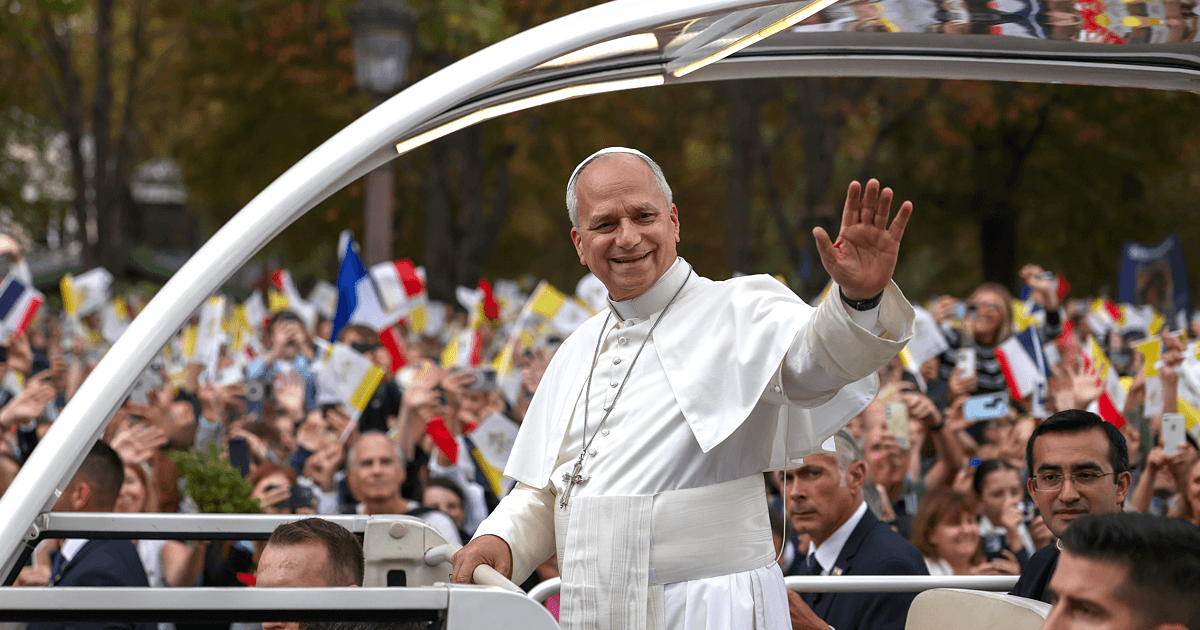
Just as in Lebanon, the reception Leo was afforded throughout his four-nation tour of Africa was immense, and there is no doubt that a new stage in the pontificate has begun in the past two weeks.

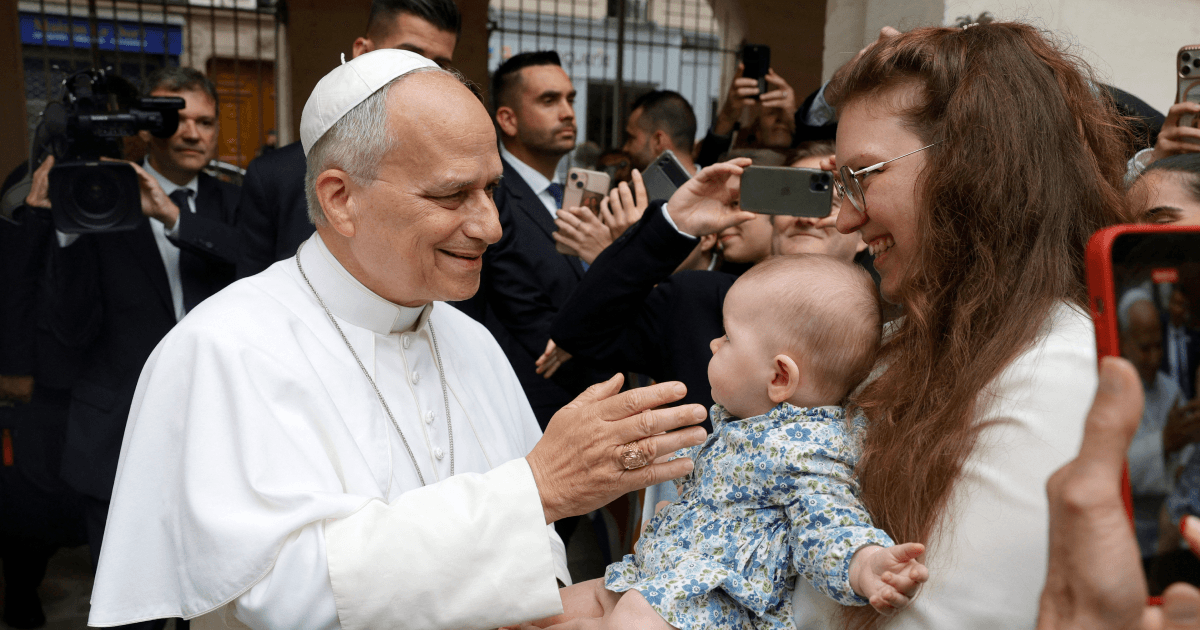
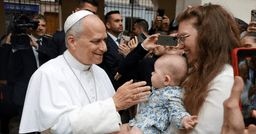
There is such regular referencing of the fact that Leo is a ‘young’ Pope that one can easily overlook the fact that, at 70 years of age, it is no mean feat to complete the journey he has just undertaken. Leaving Rome on April 13 and returning on the evening of St George’s Day, the papal caravan visited Algeria, Cameroon, Angola and Equatorial Guinea. At each location, the bubbling enthusiasm for the successor of St Peter was undeniable.
Africa has a way of spotlighting the character of a pope, and the infectious warmth of the locals’ welcome for Leo seemed to be reciprocated. Here, Leo certainly has an advantage over his immediate predecessor in that he is a fit and active man, but also has personal experience visiting Africa during his time as Augustinian Prior General. His knowledge of Africa’s blessings and torments stood him in good stead for raising his voice in strong encouragement of the local Catholics, whilst also giving firm admonitions to the authorities in each nation.

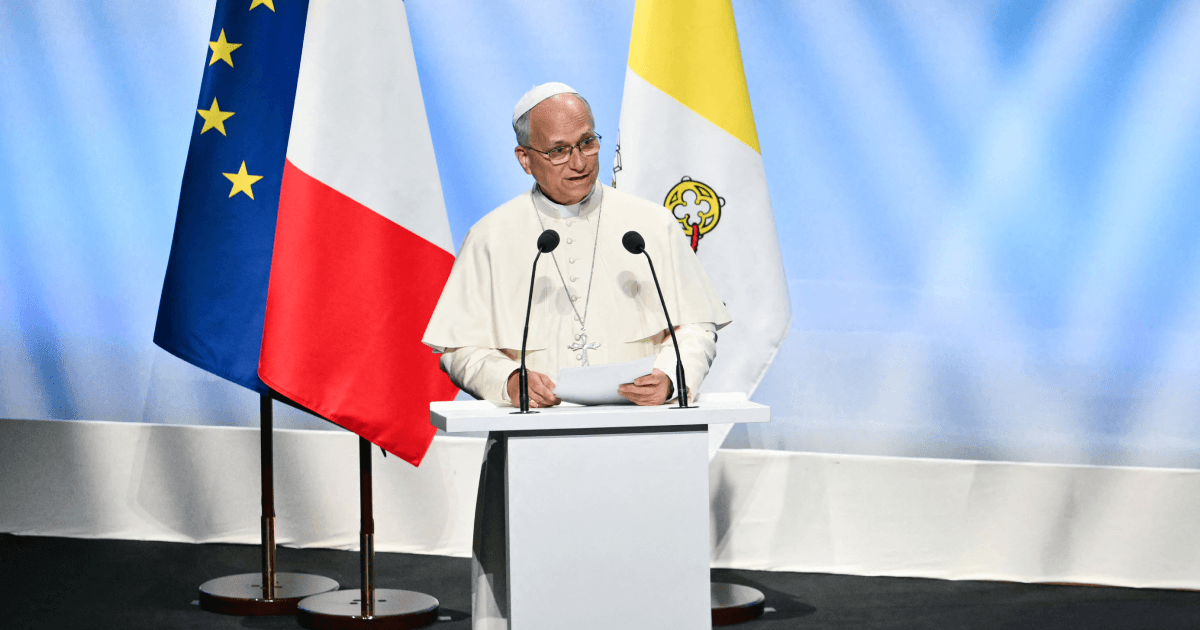
As already noted by this correspondent for the Catholic Herald, Leo’s speeches – though often described by the media as being a response to President Donald Trump – were aimed at Africa. The Pope himself admonished reporters responsible for this, commenting on the plane last weekend that: ‘A certain narrative has taken hold – one that is not entirely accurate – due to the political situation that arose when, on the first day of the trip, the President of the United States made some remarks about me.’

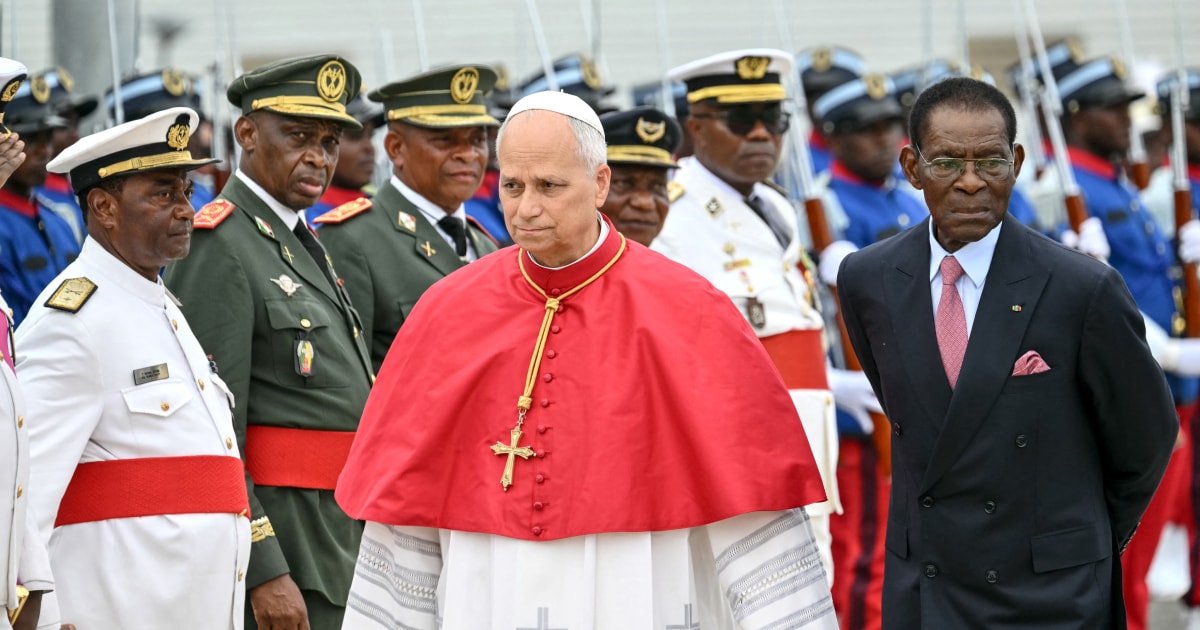
This places renewed significance on Leo’s words, for instance in his address to the president and authorities of Equatorial Guinea – largely accepted as one of the most totalitarian regimes on the globe. Standing before President Teodoro Obiang, who has held power since he seized it in a military coup more than 45 years ago, Leo cited St Augustine to warn Obiang about the pitfalls of earthly glory inherent in their project of building a new capital city:

‘The earthly city is centred upon the proud love of self (amor sui), on the lust for power and worldly glory that leads to destruction. By contrast, Augustine holds that Christians are called by God to dwell in the earthly city while keeping their hearts and minds turned towards the heavenly city, their true homeland.’

A particularly poignant moment occurred when Leo visited the nation’s notorious prison of Bata, home to many political prisoners living in conditions which have been widely condemned for their poor standards of hygiene, overcrowding, and lack of access to water or medical treatment. Allegations of torture have also been made against the prison authorities.

‘You are not alone,’ Leo told the inmates, who were assembled before him in line formation. ‘Your families love you and are waiting for you. Many people outside these walls are praying for you. If any of you fear being abandoned by everyone, know that God will never abandon you, and that the Church will stand by your side.’ Earlier that day, the Pope had expressed his concern for ‘the poorest, to families experiencing difficulty and to prisoners who are often forced to live in troubling hygienic and sanitary conditions’.

This was characteristic of much of Leo’s Africa tour. He robustly reminded political leaders of their true responsibility to their people, especially the poor and needy, while linking this duty to the ultimate end of every soul – Christ.

Such was demonstrated during his visit to a psychiatric hospital in Equatorial Guinea on Tuesday, when he sought to link the physical aim of the ward to the spiritual reality of the soul. God, said Leo, ‘loves us just as we are’, but ‘not so that we remain as we are. No, God does not want us to always be sick or suffering; he wants to heal us’.

These lines are indicative of something which Leo is doing with growing regularity: taking a phrase or theme of Pope Francis’s and adjusting it slightly to be more orthodox, thus having external thematic continuity while bringing the discussion back in line with doctrine.

Arguably the most notable example of this took place during the in-flight presser on Thursday night, just before landing in Rome. Asked about Cardinal Reinhard Marx’s push for clergy to offer blessings for same-sex couples, Leo appeared to return to the Vatican’s February 2021 note banning any such blessings, and to ignore the 2023 publication of Fiducia Supplicans. He stated:

‘The Holy See has made it clear that we do not agree with the formal blessing of couples – in this case, same-sex couples, as you requested – or of couples in irregular situations, beyond what Pope Francis has specifically permitted by saying that all people should receive the blessing.’

Despite the attempts of many who attested that Fiducia Supplicans was orthodox, the document explicitly argues for the ‘possibility of blessings for couples in irregular situations and for couples of the same sex’. Pope Francis often defended the text, while also later quite correctly – but different in meaning to Fiducia Supplicans – saying that everyone can receive a blessing.

Leo appears to have somewhat rewritten history here, reducing Francis’s intervention on the matter to the late pope’s comments on the Church’s normal mode of blessing individuals and ignoring the pope’s promulgation of Fiducia Supplicans, which authorised the blessing of same-sex couples.

Fiducia Supplicans, it seems, has not been formally abrogated, but Leo has whitewashed it into history. This is very much in keeping with what had been anticipated of the American Pope, who seems to be trying to balance showing respect to his predecessor on the throne and presenting an argument of continuity between them both, while also slowly returning to orthodox teaching. It is by no means going to please everyone, especially since a papal press conference is hardly the forum for correcting the doctrinal record. Yet it is a key insight into how Leo’s Vatican is working with the legacy it inherited.

Continue reading with a free account

Create a free account to read up to five articles each month
Create free account

You have # free articles remaining this month.

Subscribe to get unlimited access.
Sign up

subscribe to the catholic herald today

Our best content is exclusively available to our subscribers. Subscribe today and gain instant access to expert analysis, in-depth articles, and thought-provoking insights—anytime, anywhere. Don’t miss out on the conversations that matter most.
Subscribe