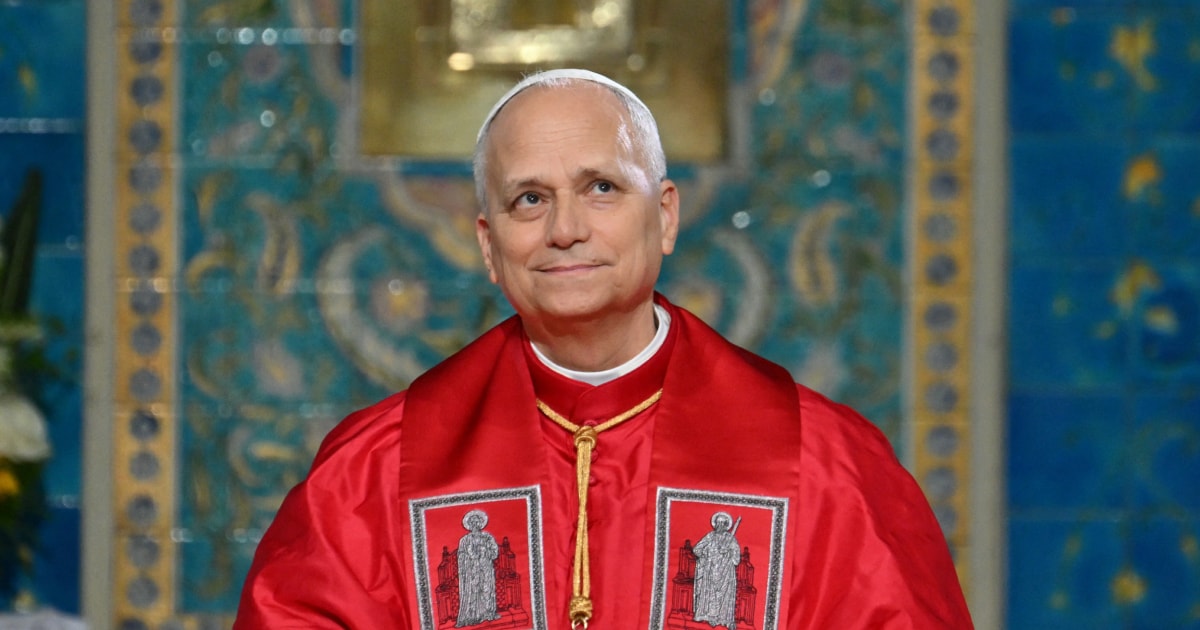
In writing to the College of Cardinals ahead of June’s consistory, Leo XIV has signalled that the age of ‘synodality above all else’ has come to an end.
For many years, Catholics have been beset by the omnipresent word synodality. It has been pushed on the Church often at the expense of all else. Since the onset of the Synod on Synodality, the word ‘synodality’ has been identified by its key Vatican advocates as being an intrinsic part of the Church’s life and nature.
For the most radical synodal revolutionaries, the process offered a chance to undermine Church teaching, craftily performed by appealing to the Spirit, as if God is guiding His Church into a new era, a new Church with new morals and teaching.
If part of that theme sounds familiar, it is because that is precisely how Pope Francis opened the Synod in 2021: ‘communion, participation and mission’, he said, would enable the Church to undergo a process of ‘change’ and ‘healing’ and become a ‘different Church’.
Indeed, the goals of the most radical synod activists included changes in Church teaching on issues such as the:
- male-only priesthood
- ecclesial and ordained hierarchy, including aspects pertaining to the papacy
- condemnation of LGBT activity
- prohibition of blessing sin, such as same-sex couples
- Church’s laws pertaining to life, including the prohibition of contraception and euthanasia
‘Maybe, if we keep questioning things then the Holy Spirit will change His mind,’ is what the synod activists argued for years, and some still do.
Leo has been much more silent on the topic of synodality. This is not to say he led some form of strident campaign against the synod: after all, he participated in both Vatican sessions of the event and – particularly in the early months of his reign – the word appeared not infrequently in his addresses.
The Pope’s usage of synodality has, however, differed from Pope Francis’s. Instead of viewing it as a means to permit questioning of everything, Leo appears to view synodality as a tool for discussing genuine needs and issues, without touching the elements of settled doctrine.
This forms the backdrop for the upcoming June consistory. In writing to the College of Cardinals just prior to his African voyage, Leo gave a summary of January’s consistory proceedings, along with hints of where his direction is heading.
Pope Francis’s apostolic exhortation Evangelii Gaudium appeared front and centre for Leo, who described the meeting as highlighting that the text ‘continues to be a significant point of reference’.
He noted in particular some of the cardinals’ proposals from January as being of particular merit, including: ‘the need to relaunch Evangelii Gaudium through an honest assessment of what has actually been embraced over the years and what, by contrast, remains unfamiliar or unimplemented, with particular attention to the necessary reforms of the processes of Christian initiation’.
Leo welcomed initiatives to ‘shift from a pastoral approach of maintenance to one of mission’, although what this would look like in practice he did not say.
But what was notable was the manner in which he referenced synodality – fleetingly. The word received just one mention in the letter, which was instead devoted to themes and concepts relating to evangelisation. ‘In my concluding remarks in January,’ wrote Leo, ‘I already referred to some elements regarding synodality that emerged from the groups. Now, I wish to focus in particular on what emerged from the groups regarding Evangelii Gaudium, especially concerning mission and the transmission of the faith.’
For something that is supposed to be the very nature of the Church, the means by which the Church lives its daily life in the modern age, Leo appears decidedly unconvinced of its importance. Rather, he seems keen to move forward with the more pressing matter of evangelisation, something which is needed both inside and outside the Church.
Indeed, this was an element he forcefully emphasised in Algeria yesterday, as he offered Mass at the Basilica of St Augustine, near to Augustine’s city of Hippo. ‘Christ’s words contain all the force of a command: you must be born again from above,’ he said in reference to Christ’s conversation with Nicodemus. ‘Such a command rings in our ears as a feat that would be impossible.’
The Pope described the ‘obligation’ of Christ as a ‘gift of freedom’ since it ‘reveals an unexpected possibility’ of being ‘born anew from above thanks to God’.
Synodality as promoted under the last pontificate has proved undeniably disastrous for the Church in the past five years. It has led to immense confusion about the Church’s nature, Her mission, Her teaching, Her hierarchical structure and ultimately the nature of truth.
There is a growing sense that Leo is aware of this enough that he is keen to direct the conversation away from what it was, and instead prioritise evangelisation. That much was revealed in January when Cardinal Mario Grech – the synod champion extraordinaire – suggested that the Pope could end the entire affair: ‘It is always up to the Bishop of Rome to convene, accompany, conclude, and – if necessary – suspend the synodal process.’
For Grech to suggest synodality may end – Grech, the man who almost embodied the synod – demonstrates that the revolution begun under Francis is not irreversible, despite what many would have the Church believe.
In his own way – slowly, quietly, somewhat tentatively – Leo is politely pulling the cardinals away from what many described as an abyss. That is not to say that much work remains if a sense of calm and normality is to return. It is always quicker and easier to destroy than to build.
The agenda for June’s consistory remains as yet formally unknown, but if Leo is keen to consider synodality a matter already discussed, then that at least is positive progress for the Church’s nature and teaching.


.jpg)