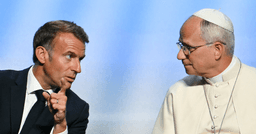
If the mainstream media were the sole source of news, one would be forgiven for thinking that Donald Trump is omnipresent on the Pope’s mind this week, but doing so would commit the error of presuming that America is the only country in the world that the Church views as worthy of consideration.
The role of a Vatican correspondent is admittedly niche and – barring the rare occasion when the secular world turns its attention to Rome – generally consists in attempting to explain to readers why papal events or speeches are worthy of their consideration instead of the latest political scandal. Not so in recent days, however, since for days on end Leo XIV has barely been able to escape the headlines as he has been placed in juxtaposition to President Donald Trump, as some kind of political foil or Democratic Party champion.
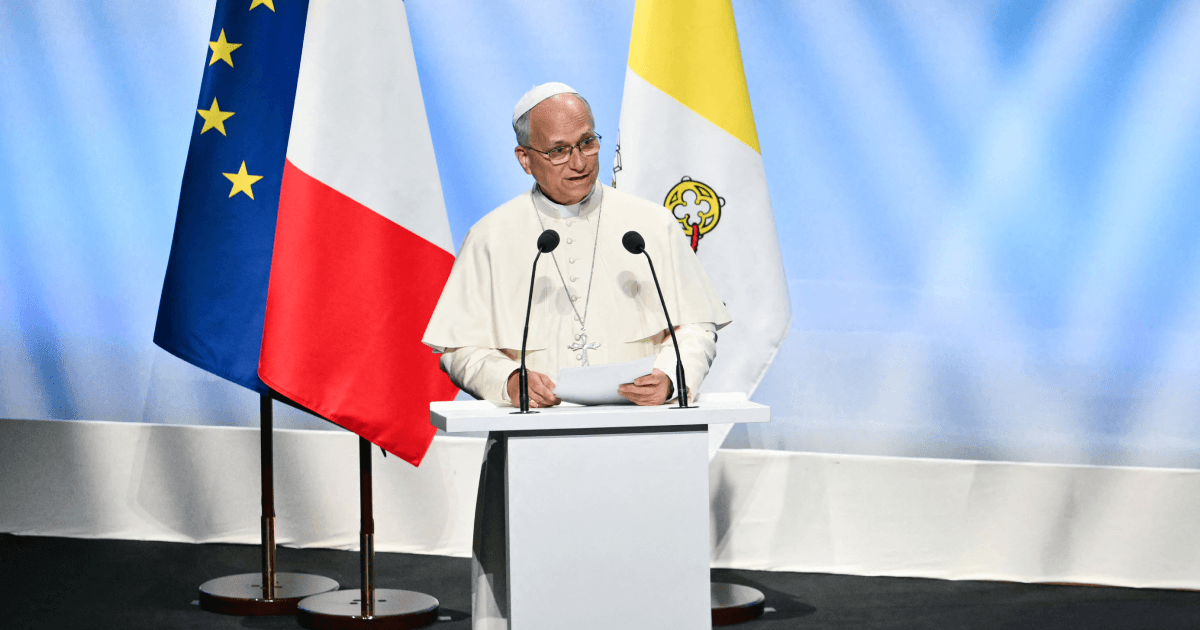
The US President’s now infamous social media attack on Leo on Sunday night has been followed by a number of media statements by Trump accusing the Pope of defending an Iranian right to have nuclear weapons. JD Vance then came to Trump’s defence, saying about the Pope that ‘if you’re going to opine on matters of theology, you’ve got to be careful’.
There is no doubt that Trump’s attack on Leo has taken centre stage in recent days, but a large aspect of that is due to careful orchestration. Leo justly criticised Trump’s plan to wreak ‘civilisation’-wide destruction on Iran, but then 60 Minutes convened three of America’s most heterodox prelates to once again critique Trump’s immigration policy. Pope Francis was a public opponent of Trump’s plan to enforce border control, and the US Left has long been keen to win Church support for its own opposition to Trump.
Cardinals Cupich, Tobin and McElroy provided just such an opportunity, and their personal opinions on immigration – framed as Church teaching – combined with Leo’s justifiable condemnation of ‘civilisation’ destruction, created the perfect storm. The two issues are completely different – war with Iran and US border policy – but in the space of a few days they have become intertwined, due to both the liberal media and to Trump himself.
With this background, every word Leo has uttered during the start of his four-country African voyage this week has been translated by secular outlets as a renewed dig at Trump. Leo’s every call for peace, and every denunciation of abuses of power and mistreatment of the population, have been viewed as ‘Pope vs President’ all over again.
But that would be to woefully misunderstand the world at large and to make the mistake that somehow the earth, and the Pope, pivot around America. The immensely complicated itinerary of Leo’s African voyage has required careful planning over many months, and his various addresses are the product of careful, researched scripting by Leo and his secretaries. They are not, as those unaccustomed to the Vatican are arguing, hastily penned texts aimed at inflicting another snub to Trump.
As Aid to the Church in Need’s Michael Kelly observed, Leo is speaking to Africa during his African voyage: ‘the assumption that everything is about the West, blinds us to the real and prolonged suffering in so many African conflicts.’
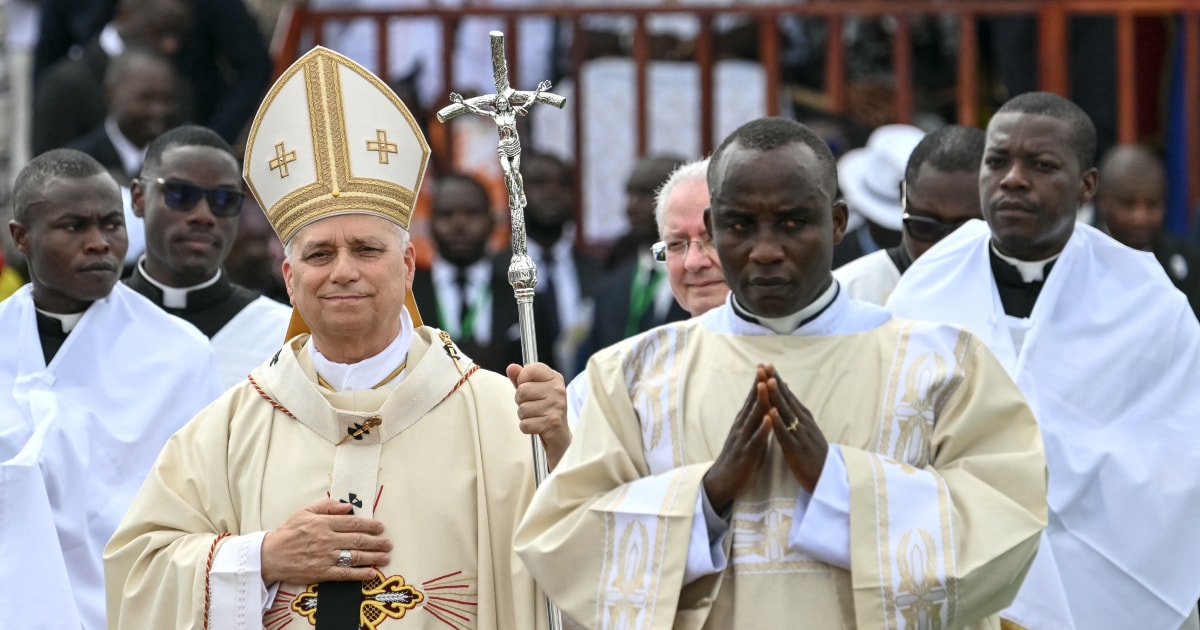
‘The world is being ravaged by a handful of tyrants, yet it is held together by a multitude of supportive brothers and sisters,’ Leo said on Thursday during a meeting for peace in the city of Bamenda, northern Cameroon. ‘I am here to proclaim peace.’
Cameroon has seen increasing instability as Muslim terrorists spill over from neighbouring Nigeria, killing thousands in the north of the country. Boko Haram has spared few in its path, and Aid to the Church in Need estimates 3,000 people have died at the hands of the terror group.
Similarly, at least 6,000 people are believed to have been killed since 2017 as part of the bloody ‘Anglophone crisis’, which has pitted government troops against separatist forces. Both sides are accused of abductions, torture, rape and murder.
Such a reality remains largely unknown to many in the West, and yet is as real to Cameroonians as the current increase in fuel prices is for those throughout Britain.
Hence when Leo spoke to Cameroon’s politicians, he urged them to ‘examine our conscience’ and said that public authorities must always exercise ‘respect for human rights, combining rigour and magnanimity, with particular attention to the most vulnerable’. Much of the secular media translated this speech into an attack by Leo against Trump, but to do so woefully ignores the bloody tragedy unfolding in Africa.
For Leo too, this crisis is not something which he can ignore, hence his visit to Bamenda, which is at the heart of the Anglophone crisis.
Welcoming Leo to the city, the local ordinary, Archbishop Andrew Fuanya Nkea, spoke of the death, destruction and immense suffering which has become daily life for Cameroonians and how the Pope’s visit was in itself a sign of hope: ‘Even if the Holy Father says nothing, his presence is a comforting one; his blessings bring peace, and his words come as a balm to the wounds of those who are bleeding.’
Nkea, who knows Leo well from sharing a table together at the Synod on Synodality, also recalled how the Catholic Church has bled for Cameroon as her clergy and religious continue ‘to bring the Gospel message as a light of hope among a traumatised people’.
Fielding questions from journalists on the plane on Monday, Leo downplayed ideas about a prolonged war with Trump. ‘I have no fear of the Trump administration, nor speaking out loudly about the message of the Gospel,’ he said. It is this which has prompted Cardinals Gerhard Müller and Raymond Burke to join numerous other prelates in defending Leo, not as a figurehead in an international jousting match, but as a religious leader whose cry for peace is – according to Burke – grounded in ‘the teaching of the Church found in the Catechism and which was classically developed by St Augustine’.
Without doubt, Leo has found his voice in the past few weeks. But if one wishes to understand the Pope, then this visit to Africa is crucial. Leo had wished to make it his first voyage, an honour which instead went to Turkey and Lebanon. Yet his concern for the slaughtered peoples of Africa, alongside his strident calls for international peace and respect for civilian populations, shows that though Leo is from America, he is the Pope of the entire Church and world.


.jpg)