




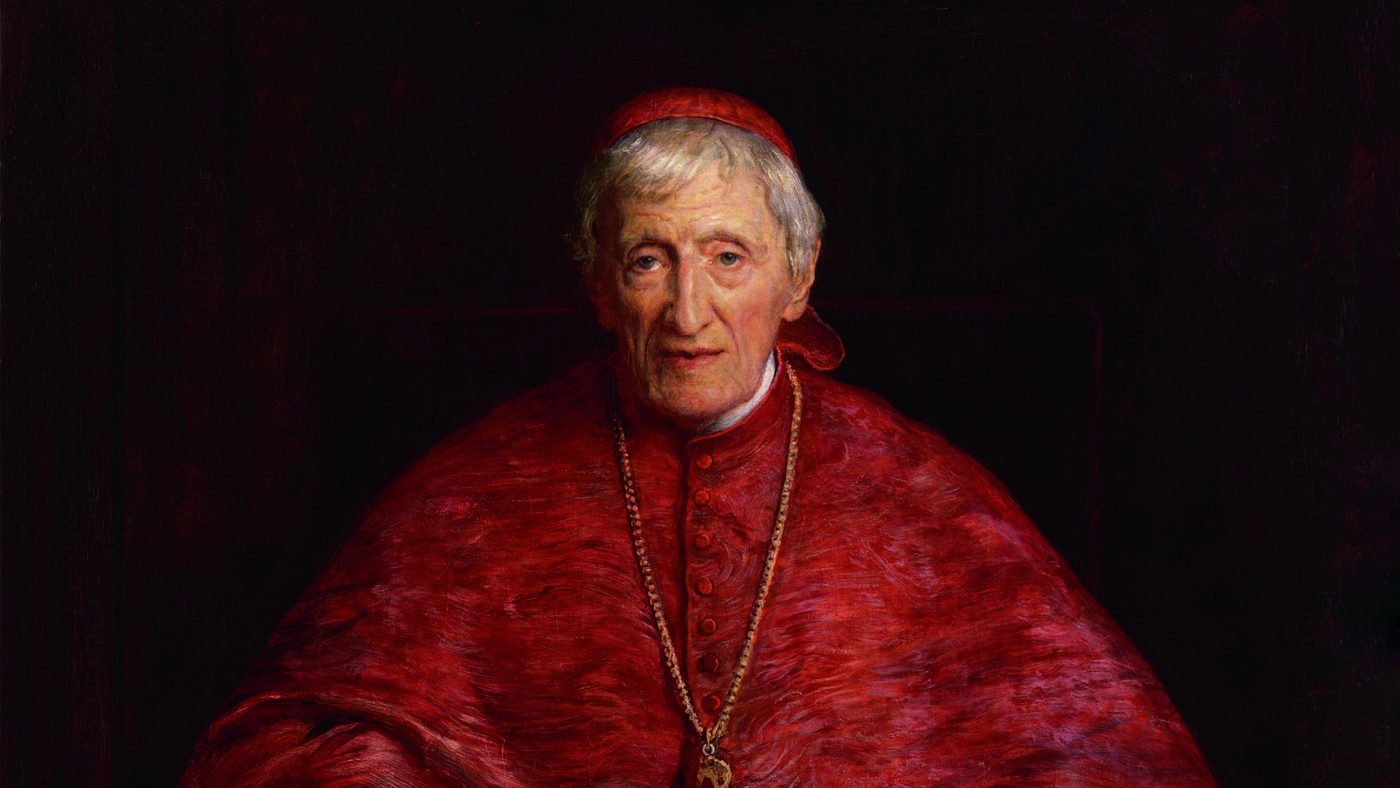
Barring the unforeseen, John Henry Newman will be declared a saint in 2019. Church authorities have determined that a woman in Chicago who had a life-threatening pregnancy and a deacon in Boston who had a debilitating spinal condition were each miraculously healed after praying to Newman, thus clearing the way for his canonisation. In time, Newman may well be named a Doctor of the Church. Perhaps the greatest mind and finest writer of his time, he devoted his considerable gifts to vindicating the religious convictions of the ordinary Catholics whose bodies he has now begun to heal. He stressed the real over the notional, the concrete over the abstract, the personal over the theoretical. “The heart is commonly reached, not through the reason, but through the imagination,” he wrote. “Persons influence us, voices melt us, looks subdue us, deeds inflame us.” Newman’s own influence amply bore out this conclusion. His manner, bearing and voice were enough to move men. They had a “mesmeric influence” (RW Church), a “wonderful charm” (AP Stanley) like a “magnetic stream” or “electric stroke” (JA Froude). In a way, Newman’s beatification (in 2010) and canonisation come late. Newman was recognised as a saint by contemporaries in the 19th century, including by many outside the Catholic fold. Veneration of Newman began at Oxford in the 1830s, when he was still an Anglican leading the Tractarian movement. “Light-hearted undergraduates would drop their voices and whisper, ‘There’s Newman’,” JC Shairp recalled. “Awe fell on them for a moment almost as if it had been some apparition that had passed.” One man wrote after seeing him: “I could almost have imagined that one of that glorious army of saints and martyrs, whose memory we were celebrating, had risen from the grave and come among us.” After Newman had converted to Catholicism and been made a cardinal, men continued their praise. “His soul was in his voice, as a bird is in its song,” wrote Henry Scott Holland. And what a voice! Matthew Arnold rhapsodised that Newman had “the most entrancing of voices, breaking the silence with words and thoughts which were a religious music – subtile, sweet, mournful.” Emily Bowles wept when she first heard this “exquisite” voice ring out from the pulpit. When, at a reception in the parsonage afterward, Newman asked Bowles, “Will you have some cold chicken?”, she was so overwhelmed that her mother had to answer for her. As his question to Bowles – both courteous and banal – should indicate, Newman did not put himself forth as a guru. A young visitor to Oxford found that Newman would rather play with his colleague’s children than talk on churchy topics:
2:30 PM
'I have nothing of a saint about me,' Newman insisted. He was wrong
Matthew Schmitz

7 min read



Already a subscriber? Sign in
5freearticles every month
Continue reading with a free account. No card needed.
- Five free articles every thirty days, on any device you sign in on
- The Catholic Herald newsletter, every morning
- Subscribe whenever you like for everything: every article and the magazine
Related articles
 Newsroom
Church leaders urge Drumcree dialogue: ‘Too much is at stake’
The Catholic and Church of Ireland Archbishops of Armagh have urged a renewed commitment to peace and reconciliation amid the Drumcree stand-off
Corrie Douglas-Young Newsroom
Thousands of Irish children to join global Rosary campaign
Corrie Douglas-Young Newsroom
TikTok priest urges young people to stand with persecuted Christians
Nathalie Raffray Newsroom
Baby born at 25 weeks reunites with neonatologist two years after leaving hospital
The Catholic Herald Newsroom
Joe Biden honoured by Planned Parenthood after defending abortion rights
Christine Rousselle
subscribe to the catholic herald today
Our best content is exclusively available to our subscribers. Subscribe today and gain instant access to expert analysis, in-depth articles, and thought-provoking insights—anytime, anywhere. Don’t miss out on the conversations that matter most.
Subscribe



