

February 12, 2026

As churches are demolished in China, the Chinese are building them elsewhere

Francis Njuguna
More
Related
Min read
share

Close to the Holy Family Minor Basilica, Nairobi’s Catholic cathedral, a team of Chinese engineers can be seen directing work on a building site.

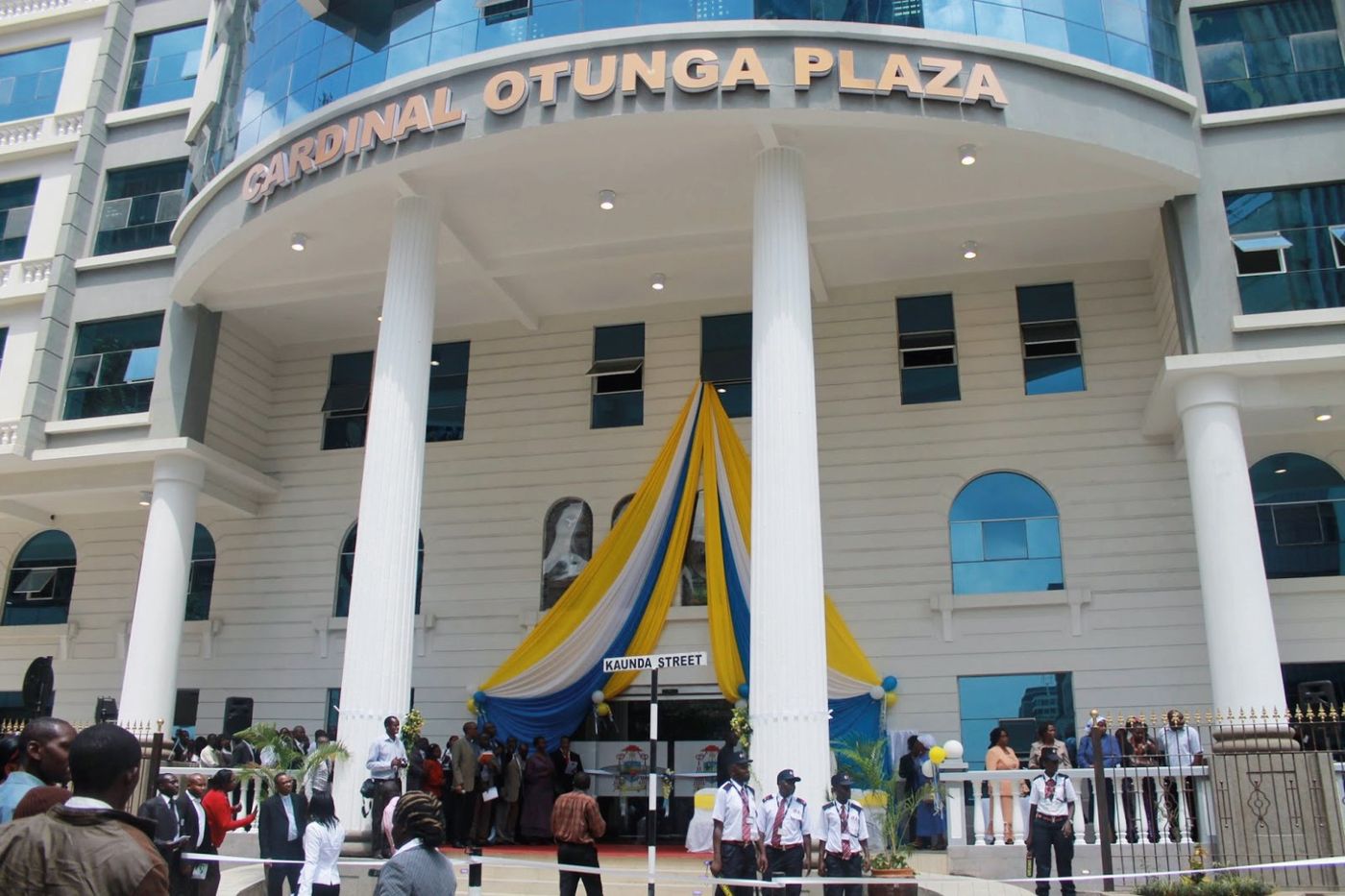
The team has been commissioned by the archdiocese to build a four-storey underground car park at a cost of £7 million ($9 million). The same engineers have already overseen the building of an ultra-modern 9-storey office block, the Cardinal Otunga Plaza (pictured), named in memory of Kenya’s first cardinal, Maurice Michael Otunga – a project that cost about £9 million ($11.5 million).
The broader picture is that Chinese firms have come to dominate major construction projects in Kenya, leaving some local companies struggling to survive. The pattern is the same for the Archdiocese of Nairobi: Chinese firms have won contracts for two churches – Our Lady of the Rosary, Kiambu, and Regina Caeli Catholic Church in Karen – and a clergy house. More such projects are expected, and not just in the capital.

In China itself, of course, authorities are not so keen on the building of churches (in some areas, demolitions are the preferred option), and there have been no official diplomatic relations between China and the Holy See since 1951.

Fr Simon Ng’ang’a, a finance official at the Archdiocese of Nairobi, has defended the use of Chinese contractors, saying they have proven themselves to be honest and trustworthy.

Bishop John Oballa Owaa of Ngong, vice-president of the Kenyan bishops’ conference, said that Church leaders were conscious of the wider problems. “We are aware of the issue and we pray hard that a solution will come,” he told me
last week.

But the archdiocese does not need permission from the Vatican. “The local Church is quite autonomous on an issue like this,” the bishop said.

Close to the Holy Family Minor Basilica, Nairobi’s Catholic cathedral, a team of Chinese engineers can be seen directing work on a building site.

The team has been commissioned by the archdiocese to build a four-storey underground car park at a cost of £7 million ($9 million). The same engineers have already overseen the building of an ultra-modern 9-storey office block, the Cardinal Otunga Plaza (pictured), named in memory of Kenya’s first cardinal, Maurice Michael Otunga – a project that cost about £9 million ($11.5 million).
The broader picture is that Chinese firms have come to dominate major construction projects in Kenya, leaving some local companies struggling to survive. The pattern is the same for the Archdiocese of Nairobi: Chinese firms have won contracts for two churches – Our Lady of the Rosary, Kiambu, and Regina Caeli Catholic Church in Karen – and a clergy house. More such projects are expected, and not just in the capital.

In China itself, of course, authorities are not so keen on the building of churches (in some areas, demolitions are the preferred option), and there have been no official diplomatic relations between China and the Holy See since 1951.

Fr Simon Ng’ang’a, a finance official at the Archdiocese of Nairobi, has defended the use of Chinese contractors, saying they have proven themselves to be honest and trustworthy.

Bishop John Oballa Owaa of Ngong, vice-president of the Kenyan bishops’ conference, said that Church leaders were conscious of the wider problems. “We are aware of the issue and we pray hard that a solution will come,” he told me
last week.

But the archdiocese does not need permission from the Vatican. “The local Church is quite autonomous on an issue like this,” the bishop said.

subscribe to
the catholic herald

Continue reading your article with a subscription.
Read 5 articles with our free plan.
Subscribe

subscribe to the catholic herald today

Our best content is exclusively available to our subscribers. Subscribe today and gain instant access to expert analysis, in-depth articles, and thought-provoking insights—anytime, anywhere. Don’t miss out on the conversations that matter most.
Subscribe