
September 7, 2026

Cardinal Burke defends Mary’s Co-Redemptrix title

Michael Haynes
More
Related
Min read
share

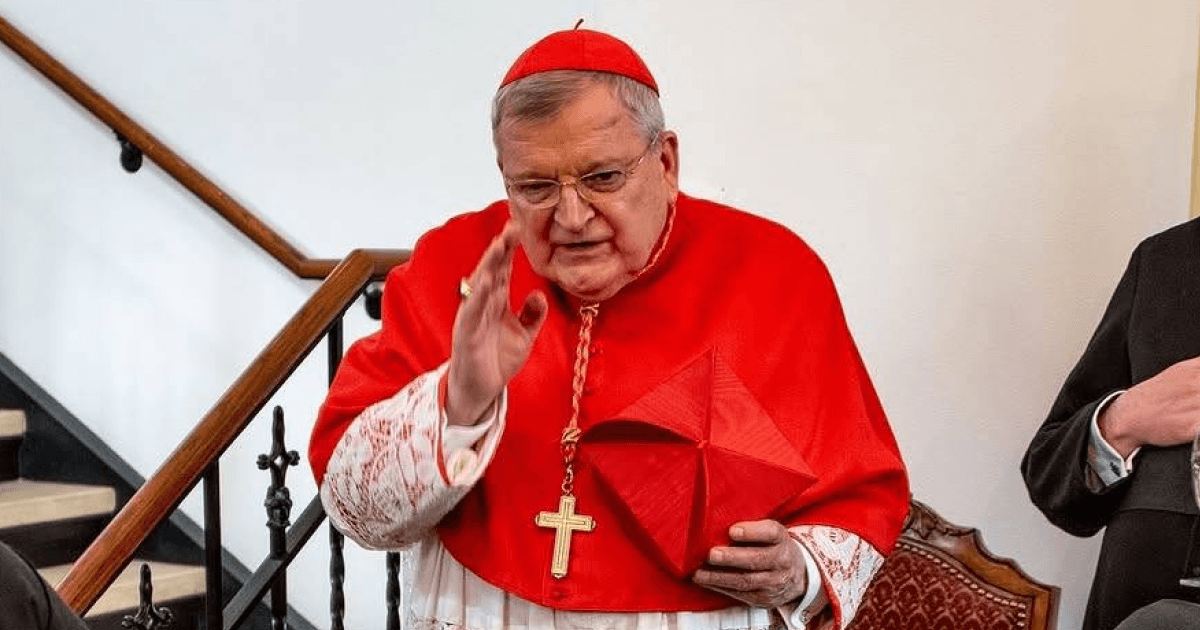
Cardinal Raymond Burke has defended the title of Mary as “Co-Redemptrix”, marking a notable pushback against a controversial Vatican document which argued against the term.

Delivering a speech in the Cathedral of Saint Bavo in the Netherlands on Sunday, Burke weighed into the Mariological debate which has been greatly accentuated following the publication of Mater Populi Fidelis by the Dicastery for the Doctrine of the Faith (DDF).

“The Blessed Virgin Mary is Co-Redemptrix, that is, she participates in Our Lord’s saving work, in a unique way,” said Burke. “We are, in virtue of Baptism and Confirmation, co-redeemers, that is, we participate in Our Lord’s saving work by sanctifying the portion of His vineyard, which He has entrusted into our care.”
His comments came at the conclusion of his exposition of traditional, theological arguments made over the centuries to denote Mary’s specific role of co-operating in Christ’s salvific work of Redemption. Based firmly in Scripture, the Church has consistently deepened its teaching regarding Mary as Co-Redemptrix, such that in previous decades the Vatican granted a partial indulgence to prayers honouring her under the term. {The Catholic Herald is in receipt of a copy of the original talk, as issued to this correspondent by Burke’s office.}

“It is not that the Sacrifice of Our Lord is in any way defective,” noted Burke, referencing the Gospel of Luke. “It is perfect and procures divine grace and eternal life for all who unite themselves to Our Lord in His Sacrifice. All that is lacking is our wholehearted participation in Our Lord’s Sacrifice, our daily taking up the Cross and following Him.”

God’s promise to the prophet Isaiah (Is 61: 10-11) is “fulfilled, first of all and most perfectly of all, in the life of the Blessed Virgin Mary by her irreplaceable cooperation in the Mystery of the Redemptive Incarnation,” noted Burke. “It is to be fulfilled in each of our lives as co-workers, with the Virgin Mother of God in her Divine Son’s work of the Redemption.”

Burke’s public use of the term is notable since it marks one of the first such occasions in which a cardinal has defended the ancient term following Mater Populi Fidelis (MPF). Published on November 4 last year, MPF argued strongly against using the term.  

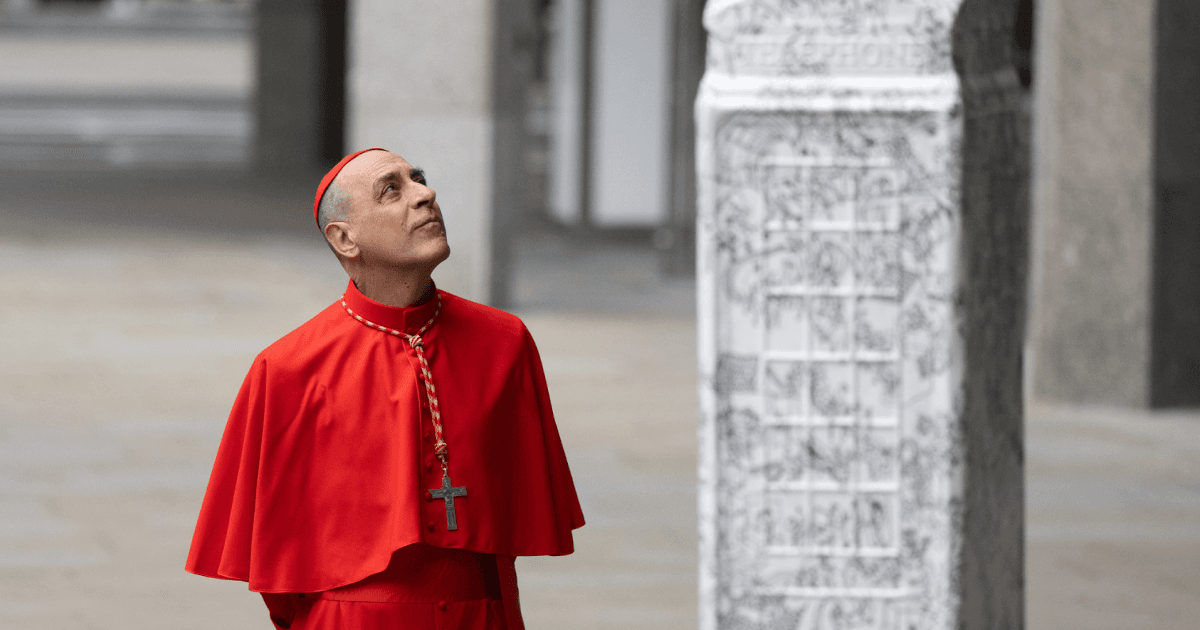
“Given the necessity of explaining Mary’s subordinate role to Christ in the work of Redemption, it would not be appropriate to use the title ‘Co-redemptrix’ to define Mary’s cooperation,” DDF prefect Cardinal Victor Manuel Fernández wrote.

Fernández could not argue that the term was in anyway wrong or illicit, since the Church has consistently taught the correct theological understanding of the term for many centuries, and popes have given direct approval of it. Instead, he argued that the title was unfitting, since it “risks obscuring Christ’s unique salvific mediation and can therefore create confusion and an imbalance in the harmony of the truths of the Christian faith.”

Fernández heavily cited Pope Francis in the text, along with invoking the ecumenical cause as being a reason not to use the Co-Redemptrix term.  

Contrary to the argument of many critics, the term does not seek to place Mary on an equal footing with Christ. It means “she who buys back with,” with Mary Co-Redemptrix being a co-operator in Christ’s salvific action, but always subordinate to him.  

The French Mariologist Fr. Neubert explained that “we can say we have been saved first and principally by Christ and secondarily by the action of Mary in subordination to the action of Christ.”

A great wealth of teaching on the term and the theology behind it has been present in the Church for many centuries, and Mariologists have long been campaigning for the Vatican to formally pronounce Mary as Co-Redemptrix as part of a fifth Mariam dogma.  

Following publication of Mater Populi Fidelis, Mariologists widely critiqued the document for faulty logic, argumentation and content. Father Serafino Lanzetta STD commented that “never in the history of the Church has the magisterium said what this document says; instead, it basically states the ‘right opposite’ of what the Church Fathers and previous Popes have historically taught.”

Criticism of the text was both instant and widespread. The Society of Saint Pius X even cited it as a key factor in proceeding with their July 1 episcopal consecrations.  

Reportedly, Fernández had not consulted any Mariologists when writing the text, although he later told Vaticanista Diane Montagna that he had consulted such experts.

In light of the immense furore, Fernández expanded on his Note and somewhat reversed track – saying that the term may be used privately but just not in official documents. He told Montagna that: “If you, together with your group of friends, believe you understand well the true meaning of this expression, have read the document, and see that its positive aspects are also affirmed there, and you wish to express precisely that within your prayer group or among friends, you may use the title — but it will not be used officially, that is, either in liturgical texts or in official documents.”

Burke is set to headline a high-profile Mariological conference in Rome at the start of October, and organisers have told this correspondent that the conference discussion will involve further study of the Co-Redemptrix term. (A full interview with the organisers will be published on the Catholic Herald in the coming days).

Michael Haynes is an English journalist in the Holy See Press Corps. He serves as Vatican Correspondent for the Catholic Herald, while readers can follow him at Per Mariam and on X @MLJHaynes.

Continue reading with a free account

Create a free account to read up to five articles each month
Create free account

You have # free articles remaining this month.

Subscribe to get unlimited access.
Sign up

subscribe to the catholic herald today

Our best content is exclusively available to our subscribers. Subscribe today and gain instant access to expert analysis, in-depth articles, and thought-provoking insights—anytime, anywhere. Don’t miss out on the conversations that matter most.
Subscribe