September 3, 2026

Cardinal Koch defends papal primacy in ecumenical work

Michael Haynes
More
Related
Min read
share

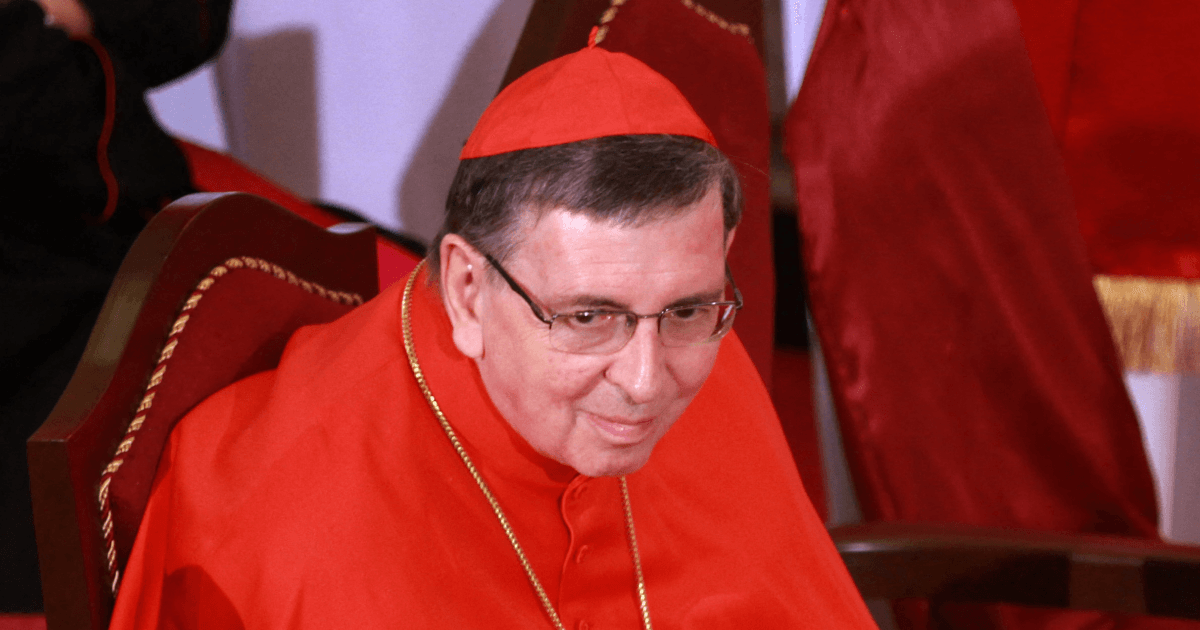
One of the Vatican’s most senior prelates has defended the Church’s teaching on papal primacy, two years after his office published a document containing calls to alter the teaching in order to aid ecumenism and implement synodal governance.  

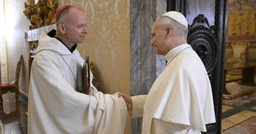
Cardinal Kurt Koch has led the Dicastery for the Promoting Christian Unity (DPCU) since 2010, and as such has been one of the key figures in Vatican ecumenism for three successive pontificates. He was appointed to the role by Pope Benedict XVI, and Koch is viewed as one of the strong body of clerics still active in Rome who very much champion the legacy of the German pope.  
Speaking to French Catholic outlet Tribune Chrétienne this week, Koch dealt with the topic of papal primacy, an issue which is naturally a prominent topic in his mandate of ecumenism.  

An ecumenical view of the papacy must involve a two-fold aspect, he said. First, the Church must note that “many Christian communities consider the question of the papacy as a major obstacle on the path to restoring Christian unity.” Second, the Church cannot betray Her own teaching: “the Catholic Church is convinced in faith that the ministry of unity of the successor of Peter is a precious gift of the Holy Spirit given to the Church.”  

The gift of the papacy is something which Koch noted the Church cannot keep as a private possession, “but has the duty to also offer this gift to other Churches and ecclesial communities.”

Crucially, Koch added that in this process, “there can be no question of calling into question Catholic doctrine on the primacy of Peter's successor.”  

He recounted how the DPCU is tasked with gathering and assessing the responses of different churches to Pope John Paul II’s Ut unum sint, and the call contained within the encyclical for viewing papal primacy as a positive aspect rather than as “a factor of division”.

“It is only from this work that it would then be possible to envisage the way in which papal primacy could be exercised,” Koch said. “The result should then be presented to the Pope in order to gather his point of view.”  

Koch’s defence of papal primacy in this week’s interview is no small matter. In June 2024 his dicastery published a key document on the papacy, ecumenism and synodality in which papal primacy appeared subject to both ecumenism and synodality.

The document “The Bishop of Rome. Primacy and Synodality in the Ecumenical Dialogues and in the Responses to the Encyclical Ut unum sint,” was the product of nearly four years of work marking the 25th anniversary of Ut Unum Sint. It presented a quietly radical overhaul of the concept of the papal office, such that papal primacy became intertwined with the novel understanding of synodality.  

“A first general agreement is the mutual interdependency of primacy and synodality at each level of the Church, and the consequent requirement for a synodal exercise of primacy,” the text read.

Devolution should also be involved, the DPCU added, so that the pope could be viewed more as the bishop of the Diocese of Rome rather than sovereign pontiff. A series of suggestions by the DPCU argued for the benefits of a papacy devolved in power, so that a greater emphasis on the “ministry of the Pope in his own particular Church, the diocese of Rome, would highlight the episcopal ministry he shares with his brother bishops, and renew the image of the papacy.”

This concept was not limited to the papacy, but was posited for the wider Church also as the DPCU advocated for a modification of the understanding of the Catholic Church as “universal.” The rationale was that this could hurt ecumenical efforts. “Roman primacy should be understood not so much as a universal power in a universal Church (Ecclesia universalis), but as an authority in service to the communion between the Churches (communio Ecclesiarum), that is to the whole Church (Ecclesia universa).”  

While Koch’s document made waves at the time of its 2024 release, due to its apparent demotion of the papacy, his recent interview with Tribune Chrétienne points to a more traditional emphasis on the role of the pontiff and papal primacy.  

Pope Leo has been keen to continue the rhetoric of his predecessor in advocating for synodality as a key feature in the Church. However he has differed somewhat in the style of synodality, appearing to lean more into the concept as a collective listening process rather than one in which established teaching is questioned.  

As such, it is unlikely that he will move in the direction of sacrificing papal authority on the altar of collective, synodal governance. While his consistories of cardinals have been based on the synod method, the actual matters of governance and import were not consigned to the cardinals and instead reserved to the Pope.  

Nevertheless, critics of the heavy emphasis on synodality have questioned Leo’s focus on synodality and whether it represents an oversight in his young pontificate away from more pressing doctrinal and governance matters.

Michael Haynes is an English journalist in the Holy See Press Corps. He serves as Vatican Correspondent for the Catholic Herald, while readers can follow him at Per Mariam and on X @MLJHaynes.

Continue reading with a free account

Create a free account to read up to five articles each month
Create free account

You have # free articles remaining this month.

Subscribe to get unlimited access.
Sign up

subscribe to the catholic herald today

Our best content is exclusively available to our subscribers. Subscribe today and gain instant access to expert analysis, in-depth articles, and thought-provoking insights—anytime, anywhere. Don’t miss out on the conversations that matter most.
Subscribe