December 23, 2025
December 23, 2025

Cardinal Müller on dialogue, tradition and the Church’s internal tensions

Min read
share

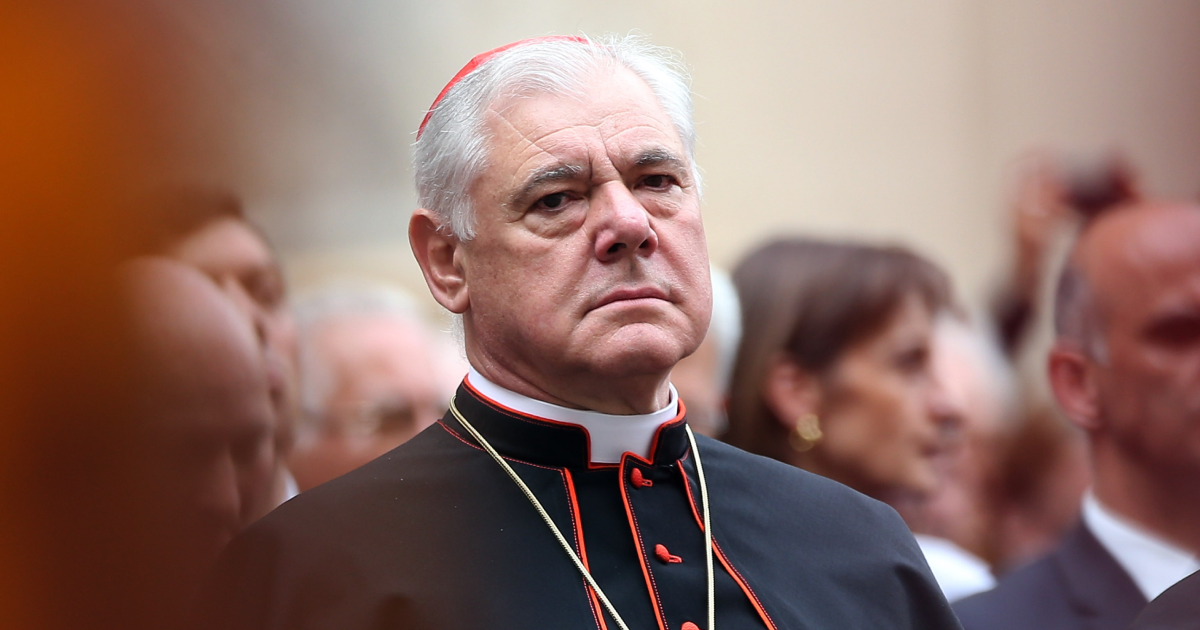
Cardinal Gerhard Ludwig Müller has accused the Vatican of operating a damaging double standard, arguing that its constant appeals to dialogue and respect are selectively applied and too often withheld from faithful Catholics themselves.

Speaking in a recent interview with Michael Haynes of Pelican +, the former prefect of the Congregation for the Doctrine of the Faith said that current approaches had deepened division rather than healed it. He argued that while Church authorities frequently stress openness and respect in their engagement with contemporary cultural movements, this spirit is not consistently extended to practising Catholics, particularly those who wish to attend the Traditional Latin Mass.

Cardinal Müller’s remarks come amid a prolonged debate over the decision to restrict the celebration of the traditional Roman Mass, a move that has affected dioceses and religious communities across the world. Asked directly about the policy, the German cardinal said it was “not so good” that Pope Francis had suppressed the Tridentine Rite “in an authoritarian way”.

The former prefect went further, suggesting that Pope Francis’s rhetoric had unfairly stigmatised a significant group of faithful Catholics. Pope Francis, Cardinal Müller said, had been “hurting and committing an injustice by accusing everyone who loves the older form of the rite of being against the Second Vatican Council in a general way, without any differentiating justice to single persons”.

The cardinal emphasised that the Church’s unity cannot be sustained by coercive measures. “We do not have a police state system in the Church, and we do not need one.” He added that “the Pope and the bishops must be good shepherds”.

Cardinal Müller’s assessment of the treatment of traditional Catholics may seem obvious to some, but it opens a wider question about whether the Church still knows what it is trying to be. How the Church orders its priorities reveals what it believes about truth, authority and the human person, and whether doctrine is something to be lived and taught, or managed and sidelined. The present tension is therefore less about liturgy or personality than about a shift in ecclesial culture, in which image and gesture increasingly displace theological coherence.

This is the context in which Cardinal Gerhard Ludwig Müller’s remarks must be read. His criticism of what he sees as a double standard in Rome is not a conservative lament for a vanished past, but a diagnosis of a deeper pattern. “All the time they speak about dialogue and respect for other persons,” the cardinal said, adding that “when it comes to the homosexual agenda and gender ideology, they speak about respect, but toward their own people, they have no respect.” 

The point is not that engagement with the modern world is wrong. The Church is, by her nature, universal. The problem arises when engagement becomes performative, selective and detached from the Church’s own doctrinal centre of gravity.

This is not merely a complaint about process. It points to a failure of theological discrimination, an inability or unwillingness to distinguish between legitimate attachment to tradition and ideological opposition to the Council.

What emerges is a picture of a Church increasingly comfortable with large scale public spectacle, celebrity endorsement and tightly managed messaging, while appearing uneasy with the slow, quiet work of doctrinal formation. Rome today is saturated with events, conferences, concerts and curated encounters designed to project openness and relevance. Yet Catholics who ask for continuity, doctrine or tradition often find themselves treated as problems to be contained rather than as members of the Roman Catholic Church.

The danger of the present moment is not that the Church engages the world, but that she forgets herself in the process. When doctrine is treated as an embarrassment, tradition as a liability and stability as dull, the result is not renewal but confusion. The credibility of the Church does not rest on spectacle or approval, but on her willingness to be recognisably and unapologetically Catholic.
Cardinal Gerhard Ludwig Müller has accused the Vatican of operating a damaging double standard, arguing that its constant appeals to dialogue and respect are selectively applied and too often withheld from faithful Catholics themselves.

Speaking in a recent interview with Michael Haynes of Pelican +, the former prefect of the Congregation for the Doctrine of the Faith said that current approaches had deepened division rather than healed it. He argued that while Church authorities frequently stress openness and respect in their engagement with contemporary cultural movements, this spirit is not consistently extended to practising Catholics, particularly those who wish to attend the Traditional Latin Mass.

Cardinal Müller’s remarks come amid a prolonged debate over the decision to restrict the celebration of the traditional Roman Mass, a move that has affected dioceses and religious communities across the world. Asked directly about the policy, the German cardinal said it was “not so good” that Pope Francis had suppressed the Tridentine Rite “in an authoritarian way”.

The former prefect went further, suggesting that Pope Francis’s rhetoric had unfairly stigmatised a significant group of faithful Catholics. Pope Francis, Cardinal Müller said, had been “hurting and committing an injustice by accusing everyone who loves the older form of the rite of being against the Second Vatican Council in a general way, without any differentiating justice to single persons”.

The cardinal emphasised that the Church’s unity cannot be sustained by coercive measures. “We do not have a police state system in the Church, and we do not need one.” He added that “the Pope and the bishops must be good shepherds”.

Cardinal Müller’s assessment of the treatment of traditional Catholics may seem obvious to some, but it opens a wider question about whether the Church still knows what it is trying to be. How the Church orders its priorities reveals what it believes about truth, authority and the human person, and whether doctrine is something to be lived and taught, or managed and sidelined. The present tension is therefore less about liturgy or personality than about a shift in ecclesial culture, in which image and gesture increasingly displace theological coherence.

This is the context in which Cardinal Gerhard Ludwig Müller’s remarks must be read. His criticism of what he sees as a double standard in Rome is not a conservative lament for a vanished past, but a diagnosis of a deeper pattern. “All the time they speak about dialogue and respect for other persons,” the cardinal said, adding that “when it comes to the homosexual agenda and gender ideology, they speak about respect, but toward their own people, they have no respect.” 

The point is not that engagement with the modern world is wrong. The Church is, by her nature, universal. The problem arises when engagement becomes performative, selective and detached from the Church’s own doctrinal centre of gravity.

This is not merely a complaint about process. It points to a failure of theological discrimination, an inability or unwillingness to distinguish between legitimate attachment to tradition and ideological opposition to the Council.

What emerges is a picture of a Church increasingly comfortable with large scale public spectacle, celebrity endorsement and tightly managed messaging, while appearing uneasy with the slow, quiet work of doctrinal formation. Rome today is saturated with events, conferences, concerts and curated encounters designed to project openness and relevance. Yet Catholics who ask for continuity, doctrine or tradition often find themselves treated as problems to be contained rather than as members of the Roman Catholic Church.

The danger of the present moment is not that the Church engages the world, but that she forgets herself in the process. When doctrine is treated as an embarrassment, tradition as a liability and stability as dull, the result is not renewal but confusion. The credibility of the Church does not rest on spectacle or approval, but on her willingness to be recognisably and unapologetically Catholic.

share

subscribe to the catholic herald today

Our best content is exclusively available to our subscribers. Subscribe today and gain instant access to expert analysis, in-depth articles, and thought-provoking insights—anytime, anywhere. Don’t miss out on the conversations that matter most.
Subscribe