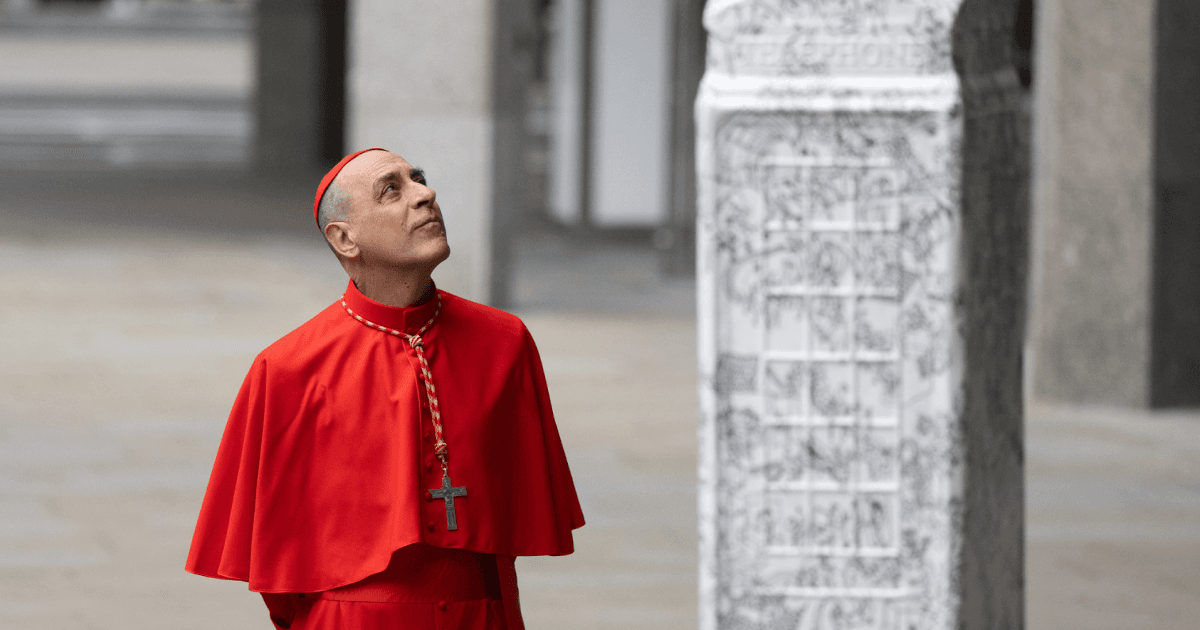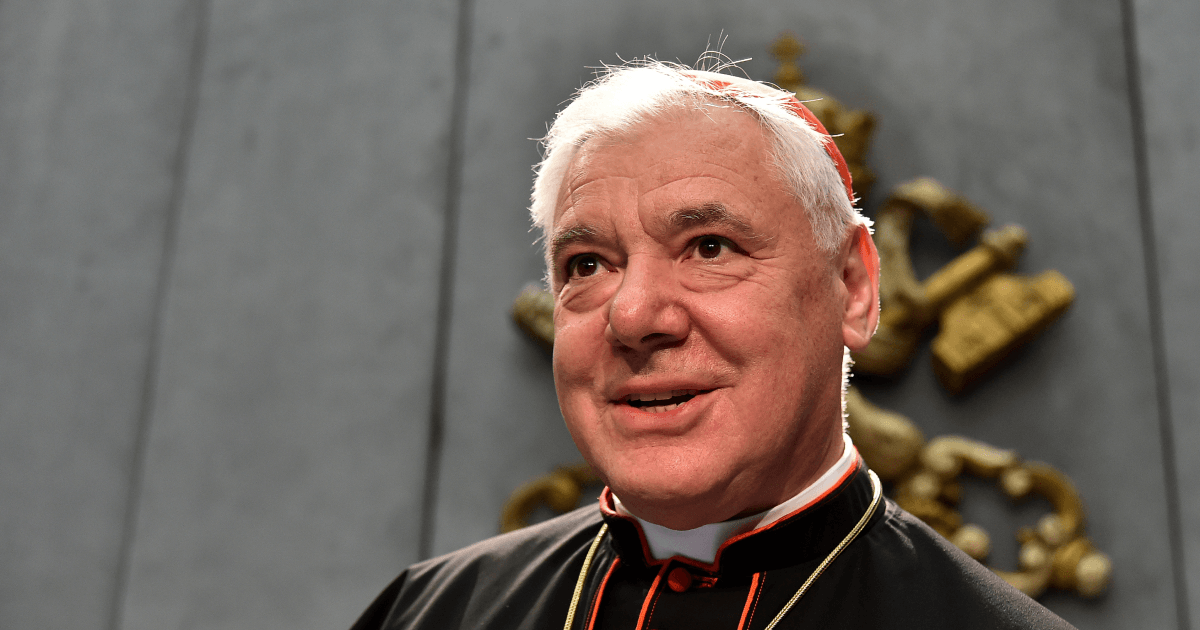
Cardinal Gerhard Müller has warned that while the Christian West is facing an “internal apostasy”, Islam is growing as Muslims “do not respect a weak Christianity”.
The West, he warned, is dealing with “an unprecedented identity crisis.” Formerly Christian nations are under assault from within and without, the cardinal stated, as the foundations of society are being eroded.
“The Christian West is no longer merely threatened by external forces, but is being eroded by an internal apostasy,” the German cardinal said. “We are witnessing the triumph of post-humanism: a nihilistic ideology that, in its attempt to emancipate humanity from God, ends up destroying humanity itself, reducing it to manipulable matter, to an algorithm among algorithms, and depriving it of its dignity as the image and likeness of the Creator.”
To this, he added, is joined the “vigorous expansion of Islam” as the West renounces its former values. Islam differs to the “secularised West” in that it is “not ashamed of God, is not ashamed of transcendence, but proposes an anthropology and a revelation radically different from those of Christianity.”
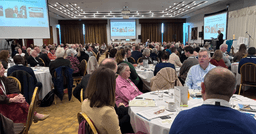
Such comments were delivered for the 2026 edition of the “Tavole di Assisi” organised by Italian senator Simone Pillon, as Müller highlighted the contrast between Christianity and Islam, basing his speech around St. Francis’ famous voyage to convert the Sultan. The Catholic Herald is in receipt of a copy of the talk given by the former prefect of the Dicastery for the Doctrine of the Faith.
Identifying the two-fold crisis of weak Christianity and rampant Islam, Müller urged decisive efforts to convert Muslims and spread the Catholic faith deliberately, imitating the example of St Francis who went directly to the Sultan Malek al-Kamil during the Fifth crusade in order to convert him, despite the Sultan offering a large reward for any soldier who would bring him a Christian’s severed head.
Modern assessments of the saint’s journey present it as a forerunner of ecumenical dialogue and peace building, downplaying the original purpose which was to convert the Muslim warlord. St. Francis has also suffered from being portrayed as a prototype of an ecological warrior, due to his particular emphasis on Divine creation in his spirituality.
Müller noted this portrayal of the Franciscan, commenting that “a certain sentimental and relativist trend has portrayed St. Francis as a precursor of modern syncretism, a prophet of pacifist dialogue as an end in itself, where all religions are equivalent and none possesses the truth.”
Such an image is “a historical and theological falsification”, he said. The saint did not meet the Sultan “to launch a diplomatic salon or to confirm the Sultan in his faith”, but was motivated by “love for souls and by the unshakable certainty that Jesus Christ is the only Saviour of mankind.”
Nor would any evangelisation attempts be successful if the Catholic faith is not professed boldly. “Interreligious dialogue, if it is to be authentic and respectful of human dignity, cannot be based on disguising one’s own identity,” he stated.
“Muslims do not respect a weak Christianity that is ashamed of the Cross and reduces itself to a charity organization or an environmental watchdog. They respect those who believe. St. Francis showed respect for the Sultan precisely because he spoke to him with the parrhesia of the Holy Spirit, offering his own life as a witness.”
A well ordered charity involves proclaiming the Truth to others, observed Müller. Following the footsteps of the saintly friar is “crucial”, he said. “It is not only valid, but urgent and indispensable.
Müller is no stranger to the topics of Islam or the decline of Christianity in the West. He regular highlights the loss of faith, alongside the rise of transgender ideology and nihilism as some of the chief ills affecting nations.
Expanding on his former commentaries, the cardinal told the Assisi conference that “the West has lost its faith because it has lost its reason.”
In the face of the “spiritual void” and varied attempts to “redefine human nature, marriage, life, and death,” Islam begins to appear to many people “as a solid rock”. But the answers to such Western decline do not lie in a creed that “separates faith from reason, or that conceives of divine omnipotence as pure arbitrariness.”
The only solution is for the West to “rediscover the courage of mission” and to “proclaim Christ’s social kingship” by saying that “outside of Jesus Christ there is no salvation.”
The former DDF prefect has been consistent on Christianity’s divergence with Islam and the impossibility of praying together with Muslims. Delivering a conference in 2019, he spoke in a similar vein. “We cannot pray as or with Muslims, because their faith in God and his self-revelation is not only different from Christian faith in God, but even denies its formula,” he noted.
Such themes he has often renewed, especially in light of the rapid spread of Islam across Europe and the increasing immigration crisis. Noting this aspect, Müller previously commented that one issue with the rise of Muslim immigrants into Europe “is precisely that Islam is not just a religion … but that it also always claims political power and not only influences the culture but becomes dominant within it.”
Michael Haynes is an English journalist in the Holy See Press Corps. He serves as Vatican Correspondent for the Catholic Herald, while readers can follow him at Per Mariam and on X @MLJHaynes.