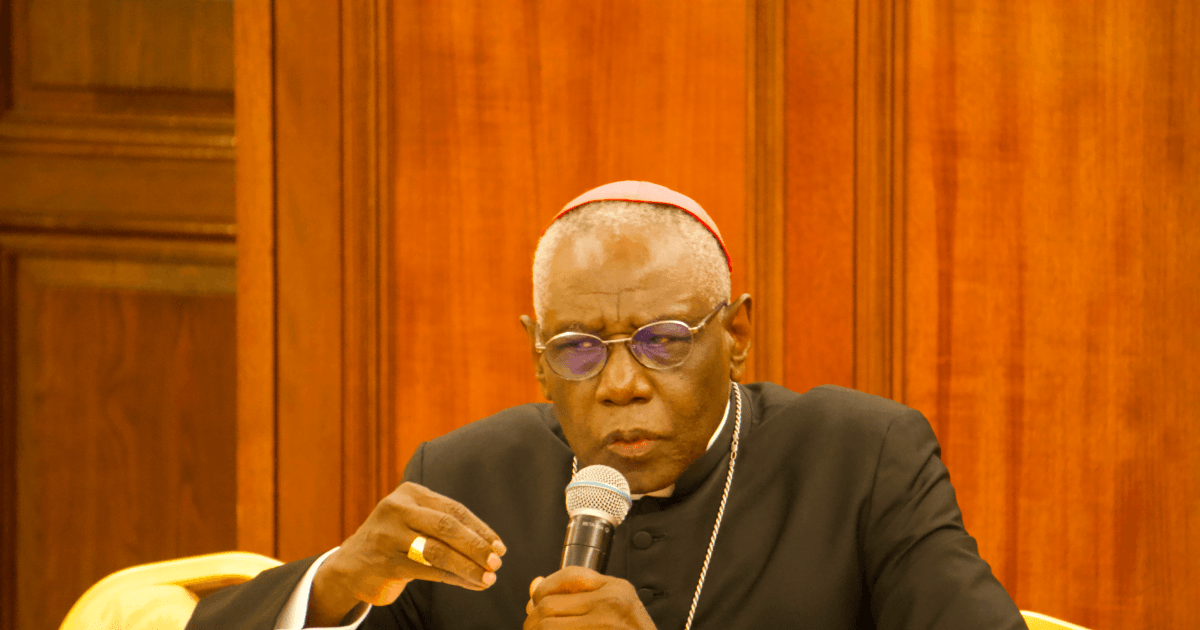
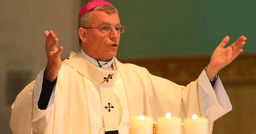
Cardinal Robert Sarah has again decried restrictions on the traditional Mass, calling it “a short-sighted and entirely ideological attitude” to “wage war” on Catholics over the liturgy.
Having served as prefect of the Dicastery for Divine Worship for over six years, Cardinal Sarah’s assessment on the Church’s liturgy is widely respected. In that vein, the Guinean prelate has strongly decried both the onset of Traditionis Custodes’s restrictions on the traditional Mass, and the continuing implementation of such measures against Catholics devoted to the old rite.
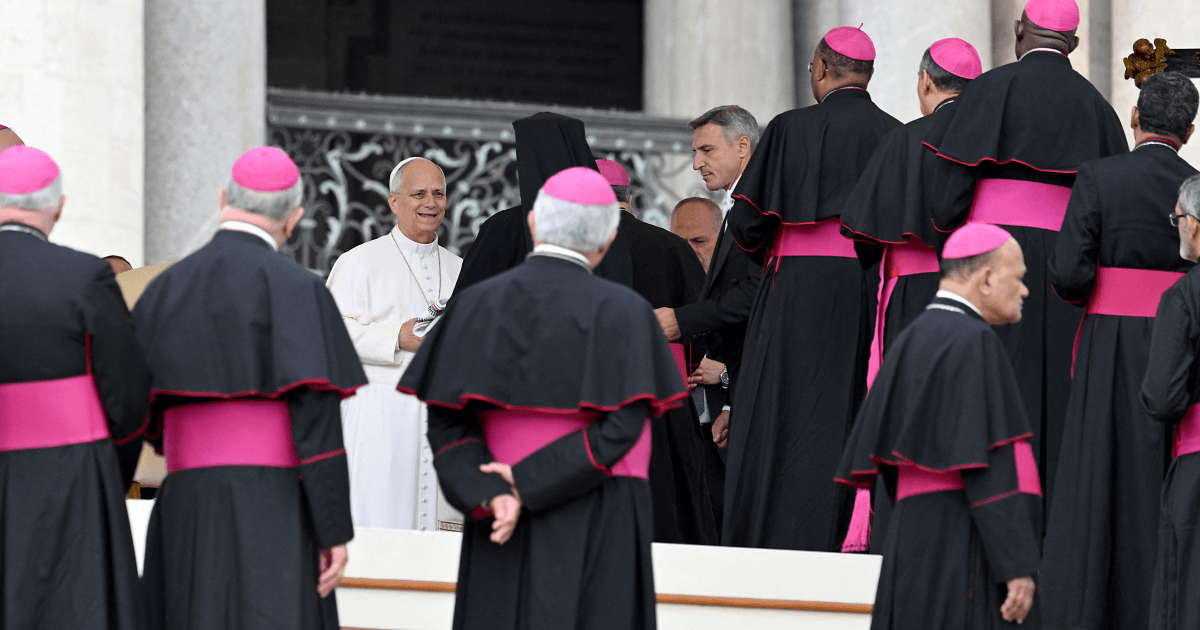
“It did not strike me as a wise or respectful decision,” he told Vaticanist Nico Spuntoni this week, in relation to Pope Francis’ Traditionis Custodes.
Sarah is one of the few members of the College of Cardinals to be a regular celebrant of the traditional liturgy and commented that the old rite has had a “positive influence” on the Church, including in reducing “possible abuses in the celebration of the ordinary form”. Such an assessment bolsters that which he made some weeks ago, regarding “excesses” in the old rite and “abuses” in the new, opining that the former were “in part justified” by the “dramatic and widespread” liturgical “abuses” in the Novus Ordo.
In recent months he has joined the growing number of voices calling on Pope Leo to rescind restrictions on the traditional Mass and instead make a return to Pope Benedict XVI’s Summorum Pontificum. The Herald understands that Sarah has spoken to Leo personally about such a matter, during a private audience.
“Access to ritual forms that have been recognised and in existence for centuries can never be artificially limited by decrees,” Sarah told Spuntoni. “If a rite did not serve the faith, it would die out on its own; if, on the contrary, it preserves and promotes the faith, let us not limit it, because we would be limiting the preservation and spread of the faith itself.”
The cardinal also offered his personal support to Catholics travelling far and wide in order to attend the traditional Mass. “I can only admire this great expression of love for God. This phenomenon is becoming increasingly widespread.” Such support is notable: many critics of the traditional Mass have taken issue with Catholics travelling outside the boundaries of their local parish in order to attend the old rite. Yet for Sarah, this is far from being an issue and is instead something to be lauded.
As for whether the efforts of such faithful would be rewarded with an easing of restrictions, Sarah was hesitant to make a firm prediction. But he did note that if reasonable reactions are allowed to prevail then an easing might be likely.
“If the hierarchy is truly capable of reading the signs of the times today – and not those of ’68, again arriving too late – then spaces for fraternal and serene dialogue can be opened.”
“As a Church” he warned, “we cannot wage war against those who devoutly participate in Mass simply because they prefer one form over another: it is a short-sighted and entirely ideological attitude—and therefore neither pastoral nor Christian. It is harmful and destructive to the Church.”
Those lobbying for a lifting of restrictions on the traditional Mass differ slightly in their proposed alternatives to Traditionis Custodes. Sarah is one of the number of prelates who favour returning to Summorum Pontificum, which would crucially mean a lifting of the varied restrictions on diocesan clergy in offering the old Mass.
Commenting on this proposal earlier this month, Sarah said the Church should “give serious consideration to this issue, returning to the balanced, pastoral, and theologically grounded position of Benedict XVI, who allowed both forms of the Latin rite to coexist, to influence one another, and to be known by the holy people of God, who, over the decades, will be able to choose which form best corresponds to their own needs for faith, silence, and spirituality.”
Pope Leo has shown no firm signs of lifting Traditionis Custodes, and just this week defended the liturgical reforms of the Second Vatican Council as “necessary”.
Leo appeared to critique the traditional rite of Mass for not leading the faithful to suitable levels of active participation, adding that the reform “is thus firmly rooted in the living tradition of the Church.”
His comments garnered criticism from liturgical scholars, who argued that the Pope’s argument represented “the greatest liturgical non-sequitur of the past sixty or so years.”
Sarah’s successor as prefect of the DDW, Cardinal Arthur Roche, has himself attested that Leo has no plans to change the current status quo, although doubts about Roche’s own longevity in his post raise questions as to whether the cardinal was speaking for himself or Leo.
Michael Haynes is an English journalist in the Holy See Press Corps. He serves as Vatican Correspondent for the Catholic Herald, while readers can follow him at Per Mariam and on X @MLJHaynes.