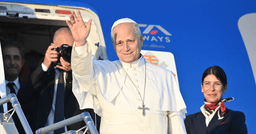
The Pope has approved a new bishop for a troubled Chinese diocese, but in doing so highlights the discrepancy underway given that bishops are being secretly consecrated for the Underground Church.
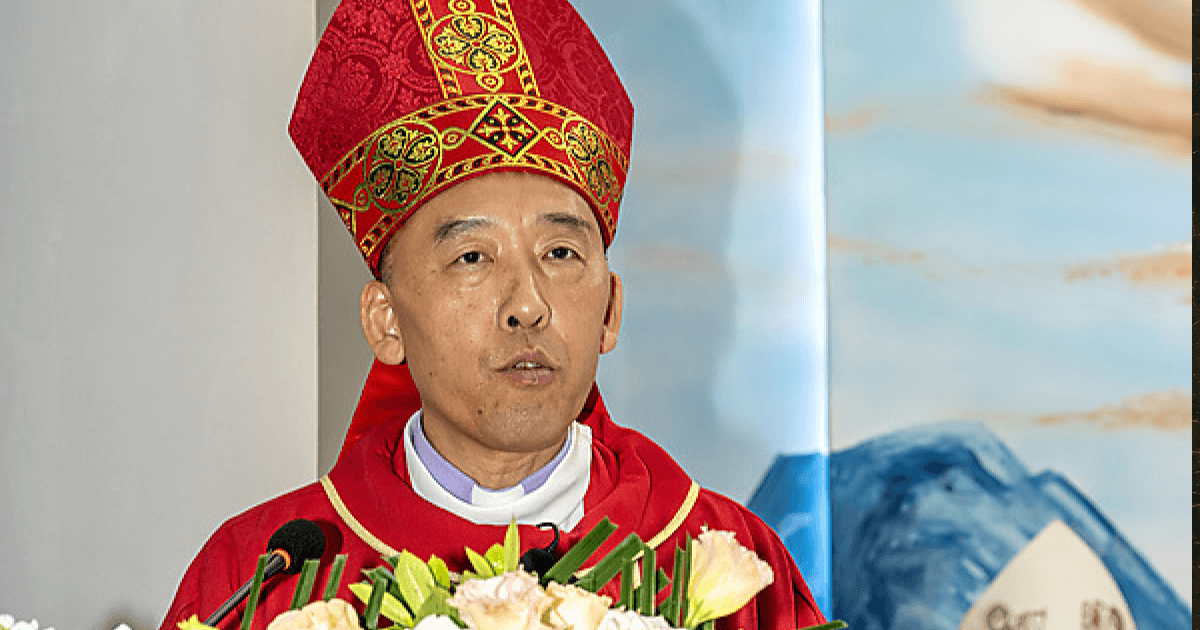
On August 31, news was shared by the Holy See Press Office of another bishop having received approval from Pope Leo and subsequent consecration from the Chinese state-approved church. Father Paul Liu Honggang was made bishop of the Diocese of Datong, located in China’s Shanxi central-north province.
According to the Vatican, Pope Leo had made the appointment one August 10 and approved his candidacy under the terms of the Sino-Vatican deal, first signed in 2018 and most recently renewed in 2024 for a four year term.
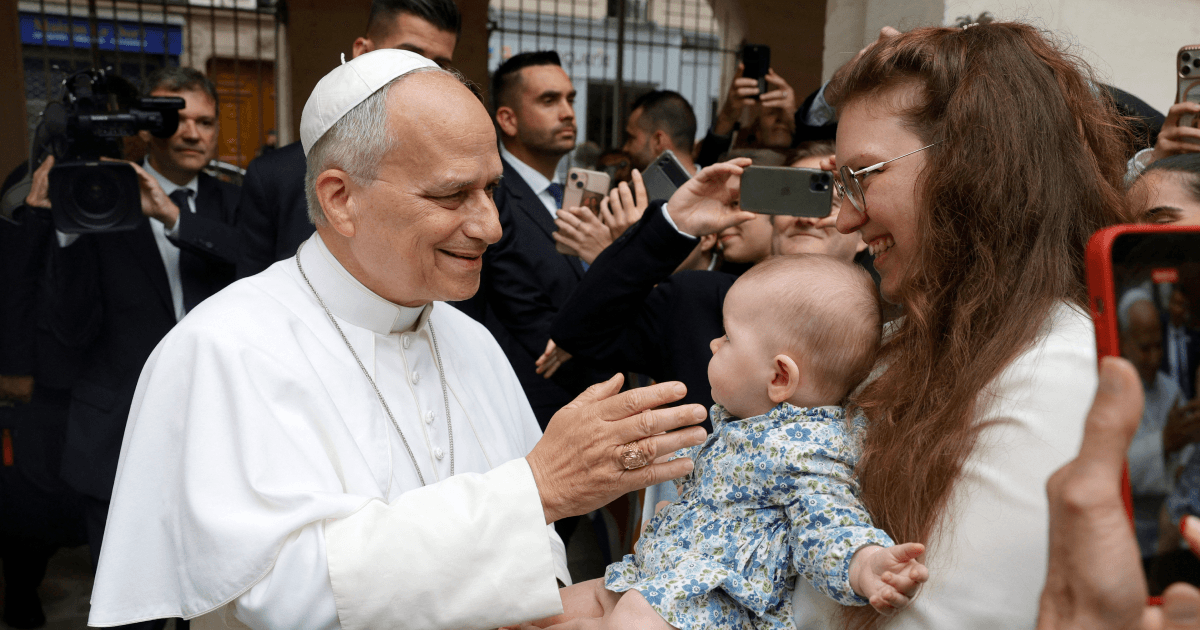
As has become standard in such announcements, the Chinese state Church – the Chinese Catholic Patriotic Association (CCPA) – made no reference to Pope Leo or the Holy See. This is because the CCPA, along with the accompanying bishops’ conference does not recognise the authority of the Pope.
Honggang was approved for the role by the CCPA on April 28. The 55-year-old priest is a native of the Datong diocese, having been ordained in 1996. He now becomes the seventeenth bishop approved under the terms of the Sino-Vatican deal regarding the appointment of bishops.
As ever, the CCPA was keen to put its stamp on the proceedings. The consecration ceremony was presided over by Bishop Shen Bin of the Shanghai Diocese, who serves as Chairman of the Chinese Catholic Bishops’ Conference, and vice chairman of the CCPA. Around 200 clergy and lay faithful attended the ceremony.
Datong diocese itself has a notable history and has not had a bishop in union with the Holy See since 1947. In that year, Bishop Joosten resigned, leading to a vacant see of over four decades. Father Guo Yingong of the Underground Church loyal to the Holy See was named as apostolic administrator in 1955, but spent many years in forced labour camps.
In the 1980’s the authorities allowed him to practice his ministry in public, before making him the bishop in July 1990. However, this consecration and appointment was not sanctioned by the Holy See.
When Yingong died in 2005, Honggang was appointed administrator of the diocese by the CCPA, and now – with Leo’s approval of his selection by the state authorities – Datong has a diocesan bishop in union with Rome after over 70 years.
The Vatican might well be congratulating itself on having resolved the situation of a long-standing vacant see, but local Catholics are demonstrating that the Sino-Vatican is fundamentally and irreparably flawed.
Firstly, Honggang may have received Leo’s approval after his selection by the CCPA, but his history has shown his loyalty is ultimately to the Communist Party. In 2018, Datong Catholics published an open letter to Pope Francis outlining the increasing persecution they were suffering – all during Honggang’s tenure as administrator.
Churches were demolished and the sale of bibles tightly controlled. Large gatherings were forbidden, making Mass difficult to celebrate, and even the times of religious ceremonies were controlled. “The Chinese Government is now strengthening its relationships with the Vatican: will the Vatican make compromises, turning us into scapegoats in order to establish diplomatic relations?,” they asked.
This letter came just weeks after the first signing of the Sino-Vatican deal and bolsters AsiaNews’ claim at the time that Underground Catholics were bitterly disappointed at the Vatican’s betrayal of them through the deal.
But also, as the Catholic Herald reported last week, the Underground Church is giving even clearer signs of the inadequacy of the Sino-Vatican deal. Bishops are being consecrated in secret for the Underground community, at least 10 bishops consecrated in Fuijan province alone since the deal was first signed. The Catholic Herald has been informed that many of that number have taken place in the last year.
Speaking to Catholic World Report, an Underground bishop spoke of a “state of emergency” and the fear that “the integrity of the Catholic faith will suffer”. Secret episcopal consecrations thus “assure the survival of China’s Church”.
This revelation highlights the fact that for the Underground Church, the Sino-Vatican deal has done nothing more than they feared, and warned, it would do from the very outset – namely, give the stamp of Vatican approval to the state-church and undermine the faith.
With bishops being consecrated secretly for the Underground, the Holy See’s deal appears completely ineffective and self-defeating. Far from achieving its publicised aim of unifying the Church in China in safety, the deal has directly led to increased persecution and also proven incapable of unifying the Church.
So far, the Holy See Press Office has not responded to the Catholic Herald’s request for comment on whether the Holy See was aware of, or approved, the Underground Church’s episcopal consecrations.
The entire scenario forces the Vatican into an untenable position regarding the deal. If the Holy See admits it approved the secret consecrations then it admits that the deal is not working. If the Holy See attests it was unaware of the consecrations, then it has to realise that local Catholics do not trust the Vatican to protect them or the faith.
Either way, the Vatican is currently trying to curry favour with Beijing for no reward.
Michael Haynes is an English journalist in the Holy See Press Corps. He serves as Vatican Correspondent for the Catholic Herald, while readers can follow him at Per Mariam and on X @MLJHaynes.