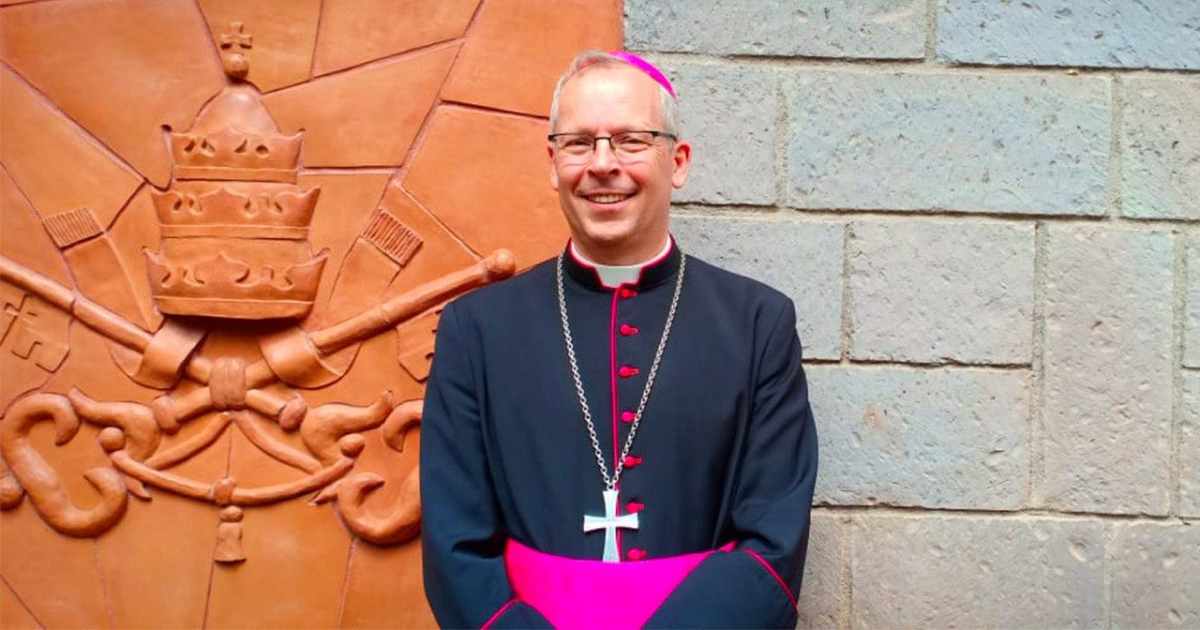


The Papal Nuncio to Germany has told the German bishops conference that “tension” over the Synodal Path is found throughout the entire Catholic Church.
“My impression is that Germans often want too much, too quickly.” Such was the unabashed assessment of Archbishop Hubertus van Megen in a recent interview with the news portal of the German bishops’ conference (DBK).
Referencing the Synodal Way and the DBK’s proposals for the Synodal Conference, he added: “Another question I ask myself is: What is the motivation behind wanting to reform the Church? Do people think: If we implement this or that reform, then we’ll save the Church? As I’ve already said, I’d consider that an illusion.”
A proficient linguist and forthright diplomat, van Megen assumed his role as Nuncio to Germany in April this year, having previously served as Nuncio in a number of countries requiring great political and diplomatic skill. The archbishop’s diplomatic service for the Holy See includes postings as Nuncio to Eritrea, Kenya and South Sudan, meaning that he will be well equipped to navigate the difficulties he faces in Germany where the bishops’ conference pursues an increasingly conflicting relationship with the Vatican.
Questioned by the DBK about the Synodal Conference, van Megen pointed to the perception many have of the Church in Germany:
“When word got out in Africa that I was going to Germany, there were many reactions from priests, but also from laypeople. They said, in essence: ‘Oh, you’re going to Germany. Be careful! They want a church that simply cannot exist.’ This tension regarding the Synodal Path runs through the entire universal Church.”
Such lines characterise the entire interview, with van Megen not shying away from a strident and critical tone regarding the actions of the German bishops – something particularly notable given his role as newly appointed Nuncio and the fact that the discussion was given to, and published by, the DBK.
It seems Leo XIV has chosen van Megen specifically in order to have a strong representative for Rome in Germany. Indeed van Megen’s tone is indicative of the new direction that may well emerge under his tenure and Leo’s papacy, coming as it does at the end of an era for Germany: outgoing Nuncio Archbishop Nikola Eterovic had been in place for the last 13 years.
Highlighting the disparity between issues raised in the Church in Germany and in Africa, van Megen said that this was “the great tension: How do we hold this universal Church together? The problems we face here in Germany, for example, simply don’t exist in many African countries.”
As the Catholic Herald has long reported, the Synodal Way and now the proposed Synodal Conference have placed the Church in Germany on a collision course with the Vatican. Curial officials have consistently pushed back against the demands of the DBK, outlining their varying divergence from Catholic teaching. But the DBK has continued regardless: in March the DBK submitted its proposals to the Vatican for the controversial Synodal Conference, despite the Vatican’s consistent prohibition for such a body.
On this front, van Megen viewed it as a positive step that the DBK at least submitted the Synodal Conference statutes to the Vatican, since it “shows that the Church here does not want to go it alone; it is aware that it is part of the universal Church.”
But he urged patience regarding a decision of any kind. Germany, he said, “isn’t the only country the Curia has to deal with” and the Vatican moves slowly.
The decision on the Synodal Conference “also depends heavily on how the Pope views the issue’, said van Megen, who refused to be drawn into speculating on the result of any deliberations currently ongoing. “I would say: Let’s just wait and see, without getting too worked up.”
The Nuncio also pushed back against arguments made by activists seeking more democratisation in the Church, the sharing of power and the role of women. “Why do you say ‘power’ and not ‘authority’ or ‘service’?,” he asked. “To me, power has a negative connotation, something oppressive. I see this in many documents of the Synodal Path as well: power, power, power. The question there is always: Who has the power? I find this word almost dangerous.”
Van Megen’s tone points to the resistance the Vatican has shown towards the Synodal Way in Germany. It also ties into the media game which is being especially used by those keen to see the Synodal Conference’s statutes approved. Bishops and lay activists have suggested the Vatican’s approval of the statutes is only a matter of time, thus building a narrative against which it is harder for the Holy See to resist.
Already the Vatican has demonstrated to the DBK that it lacks the commitment in enforcing its own rules, such as was the case with the ban on lay preaching announced in June but the complete silence after numerous incidents of lay homilies were documented in Germany following the decree.
Van Megen intends to meet with Curial officials in Rome next month where he will discuss the issue of the Synodal Conference. Although he professed himself new to the role, van Megen’s critique of the German church should not be attributed to a lack of experience – after all, he was chosen by the Pope to do exactly this.
Michael Haynes is an English journalist in the Holy See Press Corps. He serves as Vatican Correspondent for the Catholic Herald, while readers can follow him at Per Mariam and on X @MLJHaynes.