



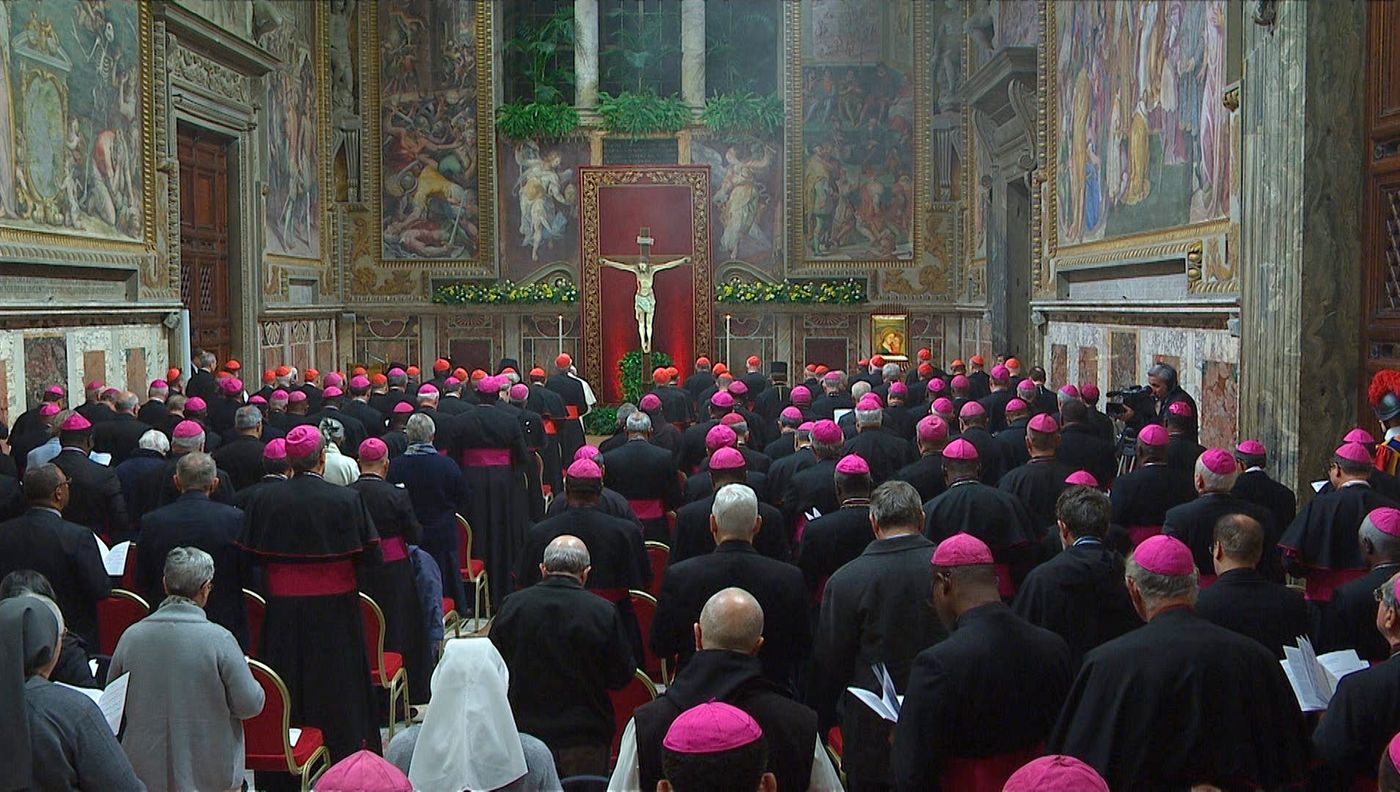
(ROME — February 23rd, 2019) There’s one speech you need to read from the Saturday sessions of the Vatican’s child protection meeting — a day dedicated to the theme of transparency — and veteran Vaticanologist Valentina Alazraki of Mexico’s Noticieros Televisa delivered it during the afternoon session. It was the last working session before Vespers and the special penitential liturgy, and it is not too much to say she nailed it. Alazraki’s remarks were a frank challenge and a moral lesson that cut through the mystifying jargon that has dominated so much of the talk over the past three days, and she delivered them in words a child could understand. “We journalists know that abuse is not limited to the Catholic Church,” Alazraki said, “but you must understand that we have to be more rigorous with you than with others, by virtue of your moral role.” In case it was needed, she illustrated the point. “Stealing, for example, is wrong, but if the one stealing is a police officer it seems more serious to us, because it is the opposite of what he or she should do, which is to protect the community from thieves.” Alazraki spoke of the right of the faithful — and the broad public — to know the truth, and to have it from those who are responsible for their safety and especially that of their children. “I would like you to leave this hall,” Alazraki explained, “with the conviction that we journalists are neither those who abuse nor those who cover up. Our mission is to assert and defend a right, which is a right to information based on truth in order to obtain justice.” She explained the terms of the issue before the participants, and spelled out the stakes unsparingly:
12:00 AM
If you read just one speech from the abuse summit, make it this one
(rome — february 23rd, 2019) there’s one speech you need to read from the saturday sessions of the vatican’s child protection meeting — a da...
Christopher R. Altieri

4 min read



Already a subscriber? Sign in
5freearticles every month
Continue reading with a free account. No card needed.
- Five free articles every thirty days, on any device you sign in on
- The Catholic Herald newsletter, every morning
- Subscribe whenever you like for everything: every article and the magazine



subscribe to the catholic herald today
Our best content is exclusively available to our subscribers. Subscribe today and gain instant access to expert analysis, in-depth articles, and thought-provoking insights—anytime, anywhere. Don’t miss out on the conversations that matter most.
Subscribe



