July 28, 2026

Lawyer for Rupnik victims being ‘fobbed off’ by Vatican’s total secrecy

Michael Haynes
More
Related
Min read
share

The lawyer representing alleged victims of disgraced priest Marko Rupnik has publicly rebuked the Vatican for not calling on the women to give testimony in the Vatican trial against Rupnik.  

The Italian civil and canon lawyer, Laura Sgrò, has poured public criticism on the Holy See for a lack of transparency in the Rupnik case, after events last week highlighted the lack of information emanating from the Vatican.

Speaking to Crux, Sgrò commented that since the beginning of the proceedings into Rupnik “we have received no communication whatsoever.”  
As the Catholic Herald has reported, the Holy See began an investigation into Rupnik in October 2023, after public scrutiny into the former Jesuit and his alleged serial abuse grew to new levels. He is alleged to have committed serial abuse of multiple forms – sexual, spiritual, physical and psychological – against numerous victims. The tally includes at least 21 members of the Loyola Community he co-founded and since the case became public in 2022 a further 15 people have made claims of abuse against him.

Since the Holy See is the juridical person investigating and taking the case against Rupnik, Sgrò is not making the case against him on behalf of the alleged victims she represents.  

But according to the lawyer, she has not been involved in the proceedings in any way, nor have the people she represents been updated on the case or invited to present witness and evidence.  

Following reports last week that Rupnik might be acquitted in the trial – which the Vatican denied 48-hours later – Sgrò delivered a firm letter to the Holy See decrying its handling of the case.  

“Has the trial begun? If so, what is its current status? Who are the judges? What was the outcome of my clients’ requests to be admitted as injured parties in the proceedings? Why have these women not been heard as witnesses?,” she wrote. {Sgrò has not yet replied to the Catholic Herald’s request to have a copy of the letter, but quotations from it were published by Crux.}

Although the investigation into Rupnik was opened in October 2023, the five judges were only appointed in late 2025 and the trial began in October. No information has been provided by the Holy See regarding the judges, other than the fact that they are not employees of the Roman Curia and are thus independent to the Vatican machine.

Sgrò has firmly critiqued this as “a trial being conducted in total secrecy.” Not only have the victims not been summoned, but my request to participate as legal counsel for the injured party has not even received a reply.”  

Indeed, although the allegations against Rupnik are now very public knowledge, the Holy See has not stated what the priest is actually being tried for.  

Sgrò also warned that without any knowledge of the judges then there could be a “conflict of interest” which she and the individuals she represents might be aware of if they only knew the judges’ identity. “How can a trial be credible when the victims do not even know the names of the judges? It is yet another form of violence being perpetrated against these women,” she protested.

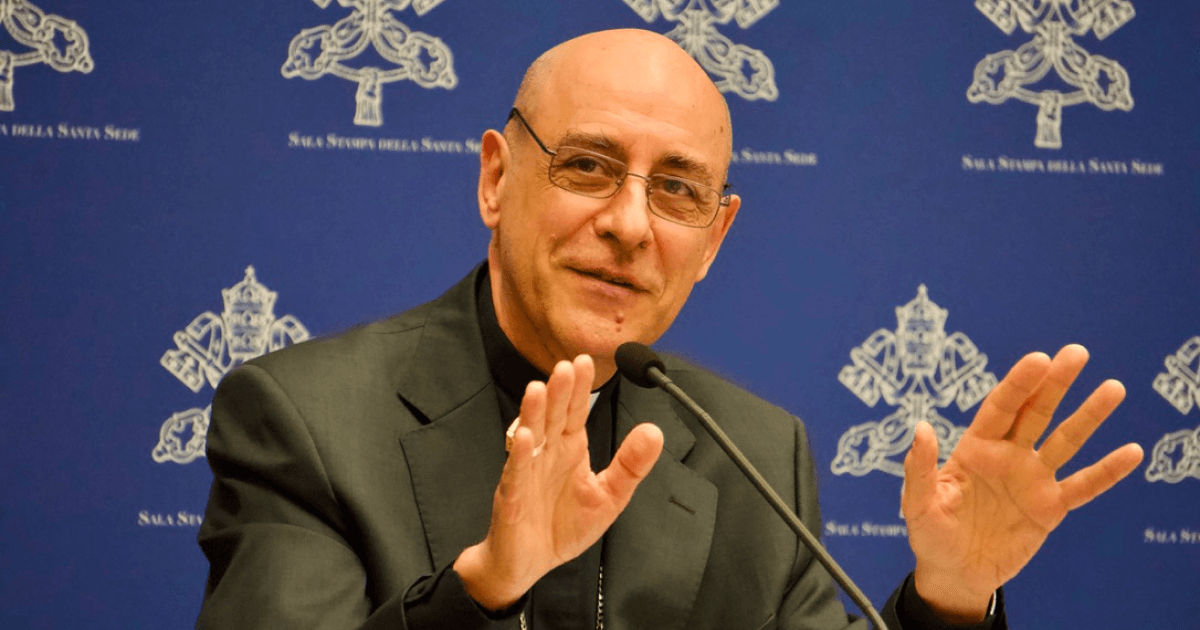
Lack of communication is a persistent issue which Sgrò complains of. The trial is the responsibility of the Dicastery for the Doctrine of the Faith, and thus under the purview of Cardinal Victor Manuel Fernández and the discipline section secretary Archbishop John Joseph Kennedy. But Sgrò recounted that numerous attempts to reach both men were fruitless, complaining of being “fobbed off”.  

She lamented that her clients “feel abandoned and betrayed, victims, once again, of a system that has never welcomed, protected, or comforted them.”

The lawyer also pointed to the immense interest in the entire case and the impact it is already having on Vatican credibility. “The credibility of these proceedings is essential pro bono communi,” she wrote, adding “the Church, no less than the victims, needs transparency, justice, and truth.”

Transparency and credibility have been issues at the heart of the Rupnik saga in the past years. Alleged victims have repeatedly spoken about how his artwork is linked to his alleged abuse, but at the same time the Vatican defended using his images on its online portals throughout the liturgical year. The outgoing prefect of the Dicastery for Communication even did so publicly at a Catholic media conference, quoting Pope Francis and quipping “who am I to judge?”

Sgrò has a high profile in Italy for representing clients who have legal complaints with the Vatican. But her concerns about the secrecy of the Rupnik trial are not isolated, nor can they be swept aside as being those of a lawyer with an anti-ecclesial vendetta.  

Numerous journalists and commentators who have closely followed the affair have echoed her thoughts, including New York canonist Father Gerald Murray.  

“Why don’t we know who the judges are?” he demanded on the Arroyo Grande podcast this weekend. “The whole thing is a horrific problem and the Holy See has not lived up to the expectations that it gives when victims come forward,” said Murray.  

As it stands, the only information the Holy See has given regarding the case is that the trial has begun and is underway.

Michael Haynes is an English journalist in the Holy See Press Corps. He serves as Vatican Correspondent for the Catholic Herald, while readers can follow him at Per Mariam and on X @MLJHaynes.

Continue reading with a free account

Create a free account to read up to five articles each month
Create free account

You have # free articles remaining this month.

Subscribe to get unlimited access.
Sign up

subscribe to the catholic herald today

Our best content is exclusively available to our subscribers. Subscribe today and gain instant access to expert analysis, in-depth articles, and thought-provoking insights—anytime, anywhere. Don’t miss out on the conversations that matter most.
Subscribe