

The state of Maine must examine its conscience and confront a culture of “radical secularism” in the wake of the fatal shooting of a migrant by an immigration officer and a recent series of laws concerning childhood gender transition, abortion and assisted suicide, its bishop said in a statement published on August 5.
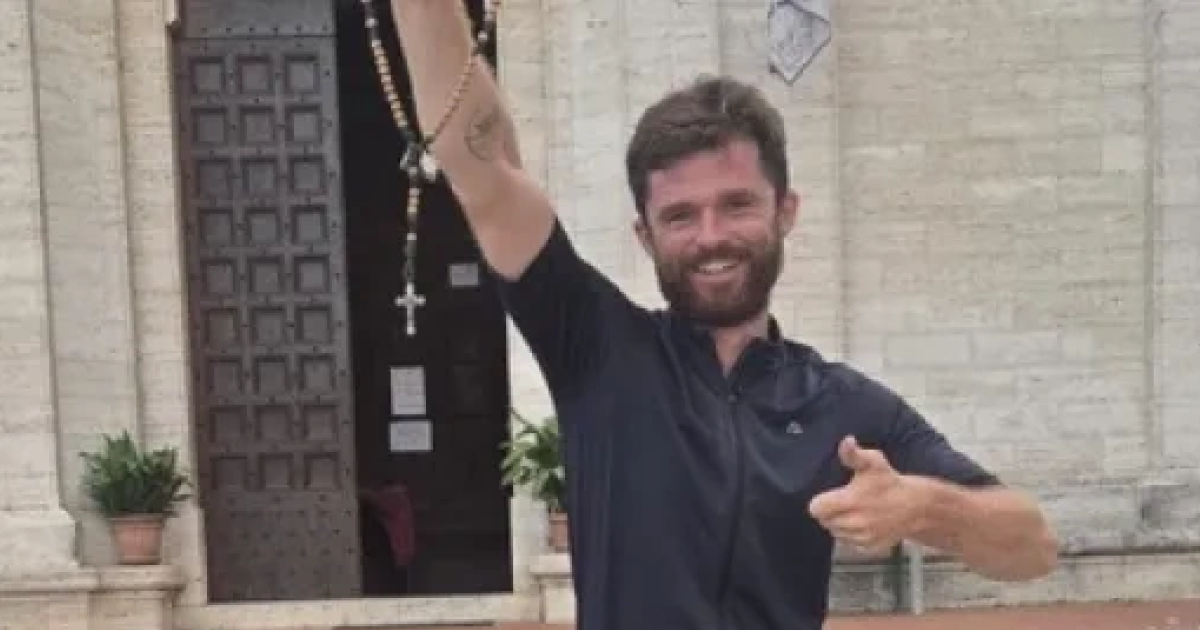
“I am truly saddened by the recent death of Johan Sebastián Durán Guerrero in Biddeford,” said Bishop James Ruggieri of Portland, Maine. Durán Guerrero, 26, was shot and killed by an Immigration and Customs Enforcement (ICE) officer on July 13.
Ruggieri continued: “The diocesan community and I have prayed for the repose of his soul, for the consolation of his family, and for all those affected by the tragic and confusing circumstances of his death, including the law enforcement officers involved.”
Christian hope, Ruggieri said, is an assurance that Christ has conquered death and “consoles those who mourn, including the family and loved ones of Mr Durán Guerrero, but it also places a responsibility upon us”.
“His dignity did not depend upon his nationality, political usefulness, or the circumstances in which he died. The law enforcement officers involved also possess an inherent dignity that must be respected.”
The Diocese of Portland encompasses the whole state of Maine.
Since Durán Guerrero’s death, Ruggieri said he had received many requests for a response, which “have led me to reflect on a deeper issue: our society’s increasingly fragmented understanding of the dignity of the human person”.
“At this moment in our history, I feel that Maine must undertake a serious examination of its collective conscience. We must also recognize that radical secularism, by removing God and the transcendent dimension of the human person from our public conversation about human dignity, threatens our common well-being,” he said.
Maine is consistently ranked among the least religious states in the US.
Despite the problems society is currently facing, “conversion of heart remains both possible and necessary if we are to recover a more consistent and humane respect for every human life”, he said.
Freedom, Ruggieri said, “is never exercised in isolation”, and human beings belong to communities that are affected by individual choices and the laws that are enacted.
“This is the meaning of human solidarity: we bear responsibility not only for ourselves but also, in some measure, for the common good,” he said.
“Maine therefore,” Ruggieri said, “needs to examine what its laws communicate about the dignity of the human person,” noting that the state permits abortion after viability when approved by a doctor, has legal assisted suicide and, “under specified conditions, permits minors aged sixteen or older to consent to gender-affirming hormone therapy without parental consent”.
While these are different issues, they all raise “fundamental questions” about the understanding of the human body, vulnerability, dependence and the value of human life, Ruggieri said.
“We cannot decry some offenses against integral human development while accepting others simply because they are defended in the language of individual rights,” he said. “Authentic freedom must be ordered toward truth, responsibility, and the common good. What, then, do our legislative decisions reveal about our collective understanding of the human person?”
The current laws and partisan divisions in Maine show a “fragmented” answer to that question, the bishop said.
“In Maine, as elsewhere, we sometimes uphold the asserted rights of one person while diminishing the dignity or legitimate claims of another. This fragmentation reflects a secularism that increasingly excludes God, transcendence, and objective moral truth from public life,” he said.
“When no truth is acknowledged as standing above political consensus, rights can become dependent upon public opinion, legislative majorities, or those who possess the greatest influence or economic power,” he said. “The vulnerable and voiceless are then placed at particular risk.”
This, Bishop Ruggieri said, “is the danger of moral relativism”, and a “healthy democracy must therefore recognize that certain moral principles are not created by governments or majorities”.
“They are grounded in the nature and dignity of the human person, can be known through reason, and remain true regardless of who holds political authority. Recognizing these objective truths helps protect society from ideological rule and from the tyranny of the majority,” he said.
To achieve lasting reform of laws and institutions, Ruggieri said, there must be a “conversion of heart”.
“Conversion begins not simply with changing our opinions but by allowing Jesus Christ, through his grace, to transform our hearts. It requires the honest recognition that I can be selfish, governed by self-interest, and unwilling to listen,” he said.
Conversion, he said, “requires humility”.
“Before condemning another, I must first remove the plank from my own eye. We all need this conversion. Were it to take place on a broad scale, it would not only change individual lives but also transform the laws, institutions, and social structures we create together.”
Every human life, from conception until natural death, should be protected, Ruggieri said, and the inherent dignity of every person, “especially those who are vulnerable, forgotten, or easily condemned”, should be acknowledged.
“Through conversion of heart, Maine need not remain trapped in division and fragmentation. It can become more fully a common home in which every human life is respected, protected, and loved.”