

March 2, 2026

Make London Bridge great again

Declan J. Ganley
More
Related
Min read
share

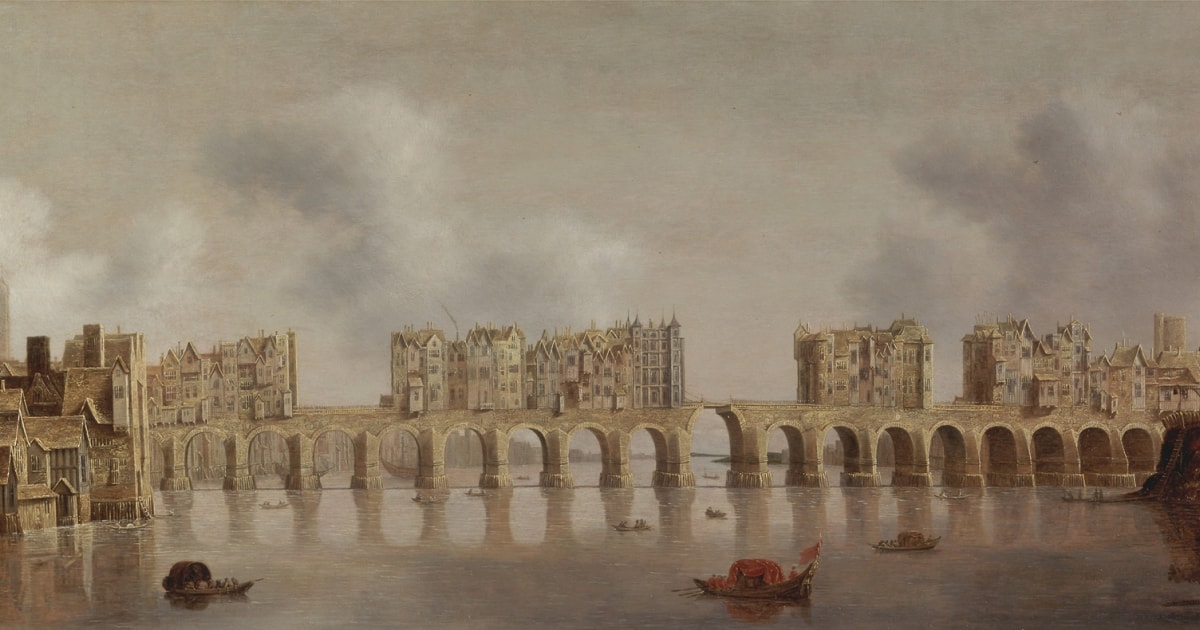
In the heart of the great city, where the Thames pulses like an artery of empires, there once stood a marvel of the world that embodied the audacious spirit of Britain: Old London Bridge. Not the bland concrete span we cross today, but the medieval masterpiece that was a city unto itself, teeming with shops, houses, chapels, a palace and a drawbridge for the tall ships of yore. For over 600 years, from 1209 until its demolition in 1831, it was more than a crossing: it was a symbol of the city’s ingenuity, commerce and communal life. Multi-storey timber-framed buildings lined the way, merchants hawked wares from overhanging galleries, the river roared below as water thundered through the cataracts of its 19 arches. It was alive, unique, dangerous, magnificent – quintessentially British.

Many times I have walked the banks of the Thames, gazing at the site where that bridge once stood, just upstream from the current one. While some might see just nostalgia, something else exists in the ghostly void once filled by this icon of old London, and that is opportunity. Britain, post-Brexit and much in need of bold visions, should rebuild that bridge. Not as a museum piece, but as a living homage, updated with 21st-century engineering to fix the flaws of the original while restoring its soul. This is not whimsy; it is a mission for national renewal. A statement of rebirth visible from the main flight approach path to Heathrow. The most ‘Instagrammable’ of locations.

Let us dispense with the naysayers first. The old bridge had its problems. Those narrow arches created treacherous rapids – ‘shooting the bridge’ was a rite of passage for boatmen, sometimes fatal. The piers impeded the flow, causing floods and ice build-up upstream and erosion downstream. Fires ravaged the wooden structures, culminating in the Great Fire of 1666, which started nearby. And by the 18th century the bridge was a bottleneck; as some legend has it, the ‘driving on the left’ rule first started as a means to make crossing London Bridge a little easier, its 12-foot-wide roadway clogged with carts and pedestrians. That is why it was replaced. But today? We have the technology to solve all that. Wider spans using advanced composites and tensioned cables could span the river without choking it. Hydraulic systems could manage water levels, and fire-retardant materials would make it safer than ever. Think of it: a pedestrian paradise with electric trams or autonomous pods if needed, flanked by replica façades housing boutiques, cafés and luxury apartments. No cataracts, no chaos, just controlled vibrancy and an enhanced renewable power supply from inbuilt water turbines. True to history, most of the buildings could be prefabricated, as was the case for what was possibly the world’s first complex prefabricated building, Nonsuch Palace, which was built in the Netherlands and then sailed up the Thames before being erected into just one of the magnificent structures that once graced the old bridge.

The economic case is unassailable. London is already a tourist magnet, drawing millions to icons like Buckingham Palace, Tower Bridge and the Tower of London. But the Old London Bridge would be unique, the only inhabited bridge in Europe since the Ponte Vecchio in Florence, which would pale in comparison. Shops and residences could generate millions in rents and rates, funding the project through public–private partnerships. Innovative infrastructure pays dividends; think Disney theme park on the Thames, but better. Build it and watch the visitors flock: history buffs, social media influencers, families seeking a slice of Shakespeare’s London. It would rival the Eiffel Tower as a must-see, boosting the local economy by hundreds of millions annually. Those bridge-top homes would command premium prices.

But this is about more than pounds, shillings and pence. It is about reclaiming Britain’s architectural soul and London’s deepest cultural roots. Modern London is littered with glass monoliths: functional, yes, impressive in their own way, but soulless. They could be anywhere in the world. The Old Bridge was quintessentially English, a riot of Tudor gables, Dutch influences and Gothic spires. Rebuilding it would be a statement against the bland globalism that has homogenised our skylines. There can only be one ‘London Bridge’. We would honour the craftsmen who built the original: Peter of Colechurch, the brilliant 12th-century priest-engineer who designed it, and the generations who added layers of life. Include the old chapels, a nod to the bridge’s medieval roots and cultural relevance to the future. Of course, let us not forget the heads on spikes at the southern gate, a macabre reminder of ‘justice’ in bygone eras; we could recreate that as a historic and educational exhibit, minus the heads.

Critics will whine about cost. Estimates I have seen float around hundreds of millions, a fraction of what is squandered on failed rail projects or paying Mauritius to take over a geo-strategic tropical island paradise. But think bigger: this could be crowdfunded in part, with naming rights for bricks and arches or sponsorships from corporates seeing value in the branding. The French rebuilt Notre-Dame after the fire; the Germans reconstructed Dresden’s Frauenkirche post-war. Why not Britain and London Bridge? In 2019, I floated this idea on social media, and the response was electric. People crave projects that stir the blood, that say: ‘We are a creative nation of builders, not bureaucrats.’

To the politicians: step up. Sadiq Khan, or whoever succeeds him as Mayor: make this part of your historic legacy. A future Prime Minister: champion it as a symbol of Global Britain, a bridge linking past glory to future prosperity. If I were running for office in London, this would be in my manifesto. It is time for London and Britain to stop apologising for their history and start celebrating it. Rebuild the Old London Bridge, and we will not only cross the Thames, we will span centuries: a bridge from what was to what can be, inspiring generations to come, adding a new verse to the old rhyme: ‘London Bridge we’ll build again, build again, build again, London Bridge we’ll build again, my fair lady.’

In the heart of the great city, where the Thames pulses like an artery of empires, there once stood a marvel of the world that embodied the audacious spirit of Britain: Old London Bridge. Not the bland concrete span we cross today, but the medieval masterpiece that was a city unto itself, teeming with shops, houses, chapels, a palace and a drawbridge for the tall ships of yore. For over 600 years, from 1209 until its demolition in 1831, it was more than a crossing: it was a symbol of the city’s ingenuity, commerce and communal life. Multi-storey timber-framed buildings lined the way, merchants hawked wares from overhanging galleries, the river roared below as water thundered through the cataracts of its 19 arches. It was alive, unique, dangerous, magnificent – quintessentially British.

Many times I have walked the banks of the Thames, gazing at the site where that bridge once stood, just upstream from the current one. While some might see just nostalgia, something else exists in the ghostly void once filled by this icon of old London, and that is opportunity. Britain, post-Brexit and much in need of bold visions, should rebuild that bridge. Not as a museum piece, but as a living homage, updated with 21st-century engineering to fix the flaws of the original while restoring its soul. This is not whimsy; it is a mission for national renewal. A statement of rebirth visible from the main flight approach path to Heathrow. The most ‘Instagrammable’ of locations.

Let us dispense with the naysayers first. The old bridge had its problems. Those narrow arches created treacherous rapids – ‘shooting the bridge’ was a rite of passage for boatmen, sometimes fatal. The piers impeded the flow, causing floods and ice build-up upstream and erosion downstream. Fires ravaged the wooden structures, culminating in the Great Fire of 1666, which started nearby. And by the 18th century the bridge was a bottleneck; as some legend has it, the ‘driving on the left’ rule first started as a means to make crossing London Bridge a little easier, its 12-foot-wide roadway clogged with carts and pedestrians. That is why it was replaced. But today? We have the technology to solve all that. Wider spans using advanced composites and tensioned cables could span the river without choking it. Hydraulic systems could manage water levels, and fire-retardant materials would make it safer than ever. Think of it: a pedestrian paradise with electric trams or autonomous pods if needed, flanked by replica façades housing boutiques, cafés and luxury apartments. No cataracts, no chaos, just controlled vibrancy and an enhanced renewable power supply from inbuilt water turbines. True to history, most of the buildings could be prefabricated, as was the case for what was possibly the world’s first complex prefabricated building, Nonsuch Palace, which was built in the Netherlands and then sailed up the Thames before being erected into just one of the magnificent structures that once graced the old bridge.

The economic case is unassailable. London is already a tourist magnet, drawing millions to icons like Buckingham Palace, Tower Bridge and the Tower of London. But the Old London Bridge would be unique, the only inhabited bridge in Europe since the Ponte Vecchio in Florence, which would pale in comparison. Shops and residences could generate millions in rents and rates, funding the project through public–private partnerships. Innovative infrastructure pays dividends; think Disney theme park on the Thames, but better. Build it and watch the visitors flock: history buffs, social media influencers, families seeking a slice of Shakespeare’s London. It would rival the Eiffel Tower as a must-see, boosting the local economy by hundreds of millions annually. Those bridge-top homes would command premium prices.

But this is about more than pounds, shillings and pence. It is about reclaiming Britain’s architectural soul and London’s deepest cultural roots. Modern London is littered with glass monoliths: functional, yes, impressive in their own way, but soulless. They could be anywhere in the world. The Old Bridge was quintessentially English, a riot of Tudor gables, Dutch influences and Gothic spires. Rebuilding it would be a statement against the bland globalism that has homogenised our skylines. There can only be one ‘London Bridge’. We would honour the craftsmen who built the original: Peter of Colechurch, the brilliant 12th-century priest-engineer who designed it, and the generations who added layers of life. Include the old chapels, a nod to the bridge’s medieval roots and cultural relevance to the future. Of course, let us not forget the heads on spikes at the southern gate, a macabre reminder of ‘justice’ in bygone eras; we could recreate that as a historic and educational exhibit, minus the heads.

Critics will whine about cost. Estimates I have seen float around hundreds of millions, a fraction of what is squandered on failed rail projects or paying Mauritius to take over a geo-strategic tropical island paradise. But think bigger: this could be crowdfunded in part, with naming rights for bricks and arches or sponsorships from corporates seeing value in the branding. The French rebuilt Notre-Dame after the fire; the Germans reconstructed Dresden’s Frauenkirche post-war. Why not Britain and London Bridge? In 2019, I floated this idea on social media, and the response was electric. People crave projects that stir the blood, that say: ‘We are a creative nation of builders, not bureaucrats.’

To the politicians: step up. Sadiq Khan, or whoever succeeds him as Mayor: make this part of your historic legacy. A future Prime Minister: champion it as a symbol of Global Britain, a bridge linking past glory to future prosperity. If I were running for office in London, this would be in my manifesto. It is time for London and Britain to stop apologising for their history and start celebrating it. Rebuild the Old London Bridge, and we will not only cross the Thames, we will span centuries: a bridge from what was to what can be, inspiring generations to come, adding a new verse to the old rhyme: ‘London Bridge we’ll build again, build again, build again, London Bridge we’ll build again, my fair lady.’

subscribe to
the catholic herald

Continue reading your article with a subscription.
Read 5 articles with our free plan.
Subscribe

subscribe to the catholic herald today

Our best content is exclusively available to our subscribers. Subscribe today and gain instant access to expert analysis, in-depth articles, and thought-provoking insights—anytime, anywhere. Don’t miss out on the conversations that matter most.
Subscribe