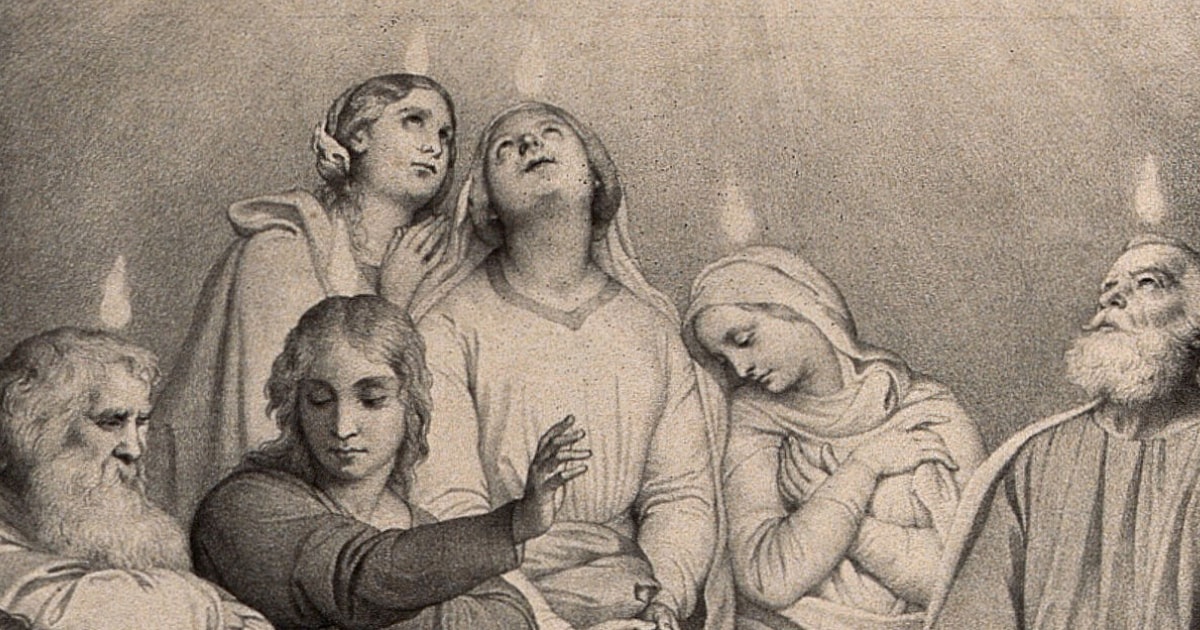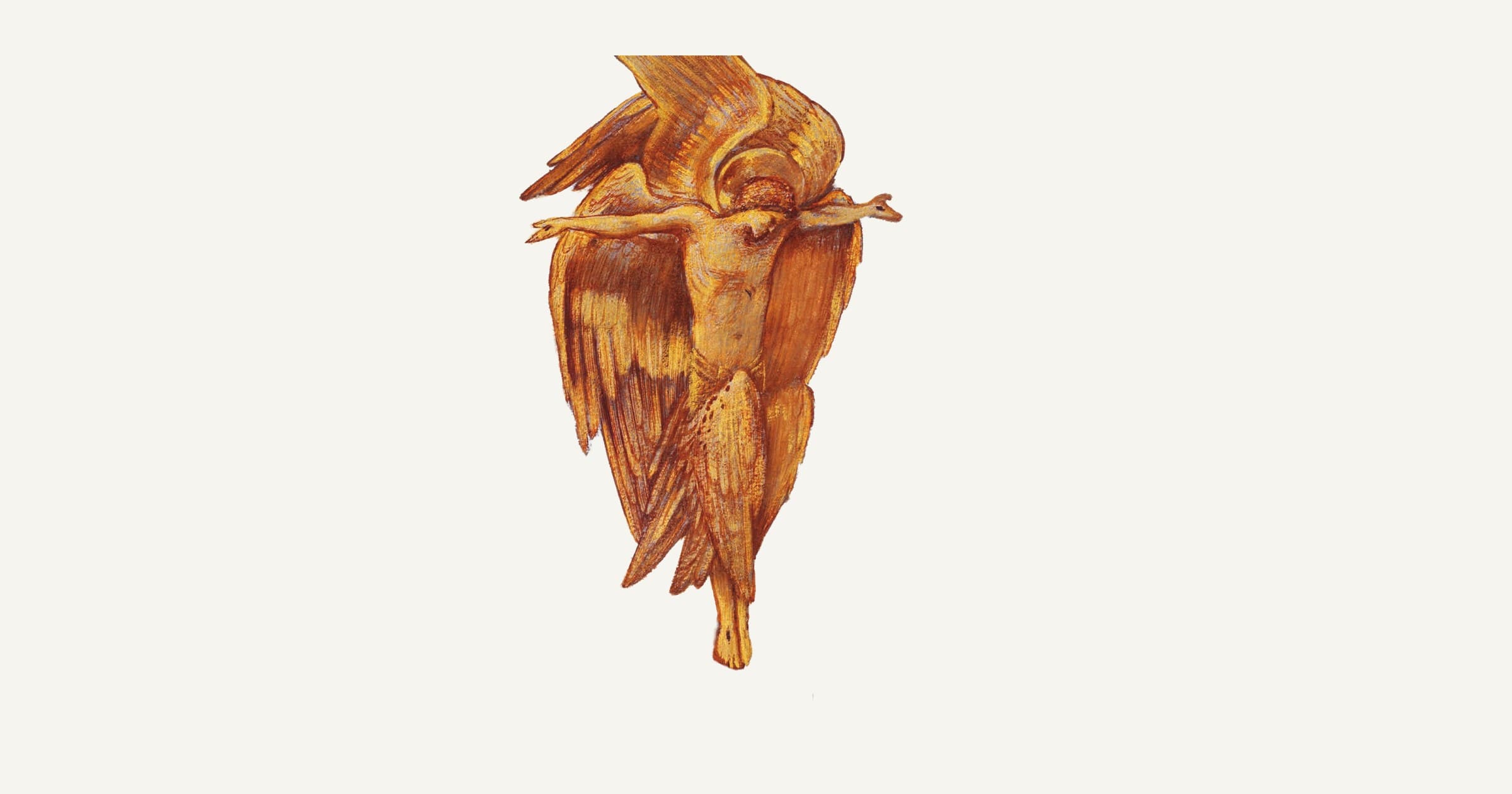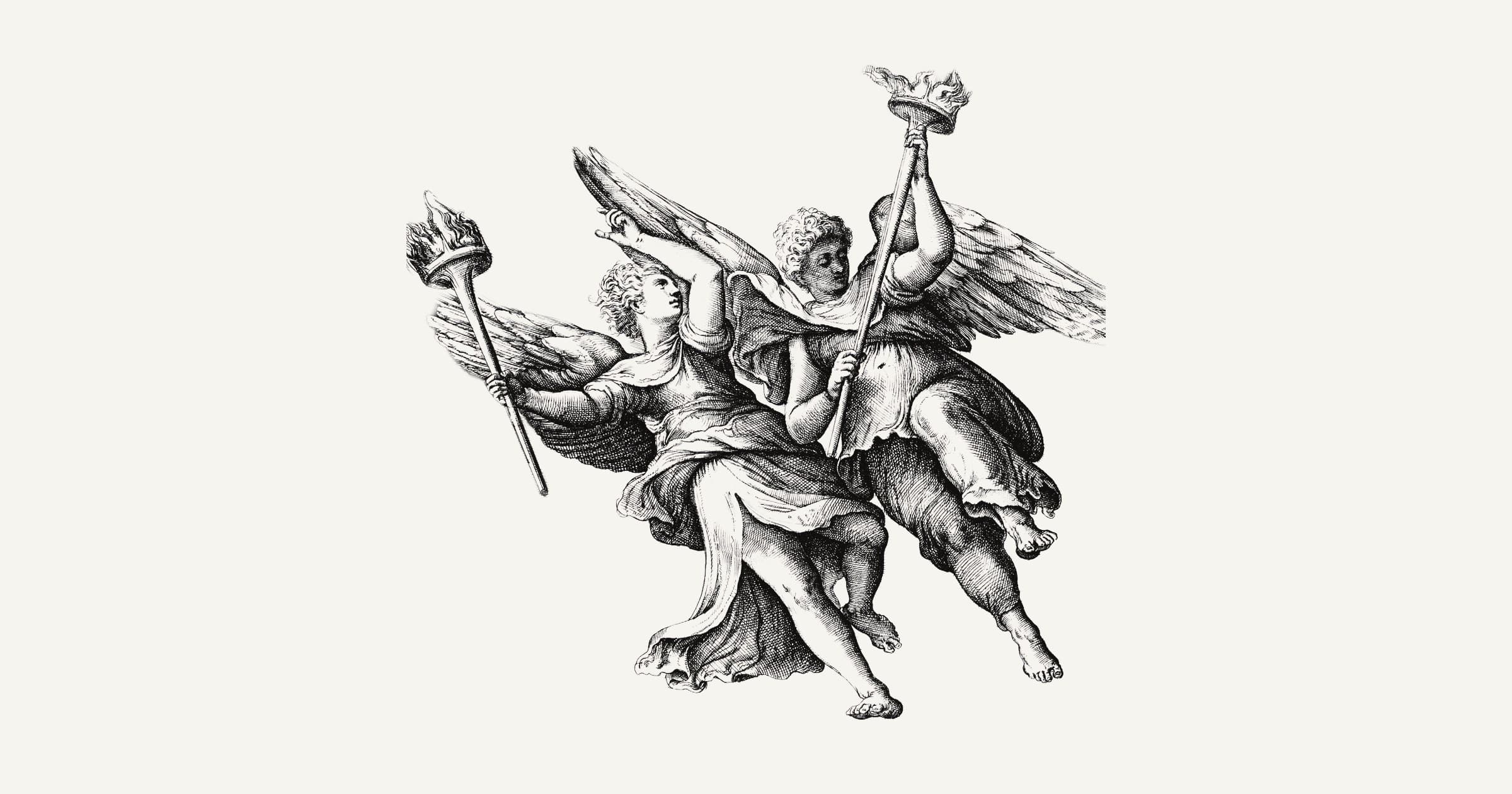
When we list the three solemnities of Christmas, Easter and Pentecost, for many Christmas will be the preferred choice when it comes to emotions, whilst for others it will be Easter because on that day we commemorate the very core of our faith, namely our salvation. Pentecost may well be the favourite among members of charismatic movements, but for the average believer it would struggle to take first place if one were to draw up a ranking of importance. Perhaps this is also because, within the Holy Trinity, the Holy Spirit also comes third, and in our approach to God in prayer we tend to address the Father and the Son first. Whilst we have no difficulty in imagining both the Father and the Son in human form, it is more difficult with the Holy Spirit, who is usually depicted as a dove. As human beings, we are, after all, dependent on visual representations, whilst realising that every image of the Divinity is merely an attempt to give expression to a transcendent reality that cannot be captured in images.
Nevertheless, with the great feast of Pentecost, God’s revelation to humanity is brought to its fulfilment. It is the fulfilment of the promise made by Jesus himself to his Apostles at his departure: “Then the Father will give you another Helper to be with you forever: the Spirit of truth” (John 14:16). A promise that God will continue to be present with humanity in a different way to carry on the work of salvation within us, through the “Helper”, also known as the “Paraclete”, the Advocate who will assist us and continue to point us towards the Truth that the Lord Jesus has brought us.
We may therefore welcome the Holy Spirit as the active presence of God Himself in our lives, who comes to dwell within us in a special way upon receiving the sacrament of Baptism, so as to remain actively present within us. It is the Holy Spirit who continues the work of salvation within us and bestows His gifts upon us. Those gifts of the Holy Spirit were so beautifully expressed by Paul in his letter to the Corinthians: “To one person the Spirit gives a message of wisdom, to another a message of knowledge by the same Spirit, to another faith by the same Spirit, to others gifts of healing, the power to perform miracles, the gift of prophecy, the ability to distinguish between spirits, various kinds of tongues, or the interpretation of them. But all these are the work of one and the same Spirit, who distributes his gifts to each one as he wills” (1 Cor. 12:8–11).
Perhaps it is difficult, in an age where people focus almost exclusively on their own talents and are convinced that everything they know and can do is the result of their own ability, to recognise and accept that these talents cannot simply be credited solely to ourselves, but are themselves gifts that we have received. It is always pride that blinds us to this and limits our horizon to our own person and our own abilities. But in doing so, our awareness of the presence of the Holy Spirit in our lives is also completely obscured.
During the last Easter Vigil, I witnessed the Baptism of a number of adults. Simply recalling my own Baptism made this a deeply meaningful event, and it strengthened my faith in the power of the Holy Spirit at work within me, precisely through having received the sacrament of Baptism. The fact that more and more adult baptisms are taking place today is indeed linked to a growing desire among young people to be received into the Church, and that should give us cause for optimism. But this must also be seen in the context of the fact that fewer and fewer children are being baptised shortly after birth today. Now that faith is no longer a matter of course for many, the view has also grown that entering the faith must be a conscious choice that can only be made at a later age. But does this not deprive children of the positive effect of the power of the Holy Spirit, which is bestowed upon a person precisely at Baptism? However, if one regards Baptism merely as a ritual that is not taken into account at all in a child’s upbringing, we may indeed question the practice of infant Baptism. For one must be receptive to the workings of the Holy Spirit, be open to them and cooperate with them positively. The workings of the Holy Spirit have everything to do with the power of God’s grace, to which we can only respond. That is why having a child baptised also entails the responsibility of creating the necessary space in their upbringing so that the Holy Spirit may pour out His grace into the child’s heart and thereby also impart His gifts.
The decision not to have children baptised, alongside the indifference towards faith prevalent among many, is also linked to the contemporary view that one must not impose anything that one cannot freely choose for oneself. The whole campaign in Belgium surrounding Jewish circumcision also fits within this belief, whilst at the same time touching upon a principle that is inherent to the Jewish faith. Circumcision is not merely a ritual that would infringe upon physical integrity, as some claim, but has its biblical foundations to which Jews can only remain faithful and which form part of their identity. This has nothing to do with personal freedom or lack thereof, but with a religious conviction that must be respected. We are sliding into a double standard here: on the one hand, people are becoming hypersensitive to anything that might touch on human rights and are seeking to extend these rights even further, but on the other hand, they are taking a cavalier approach to freedom of worship and related matters. Soon, the right to abortion, as currently enshrined in the French constitution, will take precedence over the right to practise one’s own religion.
But let us return for a moment to our great feast of Pentecost and celebrate this day in a special way as an invitation to experience the grace of our Baptism more consciously. Just as the Holy Spirit is the sometimes-forgotten Third Person of the Holy Trinity, so too is the sacrament of Baptism, for many believers, a sacrament that has been reduced to a mere historical event and is therefore also forgotten. In the past, the question of whether one had been baptised was still asked here and there, but nowadays one no longer hears this, for example during job interviews, even in Christian-inspired institutions. It would almost seem like an invasion of privacy. Yet another symptom of how everything to do with faith is virtually relegated to the private sphere. Perhaps that is precisely why Pentecost is an ideal moment to step out of this private sphere with the power we may receive from the Holy Spirit, to make faith relevant once more in our society, and not to allow some to try to silence us on this matter.
We may take an example here from Pope Leo, in how, in this time of war and violence, he continues to proclaim the message of peace and reconciliation with great consistency, and allows this to resound uncensored in the world as a Gospel message. In doing so, he shows that faith must not be locked away in the sacristy, to use an expression of his predecessor. When I become aware of the grace of Baptism that I received at my Baptism, I will also create space in my life so that this baptismal grace – call it the work of the Holy Spirit within us – may become active and give me the strength to live out my faith more consciously and to proclaim it without fear. The latter may seem the most difficult in today’s society, but Christ warned us of this too when He announced the coming of the Holy Spirit. “the Spirit of truth, whom the world cannot receive, because it neither sees Him nor knows Him” (John 14:17). What we are experiencing today in terms of resistance should therefore not surprise us, and certainly not deter us; it is merely taking on new forms of expression. Rereading the lives of the early Christians can certainly help us in this regard and even encourage us to live our faith openly and proclaim it fearlessly.
That is why the Solemnity of Pentecost, as well as marking the end of the Easter season, is also a new beginning: strengthened by the Paraclete, we may actively integrate our Baptism into our own lives in a renewed way, and from there also into our life together with others. Let us therefore sing: “Come, Creator Spirit, descend upon us; make your entrance among us, Lord”.