

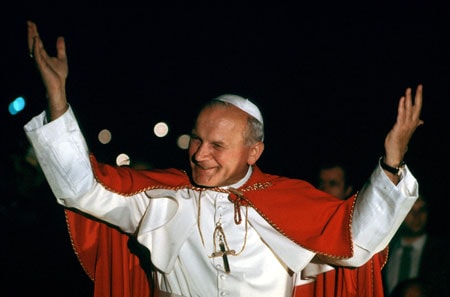
The speed of Pope John Paul II’s beatification (as well as other, I suppose predictable, criticisms) have led to a wave of opposition to it which I have to admit I find deeply depressing, predictable or not. The late pope’s pontificate had a great deal to do with my own conversion: I didn’t cross the Tiber because I was all that impressed by the English Catholic bishops; I came for papal authority, out of a church which had no means of coming to a mind about what it believed about anything.
The late pope did more than any pope of the last century to defend and reassert beyond any doubt the stable and objective character of Catholic teaching – more even than Pius X with his great encyclical Pascendi Dominici Gregis, since modernist incursions had become much more powerfully established during the pontificate of the unhappy Pope Paul than they had been in the early years of the century. Pope John Paul firmly re-established the fact that the Magisterium was given by God and not invented by theologians, after a period of utter doctrinal chaos. He saw off once and for all the so-called “alternative magisterium” of Küng, Schillebeekx and their ilk: and as a result he made it possible for hundreds of thousands of non-Catholics like myself, tired of the uncertainties of secularised versions of Christianity, to come into full communion with the Holy See. So I greeted news of his beatification with great joy: because of this great pope, I had been enabled at last to come home.
Opposition to the beatification of Pope John Paul comes from three main sources: from secular anti-Catholics; from “liberal” Catholics; and from Lefebvrist nutters (rude, I know: but even members of SSPX who are relatively sane have nevertheless to be seen as committed opponents of the late pope).
To take them in order. Secular anti-Catholic opposition may be exemplified by USA Today, which contemptuously characterised the process of canonisation as being a recognition, in the words of one Cathy Lynn Grossman, “that someone who has lived a life of exemplary holiness is now in heaven, whispering on humans' behalf in the ear of a miracle-working God”: she drew her readers attention to We Are Church, summarising their objections approvingly: “Their case," wrote Ms Grossman, “is that he failed to confront the abuse scandal, that he squashed the Liberation Theology movement, that he shut off discussion on gender equality and that he did not recognise… that use of condoms can be a moral choice for preventing the transmission of of HIV/Aids.” Her final sentence was set in bold, making clear enough her own personal view of all this religious mumbo-jumbo: “Do you pray to saints to take your cause to God? Or do you see miracles as great human accomplishments of science, strength or personal will?”
We Are Church, to look at their objections at greater length (since they are virtually identical with the secular objections, this will do as an elaboration of the anti-Catholic view as well), said this:
2:22 PM
Pope John Paul was a great pope - but that doesn't mean he never made mistakes
His beatification is a declaration of his holiness, not his achievements
William Oddie

5 min read



Already a subscriber? Sign in
5freearticles every month
Continue reading with a free account. No card needed.
- Five free articles every thirty days, on any device you sign in on
- The Catholic Herald newsletter, every morning
- Subscribe whenever you like for everything: every article and the magazine


subscribe to the catholic herald today
Our best content is exclusively available to our subscribers. Subscribe today and gain instant access to expert analysis, in-depth articles, and thought-provoking insights—anytime, anywhere. Don’t miss out on the conversations that matter most.
Subscribe



