August 26, 2026

Pope Leo defends military service as a ‘noble mission’

Michael Haynes
More
Related
Min read
share

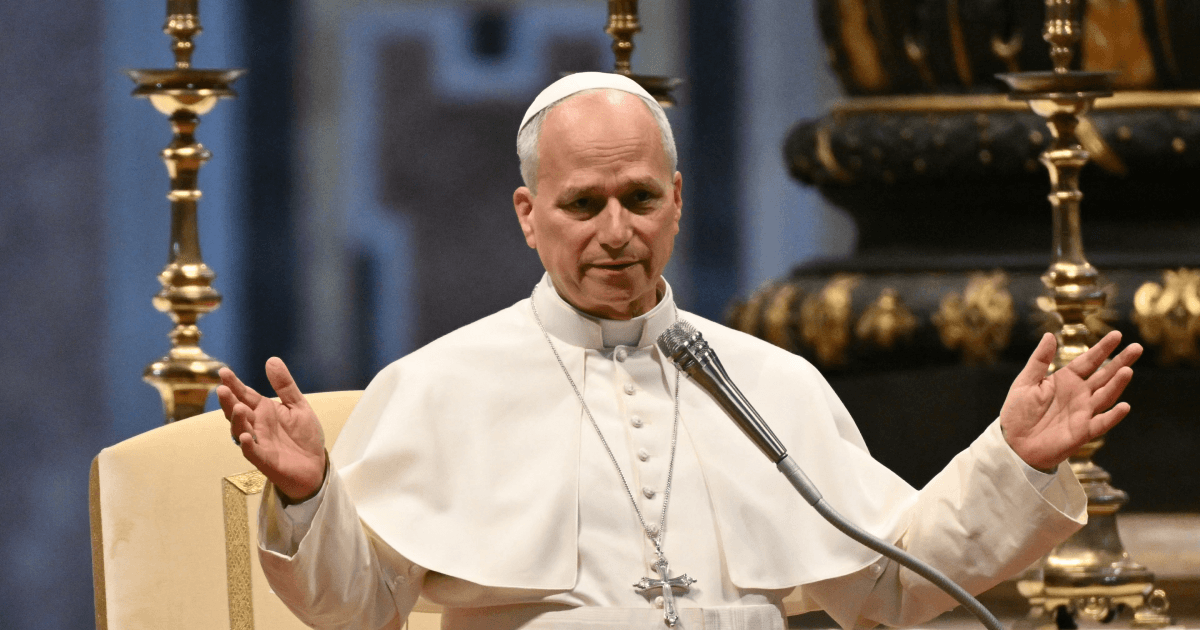
Receiving members of the Portuguese Military Ordinariate, Pope Leo praised the soldiers for their “noble mission” of defending the nation, in comments which contradict the narrative pushed by some who argued that Leo’s Magnifica Humanitas is an embrace of pacifism.  

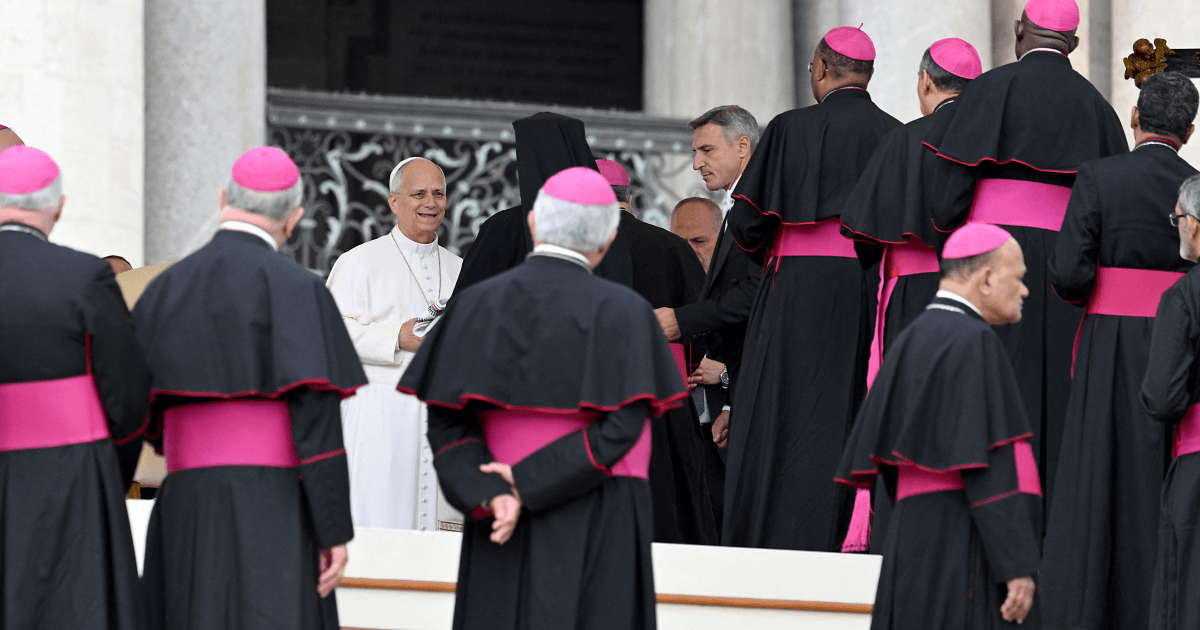
Monday morning’s papal audiences included a closed door meeting between Leo and members of the Military Ordinariate of Portugal, who had come to Rome to mark a number of anniversaries including its 60th birthday.

Hosting the group in the Apostolic Palace, Leo warmly praised the mission and role of service personnel. “Every day, each of you has the noble mission of defending the sovereignty of the Fatherland and the rule of law, ensuring the safety of your fellow citizens and protecting them from injustice,” he said.  
The Pontiff drew heavily from Scripture in his discourse to the Ordinariate, enjoining them to imitate the example of the centurion in Capernaum by practicing “obedience, discipline, self-denial, loyalty, camaraderie, dedication, responsibility and courage.”

In practicing obedience to authority along with humility, Pope Leo said that soldiers can come to imitate the the Christian ideal of military service as portrayed in Scripture. “Human beings, however much responsibility they may bear, however much power they may wield, however blameless they may be, are always hungry for the infinite and thirsty for eternity. Now, the infinite and eternity are within our reach in Jesus Christ: they are a gift from the Lord.”

Of particular note from Leo’s speech was his defence of military service as a “noble mission”, along with outlining certain elements of what that mission involves – namely defending one’s nation and ensuring compliance with the rule of law.  

Such comments come against the backdrop of much discussion in recent months following the publication of Leo’s encyclical Magnifica Humanitas in May. One of the most striking, and subsequently controversial, passages from the encyclical was in relation to the Church’s teaching on the Just War. The Pope wrote:

“Today, more than ever, without prejudice to the right to self-defence in the strictest sense, it is important to reaffirm that the ‘just war’ theory, which has all too often been used to justify any kind of war, is now outdated. Humanity possesses far more effective and capable tools for promoting human life and resolving conflicts, such as dialogue, diplomacy and forgiveness. The use of force, violence and weapons reflects a relational poverty that always has disastrous consequences for civilian populations.”

Though commonly known by title “Just War theory” the Church’s own texts regarding a just war refer to it as a “doctrine” and has been taught for centuries, drawing on the writings of some of the early Church Fathers.  

Following Leo’s comments in Magnifica Humanitas many commentators and clerics used the phrase to argue that all wars are evil and can in no way be justified. They had support for doing so also. The Pope himself had already employed the language of Pope Francis on previous occasions to argue that “war is always a defeat.”  

Such rhetoric expanded swiftly to the point that Leo was soon reported in the media as having said that not only was the Just War theory “outdated” but that all wars were always evil.  

Leo’s comments in Magnifica Humanitas were not without precedent. Cardinal Joseph Ratzinger questioned in 2003 if the concept of a just war could still exist, and even in 1944 Pope Pius XII welcomed moves to develop an international body focussed on guarding peace, stating: “No one could hail this development with greater joy than he who has long upheld the principle that the idea of war as an apt and proportionate means of solving international conflicts is now out of date.”

Yet as theologians have also noted in the aftermath of Magnifica Humanitas, while it may be harder to meet the conditions of a just war in modern society, that does not mean the teaching and principles suddenly cease to exist or can be declared wrong.  

“The truth of a moral proposition doesn’t depend on the day of the calendar year that it came up,” attested New York canonist Father Gerald Murray. “It’s a principle derived from the natural law from Revelation. This is not an abstract theory. This is how people live. To say that it’s outdated, unfortunately, is a circumlocution to say it’s bad.”

Indeed, the debate which emerged over this passage of Magnifica Humanitas is most likely why it was removed from the original schedule of the June consistory of cardinals – with officials realising that the topic was too spicy for a meeting in which they wanted only vanilla.  

Yet as is often overlooked in such discourses, the Vatican and the Pope personally benefit daily from the protection of soldiers ready to sacrifice themselves in service of the Pope and the Church if necessary. This has been the lot of the Swiss Guard before, during the Sack of Rome in 1527.  

By virtue of normal life around Vatican City, and whenever the Pope travels abroad, protection is provided by soldiers and personnel prepared to use lethal force, thus complicating any move by a pope to deride the Church’s teaching on a just war or the soldiers who are a necessary part of a war.  

The reality, therefore, is that the Holy See relies on soldiers and the principle of a just war in order to survive.  

What ought the Vatican to do in light of this debacle? Certainly, as Pope Francis’ pontificate demonstrated, declaring that prior teaching is suddenly just wrong or outdated leads only to confusion, self-contradiction, and ultimately self-demise.  

Yet very clearly the world is replete with hostility and conflicts, with many sides pronouncing themselves to be in the right – as has been the case throughout history. Perhaps the Vatican should reconsider its rhetoric to argue not that the Just War doctrine is “outdated” but that it is rarely applied.

Michael Haynes is an English journalist in the Holy See Press Corps. He serves as Vatican Correspondent for the Catholic Herald, while readers can follow him at Per Mariam and on X @MLJHaynes.

Continue reading with a free account

Create a free account to read up to five articles each month
Create free account

You have # free articles remaining this month.

Subscribe to get unlimited access.
Sign up

subscribe to the catholic herald today

Our best content is exclusively available to our subscribers. Subscribe today and gain instant access to expert analysis, in-depth articles, and thought-provoking insights—anytime, anywhere. Don’t miss out on the conversations that matter most.
Subscribe