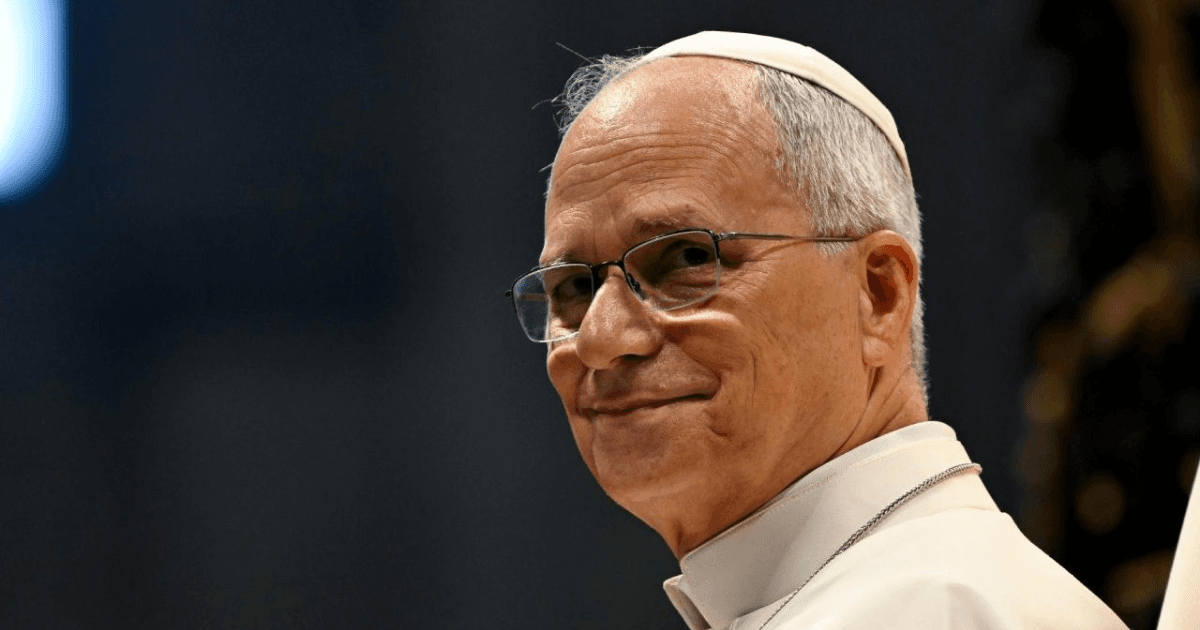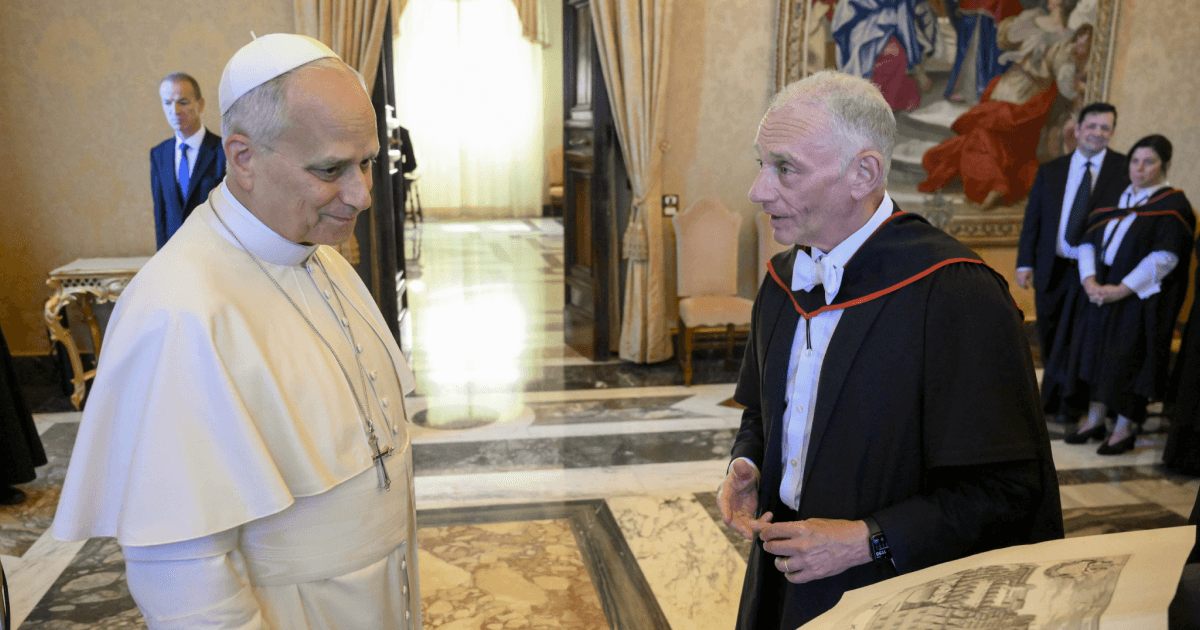
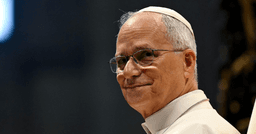
Receiving a delegation from Oriel College, Oxford, Pope Leo XIV urged the historic college to follow the example St John Henry Newman who served as fellow for over twenty years prior to his conversion.
In one of the more unusual papal audiences, the Provost, fellows and members of Oriel College gathered in the Consistory Hall in the Apostolic Palace on September 4, for a private papal audience. Established in the 1320’s, the Oxford college has the particular dedication to Mary, being known as the House of the Blessed Mary at Oxford. It is now marking the 700th anniversary of its royal foundation
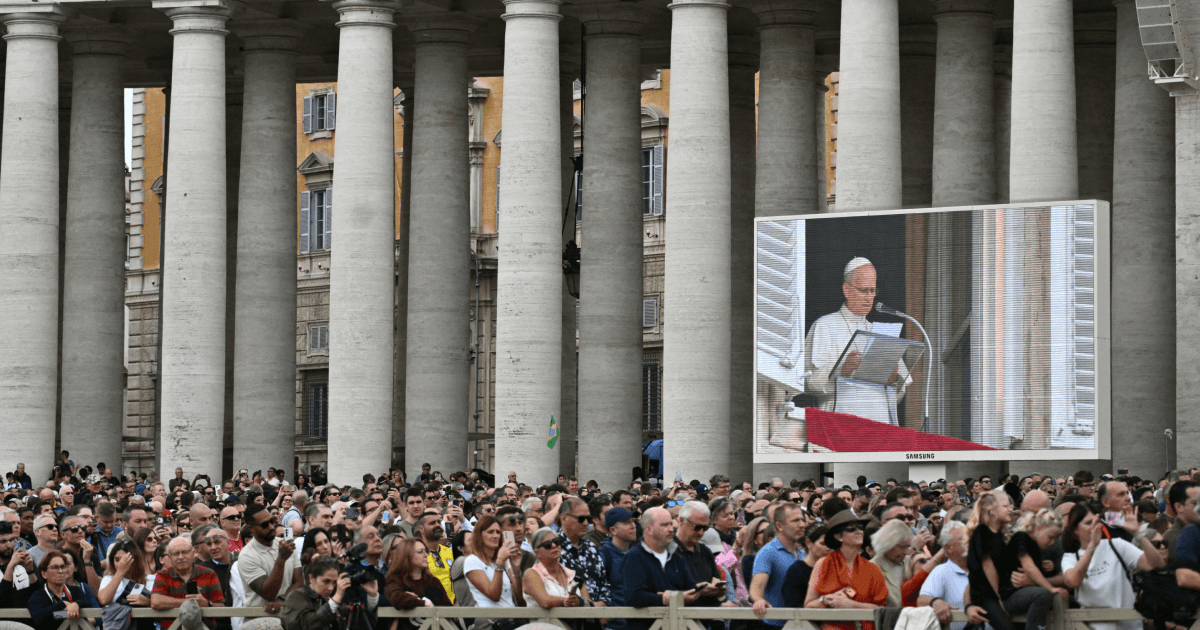
Highlighting this and the Catholic ethos which served as the foundation of Oriel, Leo XIV praised the position of faith at the heart of Oriel. “This identity is key to what has made and can continue to make Oriel not just an academic institution, but a true community of faith and scholarship in its deepest meaning,” he said.
This Catholicity must serve as a guide of the future, urged the Pope. “The College can thus look with confidence to its past contributions as a sure foundation and guide for its future endeavours.”
Oriel’s Catholic origins are not hidden, but are no longer as central a feature as at the time of its foundation. The College Provost followed the way of much of former Catholic England in adhering to the Protestant revolt during the 1530’s.
But among Catholics the College is now arguably most famous for its link with Saint John Henry Newman, newly named as a Doctor of the Church in November. Prior to his Catholic conversion he served as a fellow of the College for around 23 years, with stints as College chaplain and also as vicar of Oxford’s Anglican parish church.
Relating this aspect, Leo described Newman as “a shining example of a scholar who not only showed the inseparability of faith and reason in his works but even more admirably in his life.”
Newman possessed a “great concreteness to his ideas, since,” the Pope said, “his religious convictions were rooted in his personal relationship with God, while his scholarship was both sublime and eminently practical.”
It was these aspects which were a key factor in his addition to the small number of saints recognised as Doctors of the Church, added Leo.
Newman’s inclusion among the Doctors of the Church is also due to his work on Catholic education, a point highlighted by the Pope during the ceremony in November and during his audience with Oriel on Friday. The English convert is now co-patron of the Church’s education work along with St. Thomas Aquinas.
Addressing the College, Leo stated that Newman’s educational science is “particularly relevant, for he proposes a Christian formation that embraces the entire person and measures the value of education according to human dignity, justice and the capacity to serve the common good.”
He called on Oriel’s fellows and members to imitate Newman and “to seek the truth courageously and to promote this integral anthropological vision.” In this manner, their academic work can “genuinely facilitate a ‘heart to heart’ encounter with your brothers and sisters, and especially with our Lord Jesus Christ, who is the way, the truth, and the life.”
“Entrust yourselves and the future of the College to the unfading Light of the world, so that you too, like Our Lady, may reflect his glory to the world,” Leo urged the College.
Newman was received into the Church in 1845 and created cardinal in the consistory of May 1879. Dying in August 1890, he was beatified by Pope Benedict XVI in Birmingham in September 2010 before being canonised by Pope Francis in 2019.
Expressing his gratitude for the papal audience, Oriel’s Provost Lord Mendoza mentioned Pope Leo’s Magnifica Humanitas, and lauded the text for noting that “artificial intelligence should be neither idolised nor feared, but governed towards human dignity, the common good, solidarity and justice.”
Oriel seeks to maintain “a small but resilient defence of human judgement and human presence,” he said, while adding that “the university world is struggling with not only how to educate but how to interview, assess, tutor, lecture, examine and grade students.”
Michael Haynes is an English journalist in the Holy See Press Corps. He serves as Vatican Correspondent for the Catholic Herald, while readers can follow him at Per Mariam and on X @MLJHaynes.