

The 2026 recipient of the annual Ratzinger Prize issued at the Vatican is a former theologian for Pope Benedict, who in 2022 criticised the German pope’s liberalising of the traditional Mass in Summorum Pontificum.
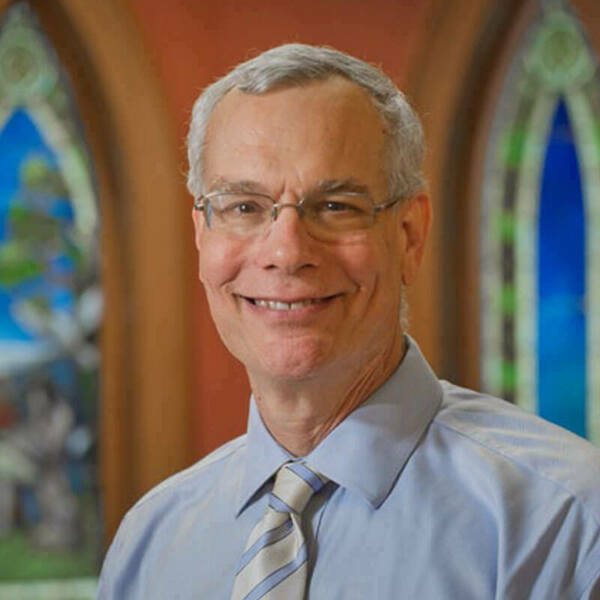
On December 19, Professor John Cavadini will take receipt of the prestigious Ratzinger Prize in the Apostolic Palace from the hands of Pope Leo XIV. In doing so, Cavadini becomes one of just over 30 individuals to have been recognised for excellence in their field since the prize was inaugurated in 2011.
Awarded via the Ratzinger Foundation, the prize is described as being for scholars who have “stood out for their scientific research in the theological field.” The theological focus of the award is not technically always followed, as past recipients in recent years have included civil lawyers and artists. Accordingly, the Ratzinger Foundation notes in its latest press details that the award is this “who have distinguished themselves through outstanding achievements in publication and scientific research”.
Cavadini received his doctorate in religious studies form Yale University in 1988 and has been a longtime faculty member at Notre Dame University. From July 1997 to June 2010 he served as chairman of the Department of Theology, while from June 2012 he has been a professor in the same department. In June of this year, he concluded a highly successful and much praised 26 year term as McGrath-Cavadini Director in the McGrath Institute for Church Life.
The theologian also has direct experience of working under Pope Benedict XVI. The German pope appointed Cavadini to the International Theological Commission for a standard five-year term in 2009. Months prior, Benedict bestowed on Cavadini the papal honour of becoming a knight of the Equestrian Order of St. Gregory the Great.
Accepting the Ratzinger Prize, Cavadini stated that he had “tried to pursue my vocation as a theologian following the pattern of 3rd century theologian Origen of Alexandria who repeatedly declared that as a theologian he wanted to be a vir ecclesiasticus, a man of the Church.”
He praised his students and colleagues at Notre Dame University and the McGrath Institute for Church Life, while also dedicating the award to Our Lady, invoking her protection as patroness of the university.
Meanwhile Ratzinger Foundation president Father Roberto Rigoli praised Cavadini as being “highly regarded for the rigour of his theological publications, his commitment and zeal in university teaching, his academic expertise, his pastoral passion and his lifelong service to the Church.”
Cavadini’s theological record is much lauded especially among conservative circles in the U.S. His admirers highlight not only the many theological writings from his career, but also his professional work ethic and personable nature.
What is of note in his receiving the 2026 Ratzinger Prize is Cavadini's critique of some of the German pope’s actions regarding the traditional Mass. Pope Benedict XVI liberalised availability of the old rite via his 2007 motu proprio Summorum Pontificum. This was later attacked and abrogated while Benedict was living in retirement when Pope Francis promulgated Traditionis Custodes in July 2021.
In late 2022, Cavadini joined Father Thomas G. Weinandy, OFM and Professor Mary Healy to compose a five-part series on the traditional Mass, its status in the Church since Vatican II and the position going forward.
The authors noted Benedict XVI’s “great personal affection” to the traditional Mass and linked his personal attachment to the old rite’s “continued rise in popularity” as the reason for Summorum pontificum. But they opined that Benedict’s hope that the new and old rite “will not lead to a division in the Church now appears overly optimistic”.
They critiqued Benedict for his permissive stance towards the traditional Mass and argued that it undermined the Second Vatican Council: “Benedict’s accommodation of the Tridentine liturgy, while pastorally motivated, undercut the fundamental principle of the liturgical renewal, for the faithful who now attend that liturgy have little opportunity for active participation.”
Whilst Benedict “cannot be faulted for his loving pastoral concern for the faithful who wish to participate in the pre-Vatican II liturgy”, the authors wrote that “it may be questioned whether such benevolence was wise”.
“In normalizing the Tridentine Mass, Benedict undermined the principle by which, as he himself insists, Vatican II must be interpreted: a hermeneutic of continuity,” Cavadini, Healy and Weinandy wrote. The trio also repeated common arguments against the merits of the traditional Mass itself regarding the manner of engagement Catholics can have with the liturgy.
Published by the McGrath Institute’s Church Life Journal, the series was met with strong opposition from devotees of the traditional Mass. A group of liturgical scholars published detailed rebuttals of the trio’s arguments, which were later collated into a book entitled “Illusions of Reform”.
One of the respondents – Dr Joseph Shaw, president of the International Una Voce Foundation – wrote that the trio’s arguments were “so shockingly awful” that they resembled the “painful forays of the militant atheist Prof. Richard Dawkins into theology, about which he evidently knows precisely nothing”.
Shaw and his fellow respondents argued that Cavadini, Healy and Weinandy were not only painfully ignorant of the Mass they chose to critique, but also recycled old arguments – which had already been debunked – without any expertise on the matter.
Nominations for the award which Cavadini will receive are made by the Ratzinger Foundation’s Scientific Committee and submitted to the Pope for approval. As of July, the five members of the committee are Cardinal Kurt Koch; Cardinal Ángel Fernández Artime; Archbishop Salvatore Fisichella; Archbishop Rudolf Voderholzer; Archbishop Bruno Forte.
Benedict’s former secretary and close confidant Archbishop Georg Gänswein is one of the four members of the Foundation’s board of directors. But this element is notable since Gänswein has consistently related Benedict’s own sorrow at Traditionis Custodes alongside that of his own. On more than one occasion this year, Gänswein has expressed his hope for a return to Summorum Pontificum under the pontificate of Leo XIV.
Michael Haynes is an English journalist in the Holy See Press Corps. He serves as Vatican Correspondent for the Catholic Herald, while readers can follow him at Per Mariam and on X @MLJHaynes.