

A new report by an Italian Vatican journalist claims to reveal the overwhelmingly negative opinion by the Vatican’s doctrinal office regarding the alleged visions at Medjugorje, detailing a vote which had hitherto remained secret.
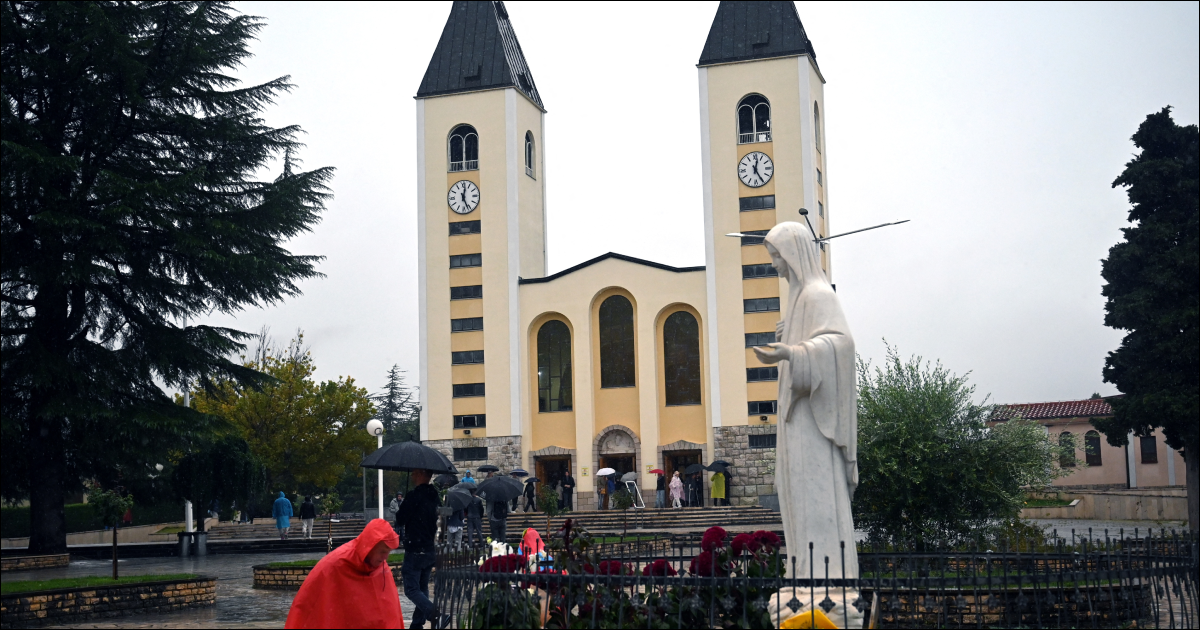
In a blog post published on August 6, David Murgia presented details of a September 2016 vote by members of the Congregation (now Dicastery) for the Doctrine of the Faith regarding Medjugorje. The vote, occurring within an ordinary session of the DDF’s activity, was for the thirty-three members to state their opinions on the phenomenon of Medjugorje, where since June 1981, alleged apparitions of Our Lady have been taking place. According to Murgia, the DDF vote considered the question: can what happened in Medjugorje be considered supernatural in origin, must it be considered non-supernatural, or is there still insufficient evidence to make a definitive judgment?
Referencing his “meticulous checks and controls”, Murgia stated that his research had produced the results.
Twenty-one members voted that Medjugorje is decidedly not of supernatural origin; nine voted that it is of supernatural origin; there voted that there was insufficient evidence to make a decision.
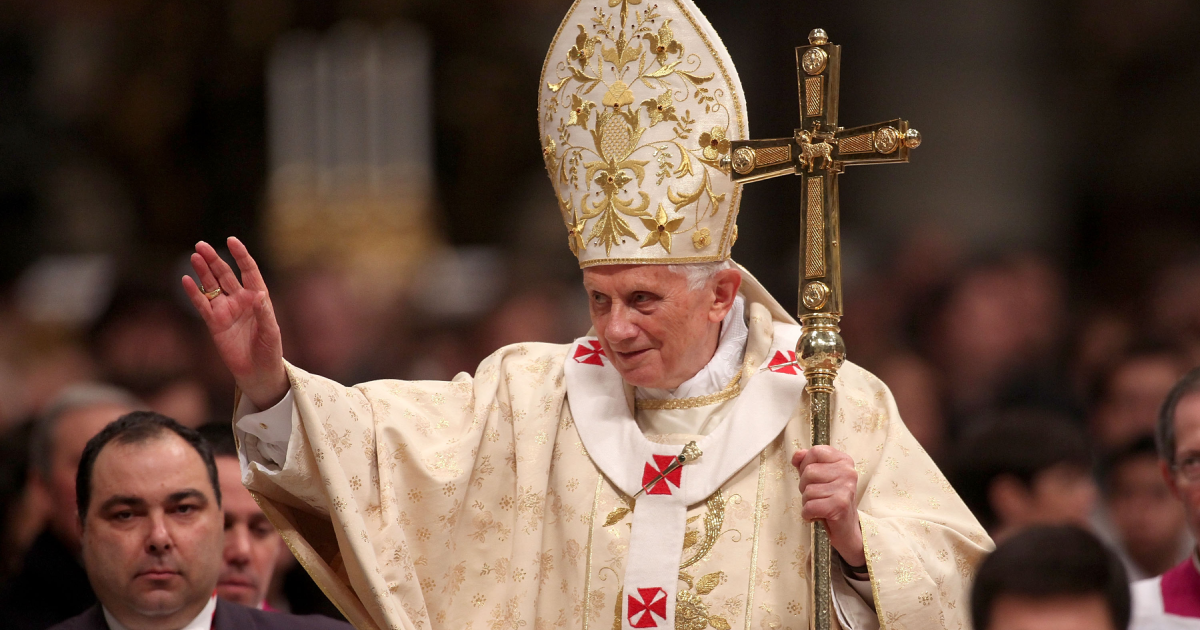
What is especially notable is that the 2016 vote took place in light of the completion of the Ruini Report on Medjugorje. The “Ruini Commission” was formed in 2010 at the request of Pope Benedict XVI, led by Cardinal Camillo Ruini and concluded its investigation in January 2014. The report was never made publicly available, but is understood to have expressed a mixed tone regarding the alleged visions, and one which was certainly more favourable than the 2016 DDF vote.
Andrea Tornielli – now editorial director for the Vatican’s in-house Dicastery for Communication – wrote in 2017 that the Ruini Commission was reportedly favourable to the first seven alleged visions, from June 24 through to July 3, 1981. Tornielli wrote that the Commission treated everything that happened after as a separate phase, with much divided opinion in the Commission over what decisions could actually be made on the period.
For the DDF to rule against Medjugorje even after having read the Ruini Report highlights the concerns that the theologians were aware of. Murgia’s report this week did not note the individual votes of the DDF members in 2016, although he promised to do so in the near future.
Medjugorje has been the subject of immense controversy ever since the alleged apparitions began in 1981. If Murgia’s report holds weight, then it marks a significant moment in the history of official investigations into the phenomenon, with yet another negative verdict handed down.
Despite the opposition by the Vatican’s doctrinal office in its 2016 vote, the Holy See later published its 2024 Nihil Obstat declaration on Medjugorje, appearing to ignore the concerns of the body set up to examine the events.
Local investigations have consistently ruled against the supernatural origin of Medjugorje’s alleged apparitions, but despite these the large scale interest of both tourists and pilgrims has led to steadily increasing numbers flocking to the site.
The first diocesan commission investigation in 1984 gave a ruling of “non constat de supernaturalitate,” namely that it was unable to determine if the events were of supernatural origin – reaching the same verdict as three of the DDF members during the 2016 vote.
A second investigation by the Diocese of Mostar-Duvno from 1984 – 1986 also found inaccuracies with the diaries of the alleged visionaries – and ruled similarly it could not determine if the events were supernatural nature.
The local ordinary Bishop Žanić then sent a report to the DDF in 1986, stating that the alleged apparitions were false and were “constat de non supernaturalitate” – namely definitively not of supernatural origin. Notably, though, Žanić did not receive sufficient support from the Vatican for his judgement to be affirmed in a more public manner.
Žanić’s successor in the diocese continued with this opposition to the alleged apparitions, and the Yugoslav National Conference of Bishops ruled in 1991 that, with Medjugorje, “it can not be affirmed that one is dealing with supernatural apparitions and revelations.”
Popularity amongst visitors appears to have been the deciding factor, however, meaning that – while the Vatican would normally leave the matter with the consistent decision of the local ordinary – the Ruini Commission was eventually formed by the Vatican in 2010, as interest in Medjugorje refused to abate, and official Vatican warnings against it were also widely ignored.
Prior to the Holy See’s 2024 declaration on Medjugorje, the most notable update came in May 2019, when Pope Francis authorized pilgrimages to be made to Medjugorje, referencing the large numbers of pilgrimages and the “greater ease” that such a Vatican arrangement would give for priests to accompany pilgrimages. However Francis highlighted that this move did not constitute an approval of the alleged visions.
Francis himself was understood by Vatican observers to be a critic of the phenomenon, even commenting publicly that he had his “doubts” about the affair. Like Pope John Paul II, Francis appeared loath to public condemn Medjugorje, perhaps for the simple reason that by that time the phenomenon had grown so large that the Vatican feared an official condemnation would have caused a schism.
The proffered resolution to this came via the new norms issued by Cardinal Victor Manuel Fernández in May 2024. In a momentous break with previous norms, the 2024 version no longer rules on whether an alleged vision is of supernatural origin. Instead the new norms reduce the highest form of approval to a Nihil Obstat, or “free from error,” meaning that an alleged vision is now no longer given a verdict on whether it is of supernatural origin or not.
Fernández gave Medjugorje a Nihil Obstat ruling, saying that there are “beautiful and positive” fruits of the phenomenon, but that the Vatican would not rule on its authenticity. As such, the cardinal ruled about the alleged messages of the apparition that “one should always bear in mind that they are ‘alleged messages’”, and that his Nihil Obstat “does not imply that the alleged supernatural events are declared authentic.”
Both the new norms and the 2024 Medjugorje declaration were widely criticized by Mariologists, who warned of further widespread confusion about the alleged visions. Should Murgia’s report about the Vatican’s own 2016 vote being a two-thirds condemnation of the alleged visions be true, then it freshly highlights the immense controversy inherent to the phenomenon and the Vatican’s fear of taking a firm stance.
Michael Haynes is an English journalist in the Holy See Press Corps. He serves as Vatican Correspondent for the Catholic Herald, while readers can follow him at Per Mariam and on X @MLJHaynes.